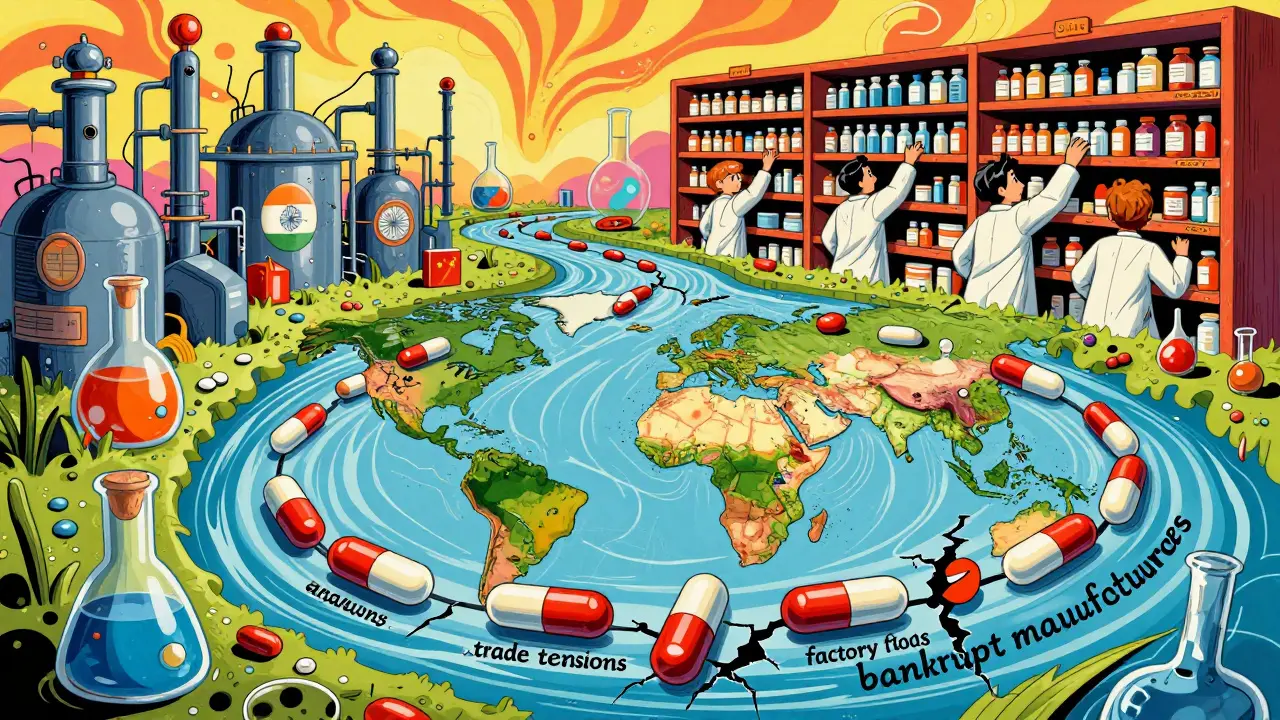
By 2025, more than 200 essential medicines are already in short supply across the U.S. and Europe. And it’s not getting better. Experts warn that without major changes, we’re headed toward a decade of worsening drug shortages - not because of random glitches, but because of deep, interconnected forces: crumbling manufacturing networks, geopolitical instability, aging populations, and a broken economic model that rewards low-cost generics over reliable production.
Why Drug Shortages Are Getting Worse
Drug shortages aren’t new, but they’ve shifted from occasional hiccups to systemic failures. In 2024, the FDA listed 314 active drug shortages - the highest number in over a decade. By 2025, that number is expected to climb past 350. What’s driving this?The biggest culprit? Concentration of manufacturing. Over 80% of active pharmaceutical ingredients (APIs) for common drugs - from antibiotics to insulin to blood pressure meds - are made in just two countries: India and China. When floods shut down a factory in Hyderabad, or trade tensions spike tariffs between the U.S. and Beijing, the ripple effect hits hospitals within weeks. There’s no backup. No redundancy. Just one line of supply.
Even when demand stays steady, production doesn’t. Many generic drug makers operate on razor-thin margins. A drug that sells for $5 a pill might cost $4.90 to make. If one competitor lowers prices by a penny, everyone else has to follow - or go out of business. The result? Fewer companies making these drugs. And when one shuts down, there’s no one left to pick up the slack.
The Role of Aging Populations and Chronic Disease
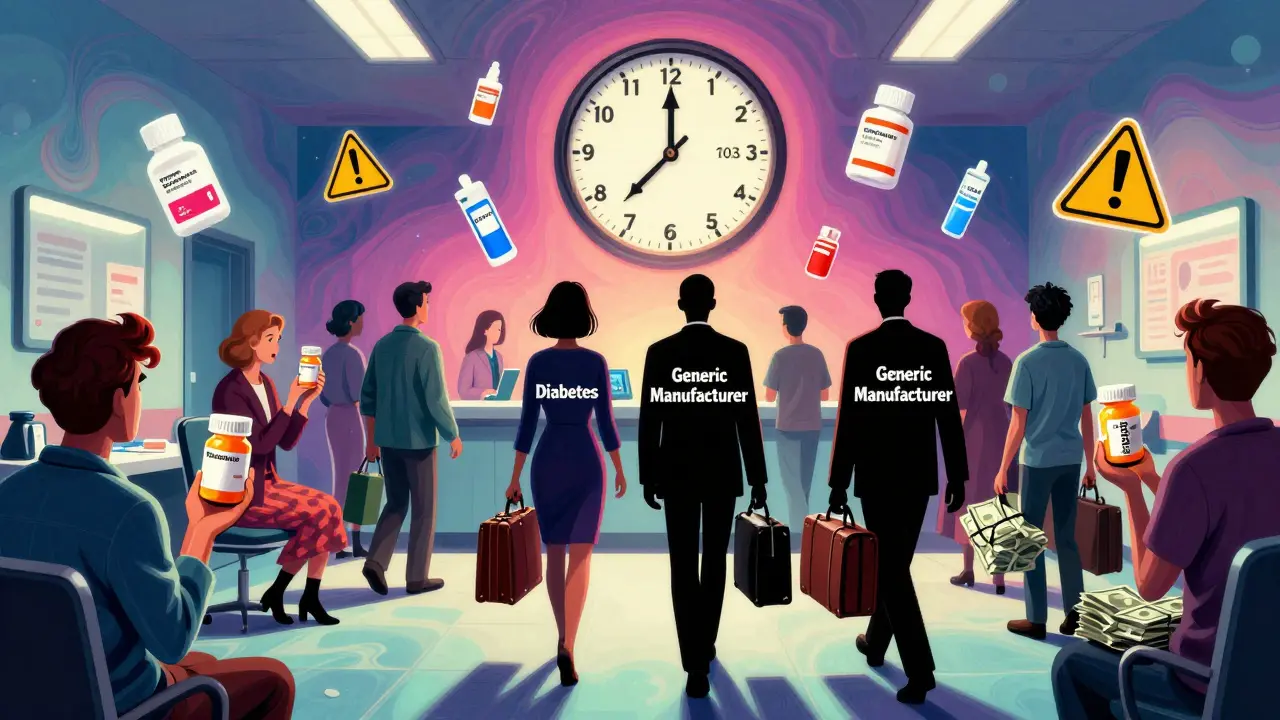
The global population over 65 will hit 2.1 billion by 2050. That’s not a distant projection - it’s happening now. Older adults take, on average, five to seven prescription drugs per day. That means higher demand for heart meds, diabetes treatments, pain relievers, and psychiatric drugs.Take metformin, the most common diabetes drug. In 2023, shortages hit 40% of U.S. pharmacies. Why? Because demand jumped 22% in two years, but no new manufacturers entered the market. The same pattern is repeating with lisinopril, levothyroxine, and amoxicillin. These aren’t niche drugs. They’re the backbone of primary care. When they disappear, patients are forced to switch - often to more expensive or less effective alternatives.
And it’s not just volume. It’s complexity. Newer drugs for cancer, autoimmune diseases, and rare disorders require ultra-precise manufacturing. A single contamination in a sterile vial can shut down a whole batch. These drugs can’t be made quickly or cheaply. They need specialized facilities, trained staff, and strict regulatory oversight. There aren’t enough of those facilities to meet rising demand.
Supply Chain Fragility and Geopolitical Risk
The global supply chain for drugs is like a house of cards. One country makes the raw chemicals. Another processes them. A third packages them. A fourth ships them. Any break - a port strike, a sanctions regime, a war - can collapse the whole thing.In 2024, a political crisis in Ukraine disrupted the supply of key solvents used in antibiotic production. A heatwave in India delayed shipments of insulin vials. A new export restriction from China on certain API intermediates sent shockwaves through the U.S. generic drug market. These aren’t rare events anymore. They’re predictable.
According to the World Economic Forum’s 2025 Future of Jobs Report, 67% of pharmaceutical companies are now building dual-sourcing strategies - meaning they’re trying to find alternate suppliers in different regions. But it’s not easy. Building a new manufacturing line takes 3-5 years. Getting FDA approval for a new supplier? Another 18-24 months. By then, the shortage is already here.
Forecasting Tools Are Improving - But Not Fast Enough
Forecasting drug shortages used to be guesswork. Now, agencies like the FDA and private firms use AI models that track real-time data: raw material shipments, factory downtime alerts, customs delays, even weather patterns in manufacturing hubs.One model developed by the University of Michigan and the FDA can predict a shortage up to six months in advance by analyzing 120 different signals - from patent expirations to supplier bankruptcy filings. In 2024, it flagged a potential shortage of norepinephrine (a critical ICU drug) three months before it hit. That gave hospitals time to stockpile and switch protocols.
But adoption is patchy. Most hospitals still rely on manual reports from pharmacists. Insurance companies don’t share data on prescription trends. And regulators move slowly. The FDA’s Drug Shortage Program can only respond - it can’t prevent. There’s no national early-warning system. No centralized database. No mandate for manufacturers to report potential shortages until they’re already happening.
Who’s Most Affected? The Answer Is Everyone - But Not Equally
When a drug runs out, it’s not just a headache for pharmacies. It’s a crisis for patients.Low-income patients, especially those on Medicaid or without insurance, are hit hardest. They can’t afford to switch to brand-name alternatives. They don’t have the time or resources to navigate complex alternatives. A study in JAMA found that patients forced to switch from a generic statin to a more expensive version were 37% more likely to stop taking their medication entirely.
Rural communities suffer too. With fewer pharmacies and longer delivery times, shortages last longer. In parts of Appalachia and the Midwest, it’s not uncommon for a patient to wait 10-14 days for a refill during a shortage. That’s enough time for a chronic condition to spiral.
And then there’s the hidden cost: increased hospitalizations. When patients can’t get their meds, they end up in the ER. A 2025 analysis by the CDC estimated that drug shortages contributed to over 120,000 avoidable hospital admissions in the U.S. alone last year - adding $1.8 billion in healthcare costs.
What’s Being Done? Not Enough
There are some efforts to fix this. The U.S. government passed the Drug Supply Chain Security Act in 2013, which aims to track drugs from factory to pharmacy. But it doesn’t address manufacturing gaps. The FDA has started fast-tracking approvals for new suppliers - but only for a handful of critical drugs.In 2025, Congress proposed the Medication Access and Resilience Act, which would give tax credits to companies that diversify manufacturing outside China and India. It also calls for a federal stockpile of 90 days’ worth of top 50 shortage-prone drugs. But the bill is stuck in committee.
Some private companies are stepping up. CVS Health and Walgreens have started direct partnerships with API manufacturers in Poland and Romania. One startup, MedSecure, is building a blockchain-based tracking system for generic drugs - letting hospitals see exactly where their meds come from and how long they’ve been in transit.
But these are islands. Without systemic reform, they won’t stop the tide.
What Comes Next? Three Likely Scenarios
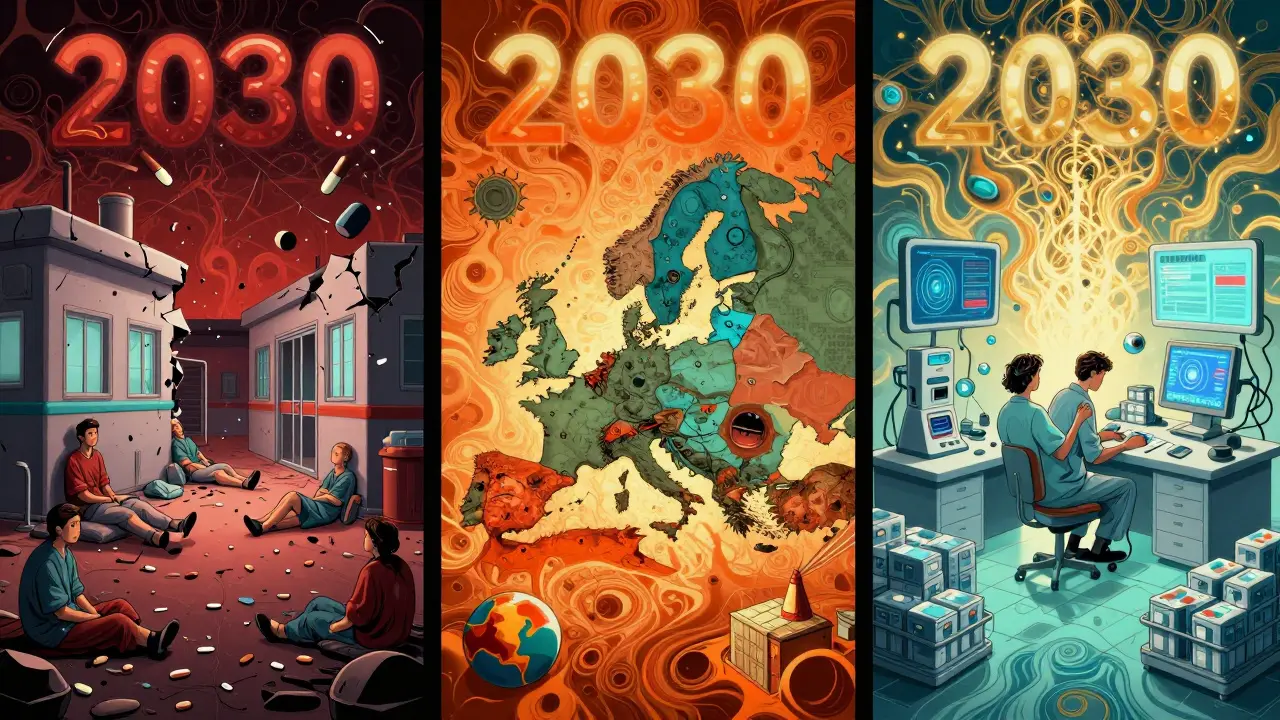
By 2030, we could see one of three outcomes:- Worsening Crisis: No policy changes. Manufacturing stays concentrated. Demand keeps rising. Shortages become routine - even for basic antibiotics. Hospitals ration drugs. Patients die because the right pill isn’t available.
- Fragmented Recovery: The U.S. and EU build regional manufacturing hubs. India and China still dominate, but new plants open in Eastern Europe, Mexico, and Southeast Asia. Shortages drop by 40%, but prices rise 15-20% due to higher production costs. Access becomes unequal: wealthy patients get what they need; others don’t.
- Systemic Reset: The government mandates minimum stockpiles, offers long-term contracts to manufacturers, and invests in automation for sterile drug production. AI forecasting becomes mandatory. New incentives reward reliability over price. Shortages drop by 60% by 2030. Medicines become more expensive - but they’re always available.
The third scenario is possible. But it requires political will. It requires funding. It requires recognizing that medicine isn’t just a commodity - it’s a public good.
What You Can Do
If you’re a patient, keep a 30-day supply of critical meds on hand - if your doctor allows it. Ask your pharmacist if there’s a therapeutic alternative if your drug runs out. Don’t wait until you’re out to ask.If you’re a provider, document every shortage you encounter. Report it to the FDA’s Drug Shortage Portal. Push your hospital to join the American Society of Health-System Pharmacists’ shortage tracking network.
If you’re a policymaker or investor, ask: Where are the drugs made? Who’s responsible when they disappear? Who pays the cost when patients get sicker?
The next five years will decide whether we treat drug shortages as a market problem - or a public health emergency.
Why are generic drugs so often in short supply?
Generic drugs are cheap to make, so companies compete on price, not reliability. Profit margins are so thin that many manufacturers shut down when prices drop slightly. With only a few factories making each drug, one shutdown - due to FDA violations, natural disasters, or financial trouble - leaves no backup. There’s no incentive to build extra capacity because no one pays for it.
Which drugs are most likely to be in short supply by 2030?
Antibiotics like amoxicillin and ciprofloxacin, heart medications like lisinopril and metoprolol, diabetes drugs like metformin and insulin, and ICU essentials like norepinephrine and dopamine are at highest risk. These are all high-volume, low-margin drugs made in concentrated global supply chains. As demand rises with aging populations and supply chains stay fragile, shortages will become more frequent and longer-lasting.
Can the U.S. produce its own drugs again?
Yes - but it won’t happen overnight. Building a single sterile injectable facility costs $200-400 million and takes 4-6 years. The U.S. has started investing in domestic API production through the CHIPS Act and the Defense Production Act, but progress is slow. The goal isn’t to replace India and China entirely - it’s to create redundancy. Even 15-20% domestic production capacity could prevent the worst shortages.
How do drug shortages affect patient outcomes?
Studies show patients who can’t get their prescribed drugs are 2-3 times more likely to be hospitalized. For chronic conditions like hypertension or diabetes, even a few days without medication can cause dangerous spikes in blood pressure or blood sugar. In cancer care, delays in chemotherapy drugs can reduce survival rates. A 2025 CDC analysis linked drug shortages to over 120,000 avoidable hospital visits and 1,800 excess deaths in the U.S. last year.
Are biosimilars or new drugs helping to solve shortages?
Not yet. Biosimilars - cheaper versions of biologic drugs - are mostly used for expensive cancer and autoimmune treatments, not the common generics in short supply. New drugs are often patented and costly, so they don’t replace the old ones. They add to the system, not fix it. The real solution lies in stabilizing the production of existing, essential medications - not creating new ones.
12 Comments
Robert Gilmore December 20, 2025 AT 09:43
This isn't just about drugs-it's about who we are as a society. When a grandmother can't get her blood pressure medicine because a factory in Hyderabad flooded, we've already lost. We treat healthcare like a spreadsheet, not a lifeline. And now people are dying because we refused to invest in resilience. We don't need more reports. We need courage.
Robert Gilmore December 22, 2025 AT 00:46
India makes most of the world's generics and you blame us for supply chains breaking? We work with what we got. Factories are old, workers are tired, and US companies demand dirt cheap prices then act shocked when things break. You want stability? Pay more. Simple.
Robert Gilmore December 22, 2025 AT 01:23
This is all a psyop. The FDA and Big Pharma are deliberately causing shortages so they can push you into expensive biologics and vaccines. They control the supply chains. They own the patents. They even control the weather data they use to 'predict' shortages. Watch what happens when the next election comes around-suddenly all the drugs will be magically available. Coincidence? I think not.
Robert Gilmore December 23, 2025 AT 02:02
It’s strange how we treat medicine like a commodity when it’s clearly not. We don’t let people starve because the wheat market crashed. We don’t let houses burn because the lumber supply got tight. But we let people die because a pill costs 12 cents too much to make? We’ve inverted our values. The real crisis isn’t manufacturing-it’s morality.
Robert Gilmore December 24, 2025 AT 05:07
The data is clear. The FDA’s current system is reactive, not predictive. We need a mandatory, real-time API inventory dashboard tied to customs, shipping, and production alerts. Every manufacturer above 500kg/month should be required to feed data into a federal hub. It’s not science fiction-it’s logistics. We do this for airplanes. Why not for insulin?
Robert Gilmore December 25, 2025 AT 15:57
China is weaponizing medicine. They're holding our prescriptions hostage. They know we're addicted to their cheap pills. They're laughing while our kids go without antibiotics. This isn't a shortage-it's an act of war. We need to shut down all imports from Red China and build our own plants with American steel and American workers. Now. Not tomorrow. NOW.
Robert Gilmore December 26, 2025 AT 04:44
Who cares? People just take too many pills anyway. My grandpa took 12 a day and lived to 92. You think you need all this junk? Most of these drugs are just placebo with a label. Let people suffer a little. Builds character. And if they can't afford it? Maybe they shouldn't have had kids.
Robert Gilmore December 27, 2025 AT 19:47
My dad had to wait 3 weeks for his metformin last year. He went into the ER because his sugar spiked. They gave him a $2,000 bill and a pamphlet. 🤡 I’m so tired of this. We’re literally letting people die because someone didn’t want to spend $0.10 more per pill. This isn’t capitalism. It’s cruelty with a balance sheet.
Robert Gilmore December 28, 2025 AT 11:57
Let’s clarify a misconception: the issue isn’t just manufacturing concentration-it’s regulatory fragmentation. The FDA approves new suppliers, but CMS and private insurers don’t reimburse for them unless they’re on formulary. Even if a new plant in Poland is FDA-compliant, if your insurance doesn’t cover it, the pharmacy won’t stock it. Fix reimbursement policy, and supply chains stabilize faster than you think.
Robert Gilmore December 29, 2025 AT 03:18
If you're a patient, you're not powerless. Call your senator. Write to your pharmacy chain. Demand transparency. Join patient advocacy groups. We’ve done this before-with HIV meds, with insulin, with naloxone. When patients organize, corporations listen. This isn't a technical problem. It's a political one. And politics is just organized people. So get organized.
Robert Gilmore December 29, 2025 AT 07:54
You think this is about drugs? No. This is about the collapse of the American dream. We used to make things here. Now we just consume. We outsource everything-jobs, pills, even our dignity. And now we're surprised when the system breaks? Wake up. This was inevitable. The only thing worse than a drug shortage is a nation that stopped believing it could fix its own problems.
Robert Gilmore December 30, 2025 AT 20:29
One must consider the epistemological underpinnings of pharmaceutical scarcity: it is not merely a logistical failure, but a semiotic collapse of value-signification in late-stage capitalism. The pill, once a symbol of healing, has been reduced to a commodified signifier, stripped of its ontological weight. The absence of metformin is not a shortage-it is an allegory for the erosion of care as a social contract. The FDA’s metrics are inadequate because they quantify, not comprehend.