SGLT2 Inhibitor Bone Risk Calculator
Personal Assessment Tool
Answer a few questions about your health to get personalized recommendations about which SGLT2 inhibitor is safest for your bone health.
When you're managing type 2 diabetes, choosing the right medication isn't just about lowering blood sugar. It's about protecting your whole body - heart, kidneys, and yes, even your bones. SGLT2 inhibitors have become popular for their ability to reduce heart failure and kidney damage in people with diabetes. But for years, one question kept coming up: Do these drugs increase your risk of breaking a bone? The answer isn't simple. It depends on which drug you're taking - and who you are.
Not All SGLT2 Inhibitors Are the Same
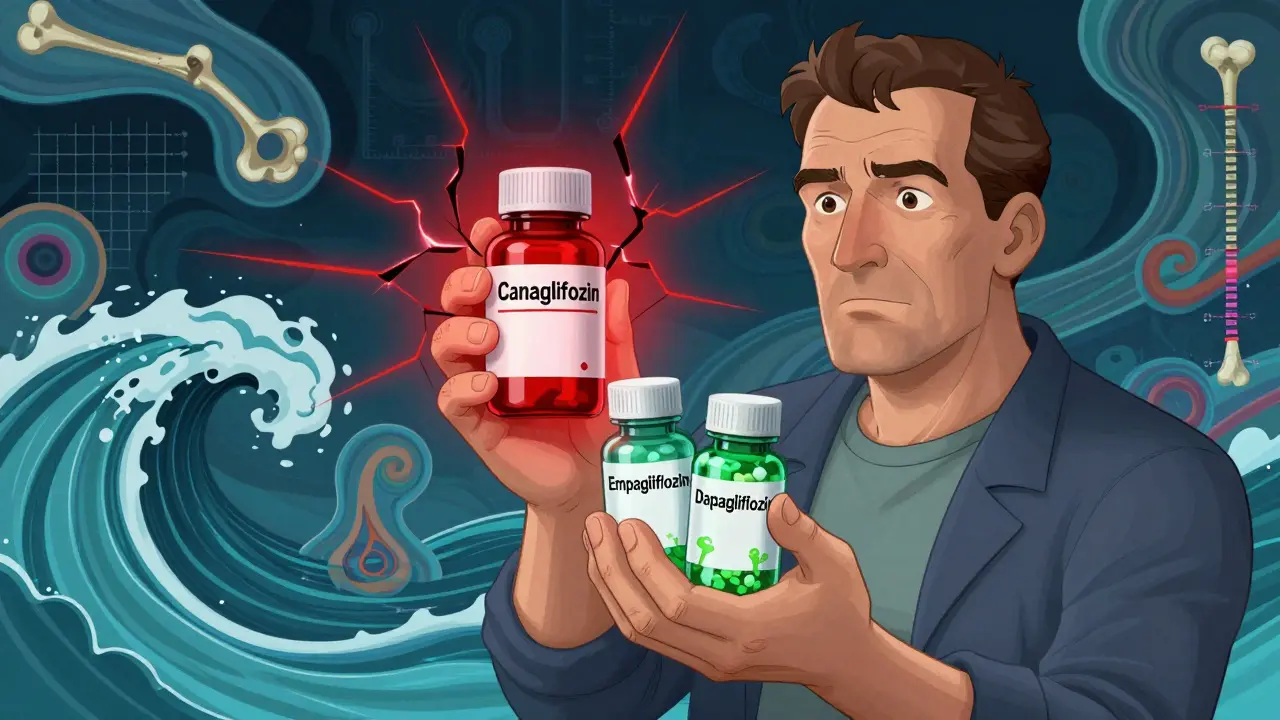
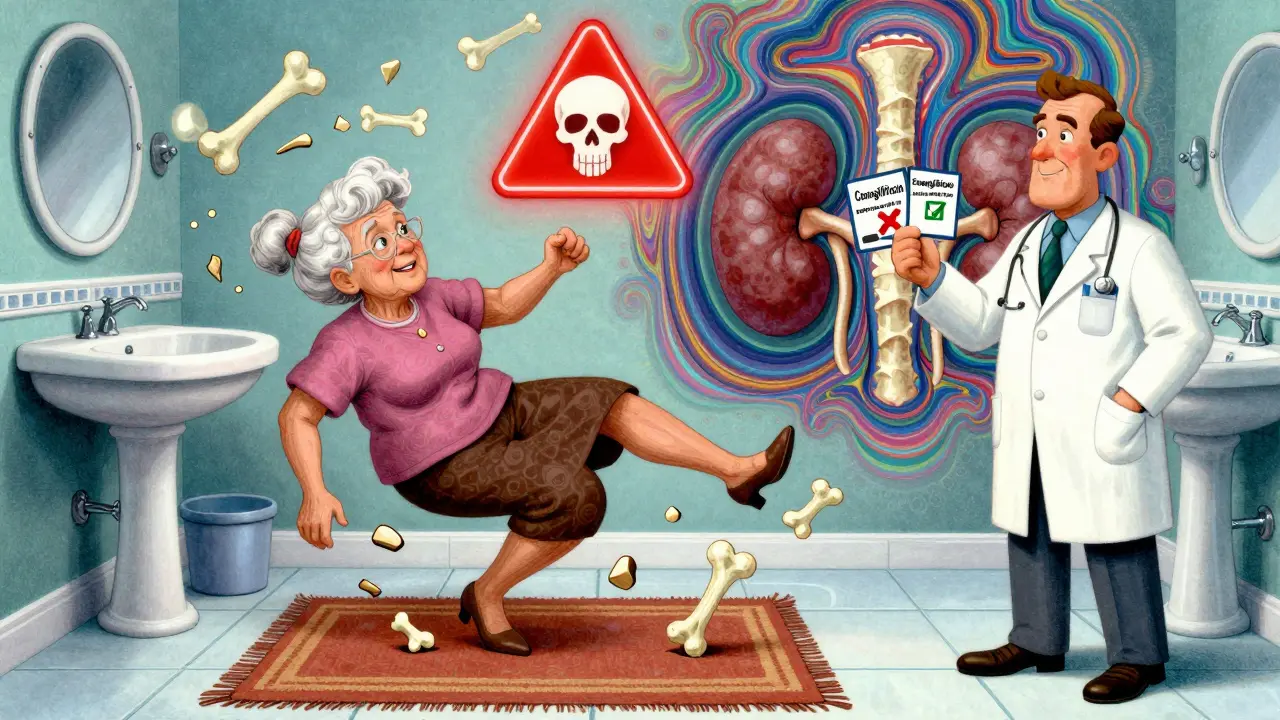
There are three main SGLT2 inhibitors used today: canagliflozin (Invokana), empagliflozin (Jardiance), and dapagliflozin (Farxiga). All of them work the same way - they stop the kidneys from reabsorbing sugar, so excess glucose leaves the body through urine. But when it comes to bone health, they don't act the same.Canagliflozin is the only one with a clear, FDA-mandated warning about fractures. In the CANVAS trial, people taking 300 mg of canagliflozin had 26% more fractures than those on placebo. Most of these were in the arm, hand, foot, or upper leg, and they happened after minor falls - like tripping over a rug or slipping in the shower. The risk showed up as early as 12 weeks after starting the drug.
Now look at empagliflozin and dapagliflozin. In the EMPA-REG OUTCOME and DECLARE-TIMI 58 trials - which together tracked over 18,000 patients - there was no increase in fracture risk. A 2023 meta-analysis of 27 studies involving nearly 21,000 people found the overall risk with SGLT2 inhibitors was essentially unchanged: a relative risk of 1.02. That’s not statistically different from zero. So if you're on empagliflozin or dapagliflozin, your fracture risk is likely no higher than if you were on any other diabetes drug.
Why Does Canagliflozin Pose a Risk?
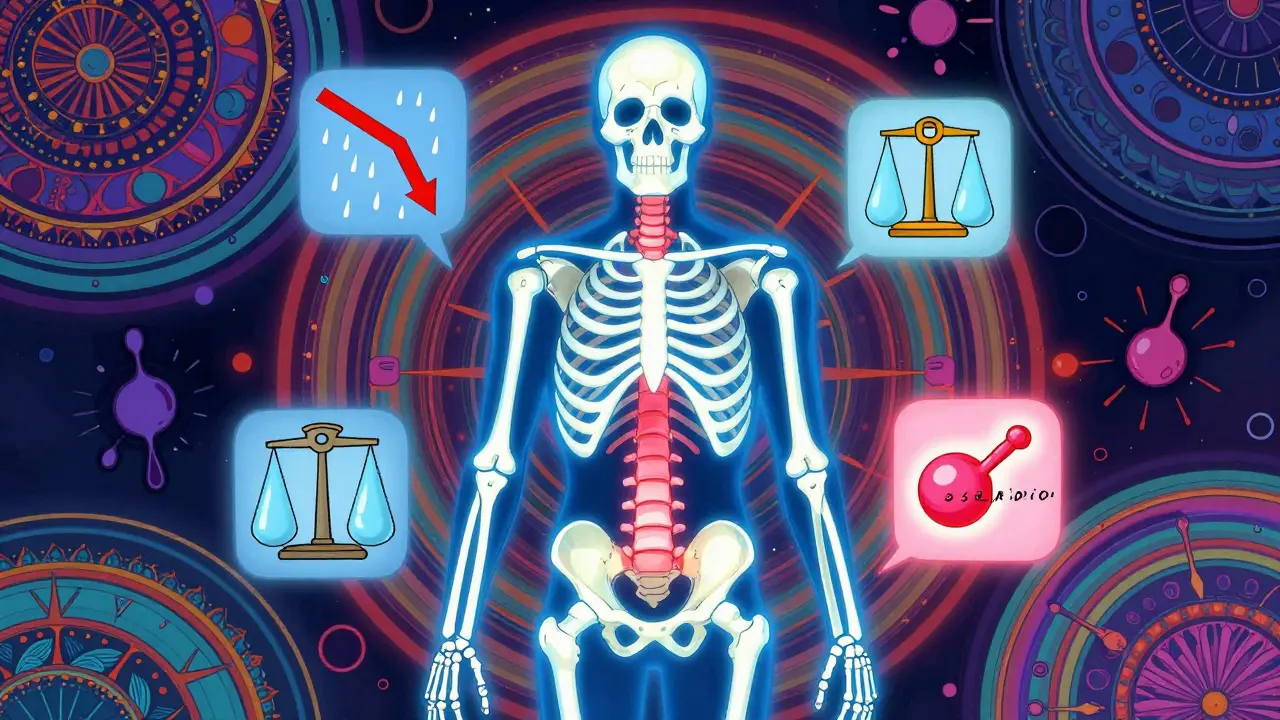
Scientists aren't sure exactly why canagliflozin stands out. But several clues point to a combination of factors:- Bone density loss: In a 2-year FDA-required study, people taking canagliflozin lost 0.92% of hip bone density and 1.04% from the spine. Placebo users lost only 0.24% and 0.44%. That’s not massive, but it’s real - and enough to matter in older adults.
- Weight loss: SGLT2 inhibitors typically cause a 2-4 kg weight drop. While that’s good for blood sugar, losing weight can reduce mechanical stress on bones, which may lead to lower bone formation. But studies show weight loss explains less than 3% of the bone density changes seen.
- Calcium and phosphate shifts: These drugs increase phosphate reabsorption in the kidneys. That triggers hormones like PTH and FGF23, which can pull calcium out of bone. It’s a subtle effect, but over time, it adds up.
- Hormonal changes: Women on canagliflozin 300 mg saw a 9.2% drop in estradiol - a hormone that helps keep bones strong. This didn’t happen with other SGLT2 inhibitors.
- Low blood pressure: About 1 in 100 people on canagliflozin get dizzy or lightheaded when standing up. That increases fall risk - and falls are what cause most fractures.
These factors don’t all show up with empagliflozin or dapagliflozin. That’s why the FDA only flagged canagliflozin - not the whole class.
Who Should Avoid Canagliflozin?
You don’t need to stop all SGLT2 inhibitors. But if you’re at high risk for fractures, you should be careful with canagliflozin.The American Association of Clinical Endocrinologists (AACE) and the American College of Endocrinology say: avoid canagliflozin if you have:
- A prior fracture (especially after age 50)
- Osteoporosis (T-score ≤ -2.5 on a DXA scan)
- Multiple risk factors: age over 70, long-term steroid use, low body weight, or history of falls
For these people, the risks outweigh the benefits. The American Geriatrics Society even lists canagliflozin as a "potentially inappropriate medication" for older adults with osteoporosis - a rare designation.
Empagliflozin and dapagliflozin? No such restrictions. If you're older, have weak bones, or are prone to falls, these are safer choices. In fact, some studies suggest they might carry equal or even lower fracture risk than GLP-1 agonists or DPP-4 inhibitors.
What Should You Do?
If you’re already on an SGLT2 inhibitor:- If you’re on canagliflozin and have no history of fractures or low bone density, you’re likely fine - but talk to your doctor about monitoring.
- If you’re on canagliflozin and have had a fracture, osteoporosis, or are over 70 - ask if switching to empagliflozin or dapagliflozin makes sense.
- If you’re on empagliflozin or dapagliflozin, don’t panic. There’s no strong evidence linking them to fractures.
If you’re considering starting one:
- Ask for a bone density scan (DXA) if you’re over 65, have had a fracture, or have other risk factors.
- Use the FRAX tool - it’s a free online calculator that estimates your 10-year fracture risk. The ADA now adds 0.5 points to your score if you’re prescribed canagliflozin. That’s a small bump, but it matters in borderline cases.
- Ask your doctor: "Which SGLT2 inhibitor are you recommending - and why?" Don’t assume they’re all the same.
Real-World Experience
A 2022 survey of 347 endocrinologists found that 68% adjust their prescriptions based on fracture risk. Of those, 82% avoid canagliflozin in patients with osteoporosis. Only 34% were cautious with dapagliflozin. That’s a big gap.On patient forums, 78% of people with diabetes expressed concern about fractures on SGLT2 inhibitors. But when you look at the data, most of those fears are tied to canagliflozin. In one clinic, 23 patients reported falls on canagliflozin versus just 7 on empagliflozin. That’s not random - it’s pattern.
Still, some doctors report no difference. Johns Hopkins tracked over 15,000 patients and found no statistically significant rise in fractures between SGLT2 types after adjusting for age and fall risk. So why the disconnect? It might be that most studies are too short. The average trial lasts 2-3 years. But fractures in older adults often happen after 5 or 10 years. We still need longer data.
What’s Changing Now?
The 2023 American Diabetes Association guidelines finally made it clear: "SGLT2 inhibitors as a class do not appear to increase fracture risk, though canagliflozin specifically has shown modest increases in some studies."The FDA hasn’t changed its label for empagliflozin or dapagliflozin since 2018. The European Medicines Agency still warns about bone effects across the whole class - but even they don’t single out any drug beyond canagliflozin.
Prescription trends tell the story. Between 2017 and 2022, canagliflozin use dropped 22% in the U.S. Empagliflozin and dapagliflozin rose by 38% and 42%. That’s not because they’re cheaper. It’s because doctors are choosing safer options.
And the next big update - the 2024 ADA/EASD consensus report - is expected to give even clearer guidance: algorithms for who should get a bone scan before starting any SGLT2 inhibitor.
Bottom Line
SGLT2 inhibitors are powerful tools. They save hearts and kidneys. But they’re not all equal when it comes to bones.Canagliflozin carries a small but real fracture risk - especially in older adults, those with low bone density, or anyone who’s fallen before. If you’re in that group, don’t take it. Switch to empagliflozin or dapagliflozin. They work just as well for blood sugar, heart health, and kidneys - without the bone risk.
For everyone else? You’re probably fine. But always ask: "Is this the right drug for my whole body?" Not just your blood sugar - your bones matter too.
Do all SGLT2 inhibitors increase fracture risk?
No. Only canagliflozin (Invokana) has been clearly linked to a higher fracture risk in clinical trials. Empagliflozin (Jardiance) and dapagliflozin (Farxiga) have not shown this risk in large studies, and current evidence suggests they are safe for bone health in most patients.
Should I stop taking canagliflozin if I’m over 65?
Not necessarily - but you should get evaluated. If you’ve had a fracture before, have osteoporosis, or are prone to falls, switching to empagliflozin or dapagliflozin is strongly recommended. If your bones are strong and you’ve never fallen, your doctor may decide to continue canagliflozin, especially if it’s helping your heart or kidneys.
Do I need a bone density scan before starting an SGLT2 inhibitor?
Yes, if you’re over 65, have a history of fracture, or have other risk factors like low body weight or long-term steroid use. The American College of Endocrinology recommends a DXA scan before starting canagliflozin. For empagliflozin or dapagliflozin, it’s not required unless you already have osteoporosis or other concerns.
Can SGLT2 inhibitors cause falls?
Yes - especially canagliflozin. These drugs can lower blood pressure, which may cause dizziness or lightheadedness when standing up. This increases the chance of falling, which is how most fractures happen. If you feel dizzy after starting an SGLT2 inhibitor, tell your doctor. Staying hydrated and standing up slowly can help.
Are there alternatives to SGLT2 inhibitors for people worried about bones?
Yes. GLP-1 receptor agonists (like semaglutide or liraglutide) and DPP-4 inhibitors (like sitagliptin) are good alternatives. They don’t carry the same bone risk. Metformin is still the first-line choice for most people. Your doctor can help you pick the safest option based on your heart, kidney, and bone health.
9 Comments
Robert Gilmore March 12, 2026 AT 20:14
I started on canagliflozin last year and had a weird fall last winter just stepping off the curb. Didn't think much of it until my doc brought up bone density. Got my DXA scan and low and behold - T-score of -2.8. Switched to empagliflozin and no more dizziness. My bones are thanking me now. Honestly never knew this was a thing until now.
Robert Gilmore March 14, 2026 AT 02:51
This is why you don't treat diabetes like a one-size-fits-all spreadsheet. Canagliflozin is a liability wrapped in a marketing brochure. Empa and Dapa? Clean. Safe. Effective. If your doc pushes cana without checking your bone history, find a new doc. Period.
Robert Gilmore March 15, 2026 AT 18:46
Interesting read. I'm on dapagliflozin and have osteopenia. My endo said it's fine since it's not cana. Still, I'm getting annual scans now. Better safe than sorry, right? Also, I'm 72 and have fallen twice before. Just saying.
Robert Gilmore March 17, 2026 AT 11:18
OMG I KNEW IT 😤 I told my doctor last year that canagliflozin was sketchy and she acted like I was some conspiracy nut. Now the data's out and guess what? I was RIGHT. 🙌 Also, why are we still using drugs with FDA warnings? I mean... really? 🤦♀️
Robert Gilmore March 18, 2026 AT 04:03
So let me get this straight... we have three drugs that do the same thing, but one of them turns your bones into stale crackers? And the rest of the medical community is acting like this is a surprise? 😂 Bro, we've been screaming about this since 2017. The real scandal is that we didn't act sooner.
Robert Gilmore March 18, 2026 AT 17:19
As a primary care provider, I appreciate the clarity in this post. I now routinely order DXA scans for patients over 65 before initiating any SGLT2 inhibitor. The data is clear: canagliflozin carries a measurable risk. Empagliflozin and dapagliflozin do not. I recommend discussing this as part of the shared decision-making process. Patient safety must come first.
Robert Gilmore March 20, 2026 AT 01:24
I'm on Jardiance and I'm 69 and had a hip fracture at 62... so I'm extra careful... I do yoga... I take vitamin D... I drink water... I stand up slow... I don't trust canagliflozin... ever...
Robert Gilmore March 21, 2026 AT 06:37
I'm not buying this. The FDA only flagged cana because Big Pharma paid them off. Look at the studies - they're all funded by the same companies. Empa and Dapa are just the same drug with a different label. I'm switching to metformin and drinking apple cider vinegar. That's what my grandma did and she lived to 98.
Robert Gilmore March 22, 2026 AT 17:41
Katherine, your grandma didn't have SGLT2 inhibitors because they didn't exist. That's not a rebuttal, that's nostalgia. If you want to live longer, stop trusting TikTok and start trusting peer-reviewed meta-analyses.