Imagine waking up feeling like you haven't slept a single minute, despite being in bed for eight hours. For millions, this isn't just a bad night; it's the daily reality of Obstructive Sleep Apnea a chronic respiratory disorder where the upper airway repeatedly collapses during sleep, causing intermittent drops in blood oxygen levels. While it might seem like a simple snoring problem, left untreated, it can lead to severe cardiovascular strain or even full-blown respiratory failure. The good news is that we have incredibly effective tools to fight this, but choosing between a machine that pushes air and one that provides extra oxygen is where things get confusing.
| Feature | CPAP Therapy | Oxygen Therapy |
|---|---|---|
| Primary Goal | Keep the airway open (Pneumatic Splinting) | Increase blood oxygen levels (Treat Hypoxemia) |
| Mechanism | Pressurized air prevents throat collapse | Supplies concentrated oxygen to the lungs |
| Effect on Airway | Physically holds the airway open | Does not stop the airway from closing |
| Main Use Case | Moderate to Severe OSA | Chronic lung disease or severe hypoxemia |
Why Your Airway Collapses and What It Does to Your Body
When you have OSA, your throat muscles relax too much during sleep, effectively acting like a closing door. Every time this happens, your brain panics because it isn't getting oxygen. You don't wake up fully, but your body jolts you just enough to take a breath. This "sleep fragmentation" means you never hit those deep, restorative stages of REM sleep.
Over time, these repeated drops in oxygen put a massive load on your heart. In fact, using CPAP Continuous Positive Airway Pressure, a device that delivers a steady stream of pressurized air to keep the upper airway open has been shown to reduce systolic blood pressure by 2.5 to 5.0 mmHg. For those with heart failure, it can even improve the heart's pumping efficiency-specifically the left ventricular ejection fraction-by about 4-6%.
CPAP Therapy: The Gold Standard for a Reason
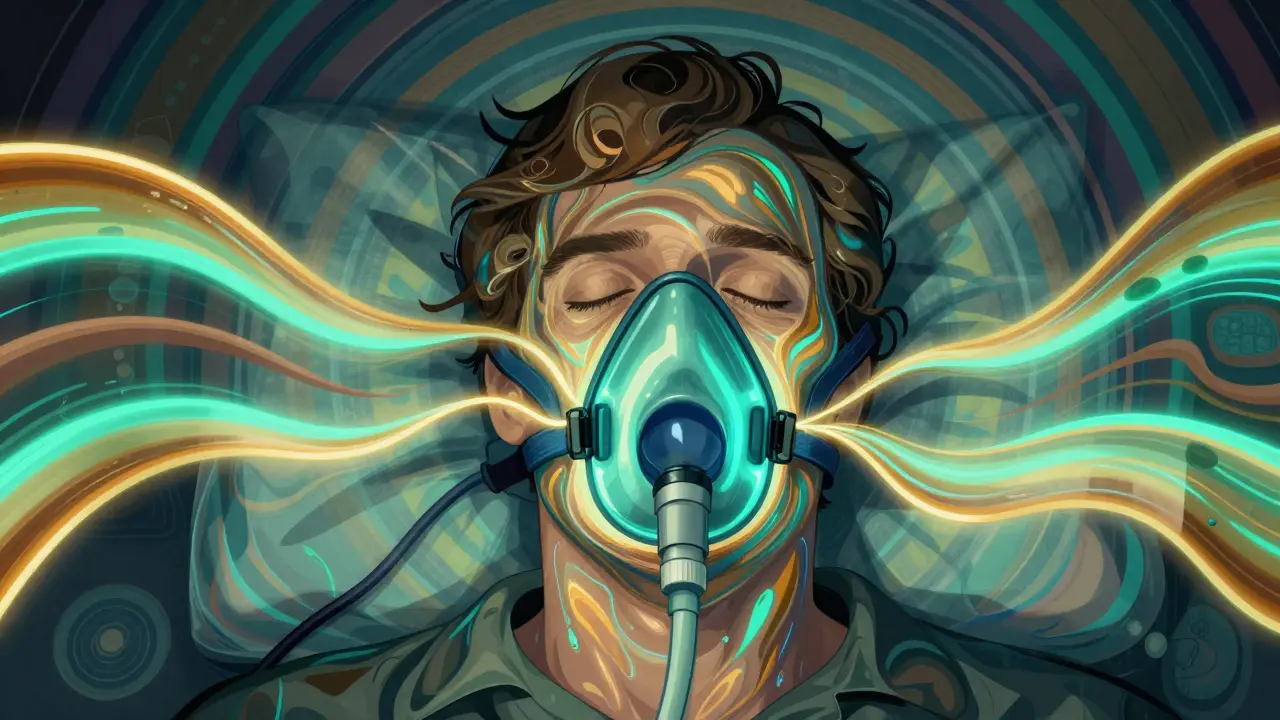
Since its introduction in 1981, CPAP has revolutionized how we treat sleep disorders. It works through a process called "pneumatic splinting." Essentially, the machine acts like an invisible wall of air that keeps your throat from collapsing.
Not all machines are the same, and the one you use depends on how your body reacts to pressure:
- Fixed CPAP: Delivers one steady pressure level. Great for simple OSA.
- BiPAP Bilevel Positive Airway Pressure, which provides higher pressure during inhalation and lower pressure during exhalation: This is a lifesaver for people who find it hard to breathe out against a constant stream of air or those who need pressures higher than 15 cm H2O.
- APAP Auto-titrating PAP, which adjusts pressure in real-time based on your breathing patterns: Perfect for people whose apnea varies throughout the night.
The real challenge isn't the technology-it's the habit. While CPAP eliminates respiratory events in 90% of users, adherence varies wildly. Some people find the mask claustrophobic or the air too dry. This is why heated humidification is such a game-changer; it makes the air feel natural and prevents that "desert throat" feeling in the morning.
When Oxygen Therapy Is Necessary
There is a common misconception that oxygen therapy can replace CPAP. It cannot. Oxygen therapy treats the result of the collapse (low blood oxygen), but it doesn't fix the cause (the blocked airway). If you use oxygen without CPAP while having OSA, you are essentially putting high-quality fuel into an engine that has a blocked exhaust pipe.
However, oxygen is critical in cases of Respiratory Failure A condition where the respiratory system fails in one or both of its basic functions: the exchange of oxygen and carbon dioxide. In acute settings, doctors use Non-Invasive Ventilation (NIV) to normalize pH levels and clear carbon dioxide from the blood. In chronic cases, supplemental oxygen prevents organ damage caused by long-term hypoxia.
Comparing Alternatives: Is There Something Better Than a Mask?
If you absolutely cannot tolerate a mask, you have a few options, though they aren't as powerful as CPAP. Mandibular Advancement Devices (MADs) Dental appliances that shift the lower jaw forward to keep the airway open are popular because they are discreet. While they have higher adherence rates (70% vs 50% for CPAP), they only reduce the number of apnea events by about 50%, whereas CPAP can almost eliminate them entirely.
For those with Central Sleep Apnea A type of apnea where the brain fails to send the signal to the muscles to breathe, rather than a physical blockage, Adaptive Servo-Ventilation (ASV) is the heavy hitter. It's far more effective than standard CPAP for central events, though it's dangerous for people with severe heart failure.
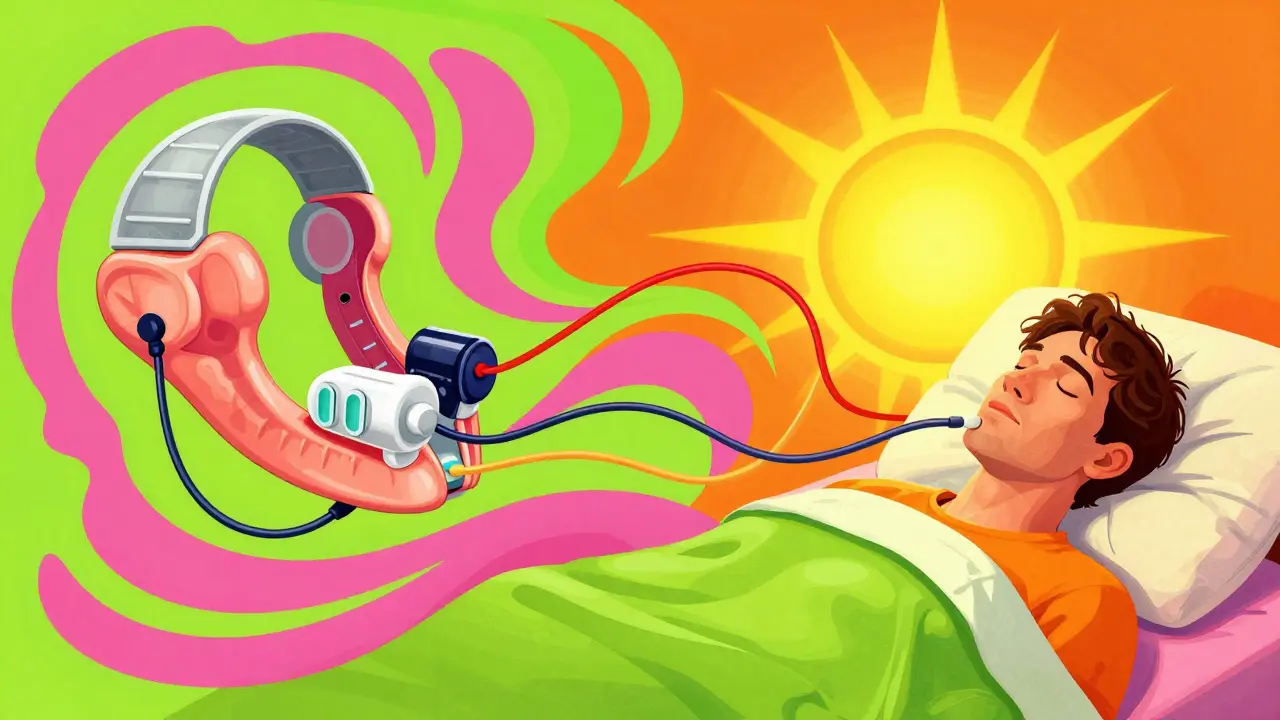
The newest frontier is the Hypoglossal Nerve Stimulator. This is a surgically implanted device that stimulates the tongue muscle to keep the airway open. Recent trials show a staggering 79% adherence rate at 12 months, far outperforming the traditional mask-and-hose setup.
Pro Tips for Mastering Your CPAP Journey
Starting CPAP therapy can feel like learning to walk again. You'll likely face a few "fail" nights where the mask leaks or you feel overwhelmed. Here is how to get past the hump:
- The Gradual Approach: Don't try to sleep 8 hours with the mask on the first night. Wear it while watching TV or reading for an hour to desensitize your brain to the feeling.
- Fight the Leaks: If air is escaping from your mouth, a chin strap is a simple, low-tech fix that solves the problem for nearly half of users.
- Get a Professional Fit: Using telemedicine for setup is convenient, but getting an in-person fitting increases 6-month adherence from 46% to 78%. A professional can spot a mask leak that you might just ignore until you give up on the machine.
- Use Telemonitoring: Modern devices often link to apps (like ResMed's AirView). This allows your doctor to tweak your pressure settings remotely, meaning fewer trips to the clinic and faster results.
Can I just use a nasal oxygen cannula instead of a CPAP machine?
No, if you have Obstructive Sleep Apnea. Oxygen does not provide the pressure needed to keep your airway open. While it might raise your oxygen levels, it doesn't stop the repeated collapses and jolts that ruin your sleep and strain your heart. You need CPAP to fix the blockage; oxygen is only a supplement for those with additional lung issues.
What is a "normal" amount of CPAP use per night?
Clinical standards generally define optimal adherence as using the device for more than 4 hours per night on at least 70% of your nights. However, the most important metric is how you feel. If you're still exhausted, your pressure settings may need adjustment regardless of how many hours you use the machine.
Why do some people prefer BiPAP over standard CPAP?
BiPAP is easier for people who struggle to exhale against the constant pressure of a CPAP. It provides a higher pressure when you breathe in and drops that pressure when you breathe out. It's also essential for patients with certain types of respiratory failure or those who require very high pressure levels to keep their airway open.
Is CPAP safe for long-term use?
Yes, CPAP is generally very safe and is the gold standard for treating OSA. The primary risks are minor, such as nasal dryness or skin irritation from the mask. It is far safer than the alternative-untreated sleep apnea-which significantly increases the risk of stroke, heart attack, and Type 2 diabetes.
What should I do if I keep waking up because the mask feels claustrophobic?
First, try a different interface. Many people who hate full-face masks find nasal pillows or nasal masks much more tolerable. Second, ensure your straps aren't too tight; a common mistake is over-tightening the mask to stop leaks, which actually increases the feeling of claustrophobia. Lastly, talk to your provider about an APAP machine, which can lower pressure when you don't need it, making it feel less aggressive.
Next Steps for Better Sleep
If you suspect you have sleep apnea, the first step is a sleep study (polysomnography) to determine if your apnea is obstructive or central. Once diagnosed, don't just accept a machine and hope for the best. Demand a proper mask fitting and a follow-up schedule. If you find yourself struggling with adherence after 30 days, ask your doctor about the hypoglossal nerve stimulator or a MAD device. The goal isn't just to use a machine-it's to get your life and your energy back.