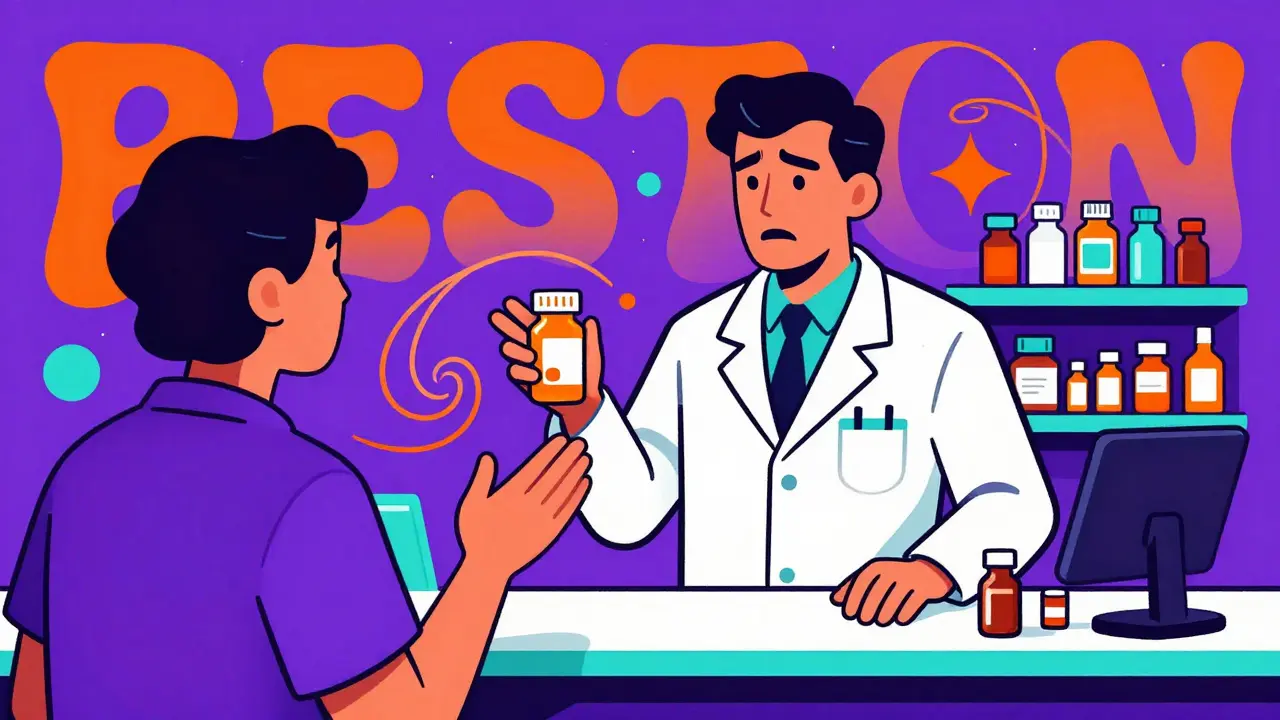
Imagine a patient comes back to your counter complaining that their new generic blood pressure medication just isn't working, even though they've been consistent with their doses. You've seen three other patients this week mentioning the same thing with the same manufacturer's lot. Is this a coincidence, or are you looking at a systemic product failure? This is where the generic drug reporting process becomes a critical line of defense in patient safety.
While many think the FDA handles everything through clinical trials, the reality is that real-world evidence is the only way to catch subtle issues. Pharmacists are the primary gatekeepers of this data, yet there is a massive gap between seeing a problem and reporting it. Despite dispensing billions of prescriptions, pharmacists contribute less than 3% of reports to the FDA's database. It's time to bridge that gap.
The Professional Obligation vs. Legal Mandate
Here is the confusing part: in the United States, there is no federal law that forces a pharmacist to report an adverse event. You won't lose your federal license for skipping a MedWatch form. However, professional ethics tell a different story. The American Society of Health-System Pharmacists (ASHP) views safety monitoring as a fundamental professional responsibility. If you spot a trend of failures, ignoring it could be seen as a failure in your standard of care.
Some states are taking this more seriously than the federal government. For instance, the California State Board of Pharmacy requires pharmacists to maintain a system for documenting and reporting therapeutic failures. In states like New York and Massachusetts, reporting serious adverse events has moved from "suggested" to mandatory. If you practice in these areas, reporting isn't just a good idea-it's a regulatory requirement.
Spotting Therapeutic Inequivalence
Not every drug problem is a "side effect." One of the most critical issues pharmacists report is therapeutic inequivalence. This happens when a generic drug meets the technical bioequivalence standards during the approval process but fails to produce the same clinical effect in a real patient.
How do you spot it? Look for patients who were stable on a brand-name drug or one generic manufacturer but experience a loss of control after switching to a different generic. For example, a patient with epilepsy who suddenly has breakthrough seizures after a pharmacy switch is a classic red flag. These reports are gold for the FDA because they provide evidence that the abbreviated new drug application (ANDA) process might have missed a nuance in how the drug behaves in the human body.
| Category | Examples | Reporting Urgency |
|---|---|---|
| Serious ADEs | Death, life-threatening reactions, hospitalization, permanent disability | Within 15 calendar days |
| Non-Serious ADEs | Unexpected mild rashes, slight decrease in efficacy, unusual taste | As soon as possible |
| Product Issues | Crumbled tablets, missing inserts, incorrect labeling, therapeutic failure | Immediately upon discovery |

How to File an Accurate Report
A common frustration for pharmacists is that their reports get rejected for being too vague. If you simply write "patient had a reaction," the FDA can't do anything with that. To make your report actionable, you need four specific pieces of data:
- An identifiable patient: You don't need to provide their full social security number, but you need enough to confirm they are a real person.
- A suspect drug: This must include the National Drug Code (NDC). This is the only way the FDA can trace the problem back to a specific manufacturer and lot.
- The adverse event: Be specific. Instead of "felt sick," use "experienced tachycardia and acute vertigo within 2 hours of dose."
- An identifiable reporter: Your contact information so the FDA can follow up for more details.
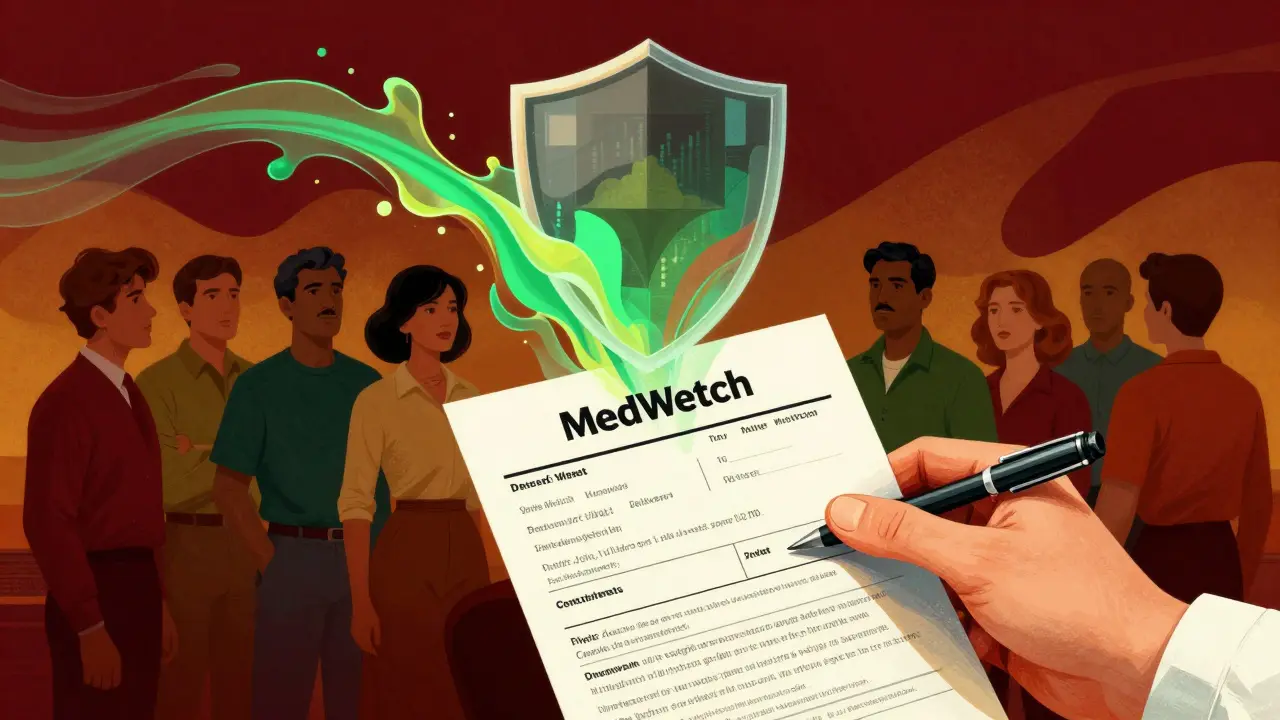
Use the MedWatch Form 3500 (version 4.1). When filling it out, don't stress over whether you are 100% sure the drug caused the event. The FDA explicitly states that you should report a suspicion of causality, even if you aren't certain. Your report is a piece of a larger puzzle; the FDA's job is to see if your piece matches others in the FDA Adverse Event Reporting System (FAERS).
Common Barriers and How to Overcome Them
Let's be honest: you're busy. Many pharmacists cite a lack of time as the primary reason they don't report. But consider the cost of not reporting. If a specific lot of a generic medication is sub-potent, and you don't report it, hundreds of other patients may suffer before the manufacturer notices.
Another hurdle is the "attribution problem." Because of the 1984 Hatch-Waxman Amendments, generic labels must be identical to the brand name. This means if a patient tells you their "Lipitor」 is causing an issue, but they are actually taking a generic version, the report often gets filed under the brand name by mistake. Always double-check the actual bottle the patient is holding, not just the name of the medication on the prescription.
If you're unsure if an event meets the criteria, use the MedWatch online portal. The updated version 3.2 includes a specific "generic drug concern" category. This makes it much easier to flag issues specifically related to manufacturing quality or labeling discrepancies rather than just clinical side effects.
The Impact of Your Reports
Do these reports actually change anything? Yes. The FDA's Office of Generic Drugs maintains a Therapeutic Equivalence Working Group specifically to analyze these reports. In 2022 alone, pharmacist-submitted data led to the additional review of 147 generic products. This resulted in 12 official communications sent to healthcare providers warning them about potential issues.
When you report, you aren't just filling out paperwork; you're providing real-world evidence. Clinical trials are controlled and sterile; the pharmacy counter is where the real-world performance of a drug is tested. Your observations help the FDA identify safety signals that would otherwise remain invisible until a major crisis occurs.
Is it mandatory for me to report generic drug problems to the FDA?
At the federal level, reporting through MedWatch is voluntary for healthcare professionals. However, some state boards of pharmacy (such as California) have stricter standards of care that may require you to have a system for documenting and reporting therapeutic failures.
What is the difference between a side effect and therapeutic inequivalence?
A side effect is an unintended reaction to the drug's active ingredients. Therapeutic inequivalence occurs when the generic drug fails to produce the expected clinical effect, even if the patient is taking the correct dose, suggesting the drug is not performing the same as the brand-name version.
What specific information do I need for a MedWatch report to be useful?
You must provide the National Drug Code (NDC), the manufacturer's name, the lot number, a description of the adverse event, and the identity of the patient and reporter. Vague reports like "patient was injured" are generally not useful for FDA investigations.
How long do I have to report a serious adverse event?
Serious adverse events-those that are fatal, life-threatening, or require hospitalization-should be submitted within 15 calendar days of the initial receipt of information.
Can I report a problem if I'm not sure the drug caused the event?
Yes. The FDA encourages reporting even when you are not certain about causality. These reports help the FDA identify patterns across thousands of patients that a single pharmacist might not see.
Next Steps for Your Pharmacy
If you want to improve your pharmacy's safety profile, start by auditing your current process. Do you have a dedicated log for patient complaints about efficacy? Does your staff know where to find the MedWatch portal?
For community pharmacies, consider integrating adverse event reporting into your monthly clinical review. If you're a consultant pharmacist in a long-term care setting, be extra vigilant with medication switches, as the elderly are often more sensitive to subtle differences in generic formulations. By turning these observations into formal reports, you move from being a dispenser of medication to a guardian of public health.