Fentanyl Patch Safety Assessment Tool
This tool helps you understand your personal risk level when using fentanyl patches. Based on your medical history and usage patterns, it provides tailored safety recommendations.
Using a fentanyl patch might seem simple-stick it on your skin, and it delivers pain relief for days. But this isn’t like taking a pill. Fentanyl patches are one of the strongest pain medications available, and the risks don’t wait until you make a mistake. They’re built into how the drug works.
What Makes Fentanyl Patches So Dangerous?
Fentanyl is 50 to 100 times stronger than morphine. A patch meant for someone with years of chronic pain can kill someone who’s never taken opioids before. The FDA reports 32 pediatric deaths between 1997 and 2012 from accidental exposure to used or unused patches. Kids found a patch in a drawer, stuck it on their skin, and stopped breathing within hours.
These patches aren’t designed for occasional use. They’re meant for people who already take daily opioids and need steady, around-the-clock pain control. If you’ve never taken opioids before, or if you’re using it for sudden pain like after surgery, you’re at extreme risk. The patch releases fentanyl slowly over 72 hours. That’s good for pain management-but deadly if your body isn’t used to it.
Overdose: The Silent Killer
Overdose from a fentanyl patch doesn’t always look like a drug user collapsing. It’s quieter. Slower. More deceptive.
Symptoms include:
- Shallow or slow breathing
- Unusual snoring or gurgling sounds
- Extreme drowsiness-you can’t wake the person up
- Cold, clammy, or blue-tinged skin
- Pinpoint pupils
- Limp muscles, weak pulse
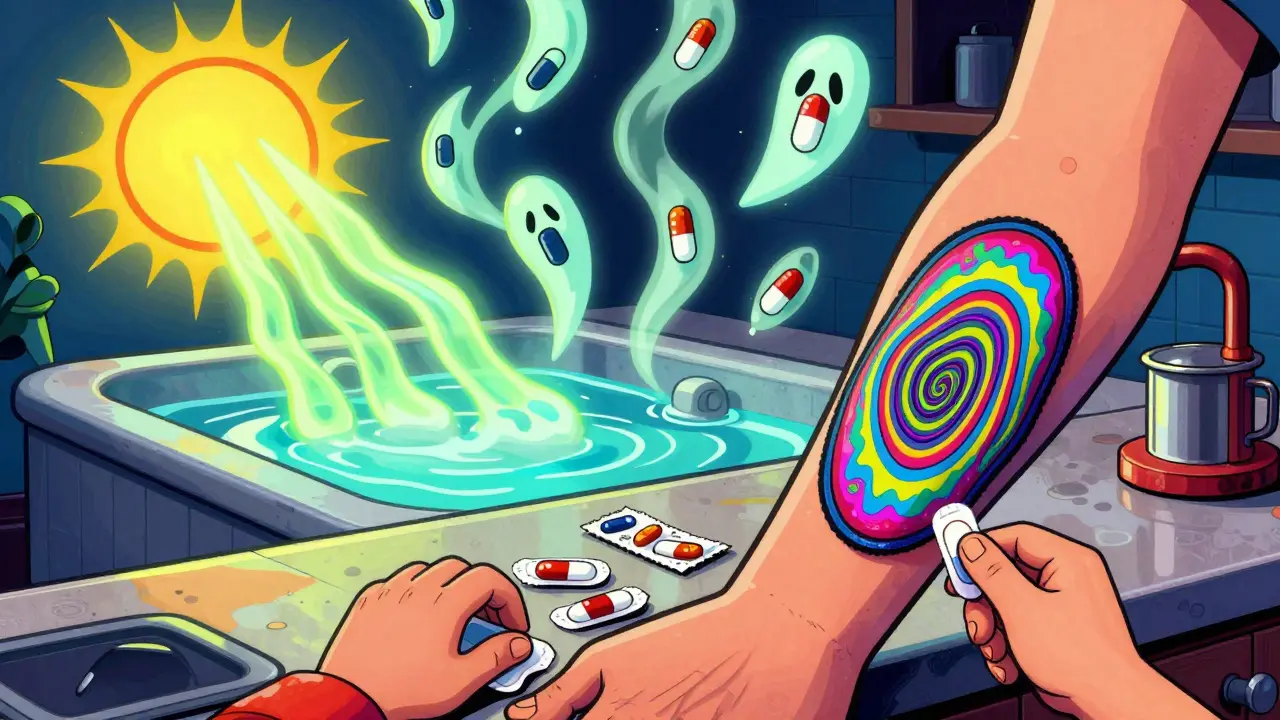
Here’s what makes it worse: heat. A hot shower, a heating pad, a fever-even sitting in the sun too long-can cause your body to absorb fentanyl faster. That’s not a myth. The FDA warned about this in 2013. People have died because they wore the patch while soaking in a hot tub or sleeping under a heated blanket.
If you suspect an overdose, remove the patch immediately. Call 911. Give naloxone (Narcan) if you have it. Naloxone reverses opioid overdoses. The FDA now recommends that anyone prescribed a fentanyl patch also get naloxone on file. It’s not optional. It’s life-saving.
Withdrawal: When Stopping Becomes a Crisis
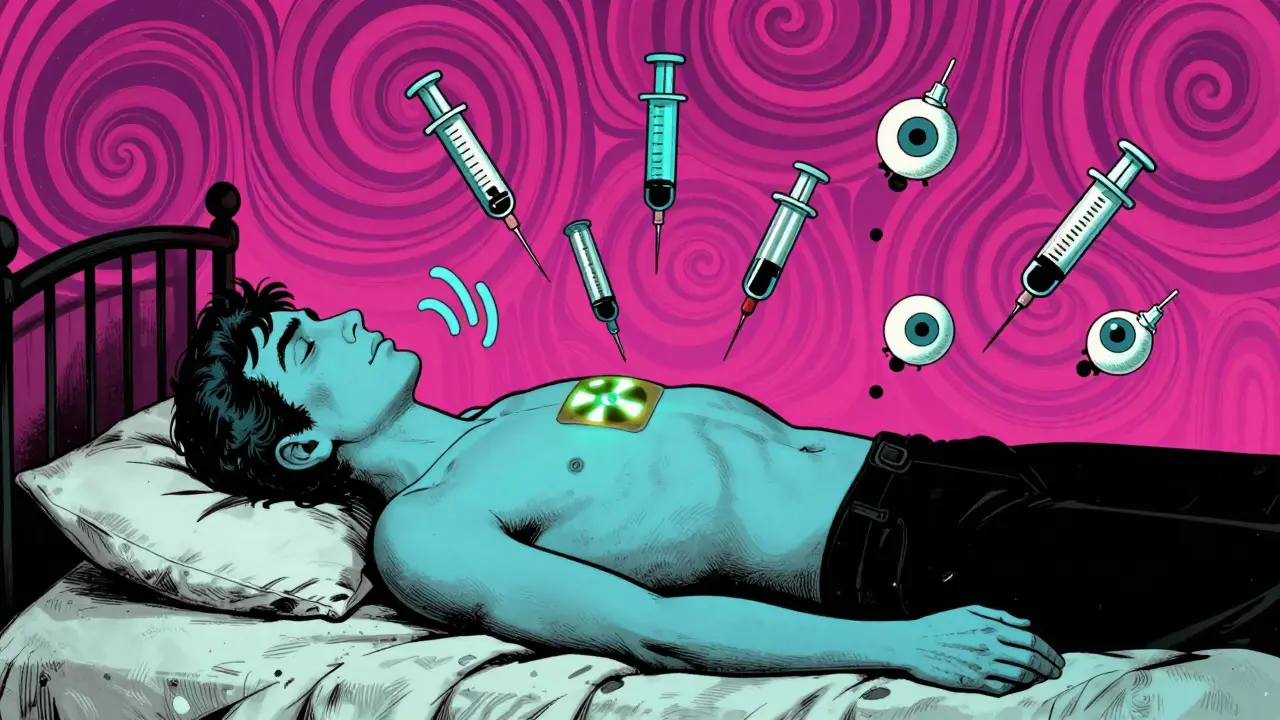
Stopping a fentanyl patch suddenly isn’t like quitting coffee. It’s like pulling the plug on your nervous system after months of constant stimulation.
Withdrawal symptoms start 8 to 24 hours after your last patch. They peak around 3 days and can last up to 10 days-sometimes longer. Symptoms include:
- Severe anxiety and agitation
- Profuse sweating and chills
- Stomach cramps, vomiting, diarrhea
- Insomnia and restlessness
- Rapid heartbeat, high blood pressure
- Uncontrollable muscle aches
- Depression and suicidal thoughts
The EMA and FDA both warn that abrupt discontinuation can trigger life-threatening complications. Dehydration from vomiting and diarrhea can spike sodium levels in the blood. That can lead to seizures or heart failure. And here’s the cruel twist: after you’ve gone through withdrawal, your tolerance drops. If you relapse-even with a small dose-you can overdose and die. Johns Hopkins found that 37% of fatal fentanyl overdoses happened in people who had recently stopped using.
How to Stop Safely
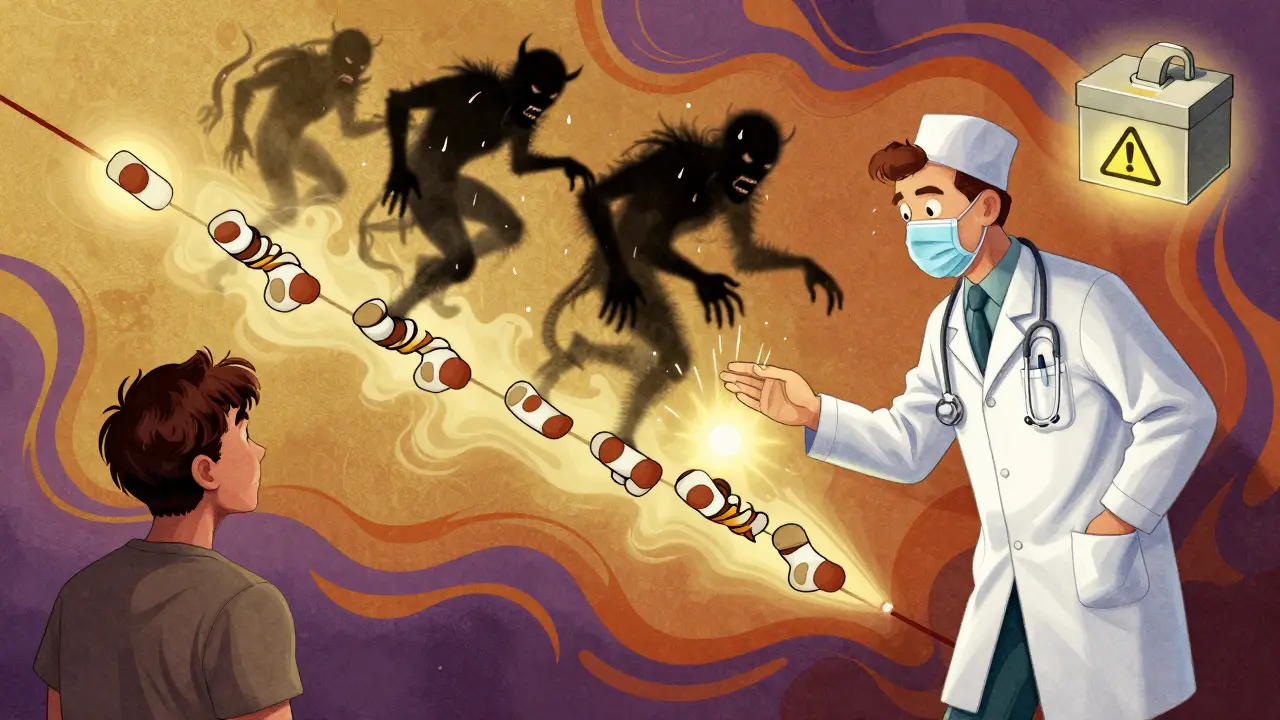
You don’t just quit. You taper. Slowly. Under medical supervision.
Doctors typically reduce the dose by 10% to 25% every 1 to 3 weeks. If you’ve been on a high dose for months, tapering can take weeks or even months. The goal isn’t speed-it’s safety. Rushing the process risks severe withdrawal, uncontrolled pain, and relapse.
Never adjust your patch dose yourself. Never skip appointments. The prescription isn’t refillable for a reason. Your doctor needs to check your pain levels, your mental health, and your risk of misuse. If you’re running low, call ahead. Don’t wait until you’re out.
What You Must Do Every Day
Using a fentanyl patch isn’t just about sticking it on. It’s about constant vigilance.
- Apply only to clean, dry, intact skin. No cuts, rashes, or burns. Heat from a burn can increase absorption.
- Avoid heat sources. No hot tubs, saunas, heating pads, or sunbathing while wearing the patch.
- Store patches safely. Keep them locked up. Out of reach of children, pets, and visitors. Used patches still contain 80% of the drug. Fold the sticky sides together before throwing them away-never flush them.
- Inform all healthcare providers. Tell your dentist, surgeon, or ER doctor you’re on a fentanyl patch. It interacts with anesthesia, sedatives, and even some antibiotics.
- Keep naloxone on hand. Teach family members how to use it. Keep it in your wallet, your car, your purse.
Why Are Prescriptions Dropping?
In 2016, over 4.8 million fentanyl patch prescriptions were filled in the U.S. By 2022, that number had dropped to 2.8 million. Why? Because doctors are learning.
The CDC now says fentanyl patches should only be used if you’re already opioid-tolerant-meaning you’ve been taking at least 60 mg of morphine daily for a week or longer. Most doctors now consider them a last resort. A 2023 survey found 78% of physicians only prescribe them after trying everything else: physical therapy, nerve blocks, non-opioid meds, injections.
The FDA’s Risk Evaluation and Mitigation Strategy (REMS), launched in 2012, requires prescribers to get certified. They must educate patients on overdose and withdrawal risks. That’s changed practice. But it’s not enough. Many patients still don’t understand the danger.
What’s Next?
Researchers are working on safer patches. Two clinical trials are testing new designs that reduce accidental exposure-like patches that shut off if they get too warm, or that release less drug if peeled off. These aren’t on the market yet, but they’re coming.
For now, the message is clear: fentanyl patches are powerful tools for chronic pain-but they’re not toys. They’re not backups. They’re not for occasional use. If you’re on one, treat it like a loaded gun. Store it right. Use it right. Stop it right.
If you or someone you know is struggling to stop, reach out. Withdrawal is hard. But you don’t have to do it alone. Medical help exists. Naloxone saves lives. Tapering works. And you’re not weak for needing help.
Can you die from stopping a fentanyl patch cold turkey?
Yes, stopping suddenly can lead to severe withdrawal symptoms like high blood pressure, rapid heart rate, vomiting, and dehydration. In extreme cases, this can cause heart failure or seizures. While withdrawal isn’t usually directly fatal like an overdose, the complications can be life-threatening without medical care.
How long does a fentanyl patch stay in your system?
The patch delivers fentanyl for 72 hours, but the drug can be detected in your system for up to 3 days after removal. For heavy, long-term users, traces may show up in urine tests for a week or more. The effects on your brain and nervous system, however, can last weeks as your body readjusts.
Can you use a fentanyl patch for breakthrough pain?
No. Fentanyl patches are designed for constant, around-the-clock pain. They take 12 to 24 hours to reach full effect and last 72 hours. Using them for sudden pain spikes is dangerous and ineffective. Breakthrough pain should be managed with fast-acting opioids prescribed separately.
Is it safe to cut a fentanyl patch in half to lower the dose?
Never cut or alter a fentanyl patch. Cutting it can damage the drug reservoir and cause a sudden, dangerous release of fentanyl. This has led to fatal overdoses. If you need a lower dose, your doctor must prescribe a different strength.
Can children be affected by a used fentanyl patch?
Yes. Even after 72 hours, a used patch still contains 80% of its original fentanyl. If a child finds and sticks it on their skin, they can overdose and die within hours. Always fold the sticky sides together and dispose of used patches in a sealed container out of reach.
What should I do if I miss a patch change?
If you miss a patch change by less than 12 hours, apply the new one as soon as you remember. If it’s been longer than 12 hours, skip the missed dose and apply the next one at your regular time. Never apply two patches to make up for a missed one. Contact your doctor if you miss more than one dose.
13 Comments
Robert Gilmore December 20, 2025 AT 21:37
Fentanyl patches aren't a cure-they're a last-resort weapon, and most people treat them like a coffee mug. If you're not already opioid-tolerant, you're not a patient-you're a statistic waiting to happen.
Robert Gilmore December 21, 2025 AT 05:58
Let’s be real: the FDA’s 2013 heat warning should’ve been front-page news, not buried in a footnote. I’ve seen ER docs miss it-patients come in with a patch still on after a hot shower, pulse at 40, and everyone acts shocked. It’s not negligence-it’s systemic ignorance. The patch’s bioavailability spikes 25–50% under heat. That’s not anecdotal; it’s pharmacokinetic fact. And yet, we still hand these out like Band-Aids.
And don’t get me started on disposal. Folding the sticky sides? Most patients don’t even know the patch still holds 80% of the drug. I’ve seen toddlers find them in trash cans. We need childproof packaging with time-release deactivation. Not just a ‘fold it’ suggestion.
Also, naloxone access is still a joke. If you’re prescribed this, you should get two doses with it-free, no script, no questions. And train the whole household. My cousin’s neighbor died because his wife didn’t know how to use Narcan. She thought it was for allergies.
The tapering protocols? Still too aggressive. 10–25% every 1–3 weeks? That’s fine for a 50 mcg/hour patch, but for someone on 100 mcg/hour for 5 years? That’s a death sentence without adjunct meds like clonidine, gabapentin, and low-dose naltrexone. We’re still treating this like a moral failure, not a neurochemical recalibration.
And yes-cutting the patch? That’s how people die. The reservoir isn’t evenly distributed. You think you’re halving the dose? You’re triggering a bolus. One patient I knew lost his brother that way. The patch was ‘accidentally’ sliced with scissors. No warning label was strong enough.
Doctors still don’t get it. They think ‘opioid-tolerant’ means ‘been on oxycodone for a year.’ No. It means 60 mg morphine equivalents daily for seven days minimum. That’s not common. That’s rare. And yet, we still see prescriptions for post-op patients. It’s not just dangerous-it’s criminal.
And the new patches with thermal shut-off? Long overdue. We’ve had the tech for a decade. Why is it still in trials? Profit. The pharma lobby doesn’t want safer patches. They want compliance. And compliance means more deaths. More lawsuits. More revenue.
Until we treat this like the nuclear material it is-locked, monitored, and regulated like fentanyl itself-we’re just rearranging deck chairs on the Titanic.
Robert Gilmore December 22, 2025 AT 07:58
So let me get this straight-some guy in California gets a patch for back pain, then takes a hot shower and dies? And now we’re blaming the system? Newsflash: if you’re dumb enough to stick a drug designed to kill a horse on your skin and then jump in a sauna, you deserve what you get. This is why America’s getting weaker. We protect people from their own stupidity until they die.
And now we want to give Narcan to everyone? Like it’s candy? Next they’ll hand out defibrillators at the mall because someone passed out from eating too much pie.
Stop coddling. Stop overregulating. If you can’t handle a patch, don’t take it. Simple. Not everyone needs a babysitter.
Robert Gilmore December 23, 2025 AT 19:46
My uncle died from this. He was on it for 3 years. Stopped cold turkey because his insurance dropped coverage. Took 3 days to die. No one told him it was dangerous. No one told him to taper. He just… stopped. I’m not mad. I’m just done pretending this system works.
Robert Gilmore December 25, 2025 AT 04:59
It is imperative to underscore, with the utmost gravity, that the pharmacological profile of transdermal fentanyl constitutes a Class I controlled substance under the Controlled Substances Act of 1970, as amended, and its misuse, whether through thermal augmentation, improper discontinuation, or failure to adhere to REMS-mandated patient education protocols, constitutes a violation of both medical ethics and federal regulatory standards. The absence of standardized, physician-supervised tapering regimens, coupled with inadequate patient comprehension of pharmacokinetic half-life and residual drug content in discarded patches, represents a systemic failure in clinical governance that demands immediate institutional intervention. Furthermore, the proliferation of non-medical narratives regarding naloxone accessibility, while well-intentioned, inadvertently fosters a culture of pharmacological complacency that undermines the very principles of harm reduction. The data are unequivocal: fentanyl patches are not adjunctive therapies-they are end-stage interventions reserved for the opioid-tolerant, and their prescription must be subject to the highest tier of clinical scrutiny.
Robert Gilmore December 25, 2025 AT 21:43
How quaint. You all treat this like it’s a medical issue. It’s a capitalist one. The pharmaceutical industry didn’t invent fentanyl patches to help people-they invented them to monetize chronic pain. And now we’re all supposed to be grateful for the ‘safety warnings’ that came after 32 kids were already dead? Of course they didn’t design safer patches earlier. Profit margins. It’s always profit margins.
And the ‘tapering’ advice? So middle-class. You think people on Medicaid, working two jobs, with no transportation, can just ‘see their doctor every three weeks’? The system doesn’t care if you live or die-it just wants you to sign the consent form.
Also, ‘don’t cut the patch’? Who even cuts a patch? It’s not a cookie. This whole post reads like a brochure written by someone who’s never met a real patient.
Robert Gilmore December 26, 2025 AT 02:38
my friend’s cousin’s neighbor got a patch and then went to the gym and died. they said it was the heat. but i think the patch was fake. like, maybe the company made a bad batch. they do that. i saw a video on tiktok. also, why do they even make these if they’re so dangerous? someone’s making money off it. not the doctors. not the patients. someone else.
Robert Gilmore December 27, 2025 AT 03:31
The assertion that fentanyl patches are inherently dangerous is a misrepresentation of pharmacological reality. The compound itself is not toxic; it is the lack of disciplined clinical oversight that precipitates adverse outcomes. In Nigeria, where opioid stewardship is rigorously enforced through centralized prescription monitoring and mandatory physician certification, fentanyl patch-related mortality is negligible. The issue is not the patch-it is the absence of a centralized, state-regulated pain management infrastructure. The American model, predicated on individual autonomy and fragmented healthcare delivery, is a failure of governance-not pharmacology.
Furthermore, the suggestion that naloxone should be distributed to the general public is a dangerous precedent. It implies that opioid use is an acceptable risk, rather than a medical intervention requiring professional supervision. The solution is not more Narcan-it is fewer prescriptions, enforced by law, not suggestion.
Robert Gilmore December 28, 2025 AT 05:05
They say fentanyl is 100 times stronger than morphine-but they never tell you that morphine itself was once considered a miracle drug. And look where that got us. The same people who screamed about opium dens in the 1800s are now screaming about patches. History doesn’t repeat-it just gets a new label. We’re not fighting addiction. We’re fighting the fear of control. The body doesn’t crave painkillers. It craves peace. And in a world where work is torture, relationships are transactional, and meaning is sold in ads, of course people reach for something that makes the noise stop. The patch isn’t the villain. The silence after the patch is removed-that’s the real poison.
You think tapering helps? It just delays the inevitable. The nervous system remembers. It always remembers. And when it does, the world feels twice as loud. Twice as cold. Twice as empty. That’s not withdrawal. That’s awakening.
So give me Narcan. Give me a doctor. Give me a warm room. But don’t give me hope. Hope is the thing that makes you think you can go back to normal. There is no normal. There’s only before and after.
Robert Gilmore December 28, 2025 AT 21:36
As someone raised in Kenya, I’ve seen how pain is handled differently. In my village, elders used herbs, massage, prayer. No patches. No pills. But here? We treat pain like a bug to be exterminated. We don’t sit with it. We don’t understand it. We just drug it into silence. And when the drug fails? We blame the patient. The patch isn’t the problem. It’s that we’ve lost the ability to hold space for suffering. We need more community. Less chemistry.
Also-naloxone? Yes. But also teach people how to hold someone’s hand while they breathe slow. That’s medicine too.
Robert Gilmore December 29, 2025 AT 02:21
Why is everyone acting like this is new? My cousin’s ex was on these for 7 years. He cried when he stopped. Like, actual sobbing. And then he went back to oxy. Everyone’s like ‘oh no the system failed’-but no one asks why he was on it in the first place. He had a bad back. That’s it. No trauma. No disability. Just a guy who got lazy and took the easy way. And now we’re making a whole documentary about it? Grow up.
Also, heat? Really? So now we’re babysitting adults who can’t read a warning label? I’m tired.
Robert Gilmore December 30, 2025 AT 00:36
We treat pain like a problem to be solved, not a signal to be heard. The patch doesn’t fix anything. It just makes the noise go quiet. And when it’s gone? The silence is louder than ever. Maybe the real overdose isn’t the drug-it’s the numbness we’ve been selling as relief.
They say taper slowly. But what if the slow taper is just another kind of prison? What if the only real cure is learning to sit with the ache without running? I don’t know. I’m just asking.
Robert Gilmore December 31, 2025 AT 16:59
They don’t tell you that the worst part isn’t the withdrawal. It’s the guilt. You feel like you failed. Like you weren’t strong enough. Like you should’ve just stayed on it.