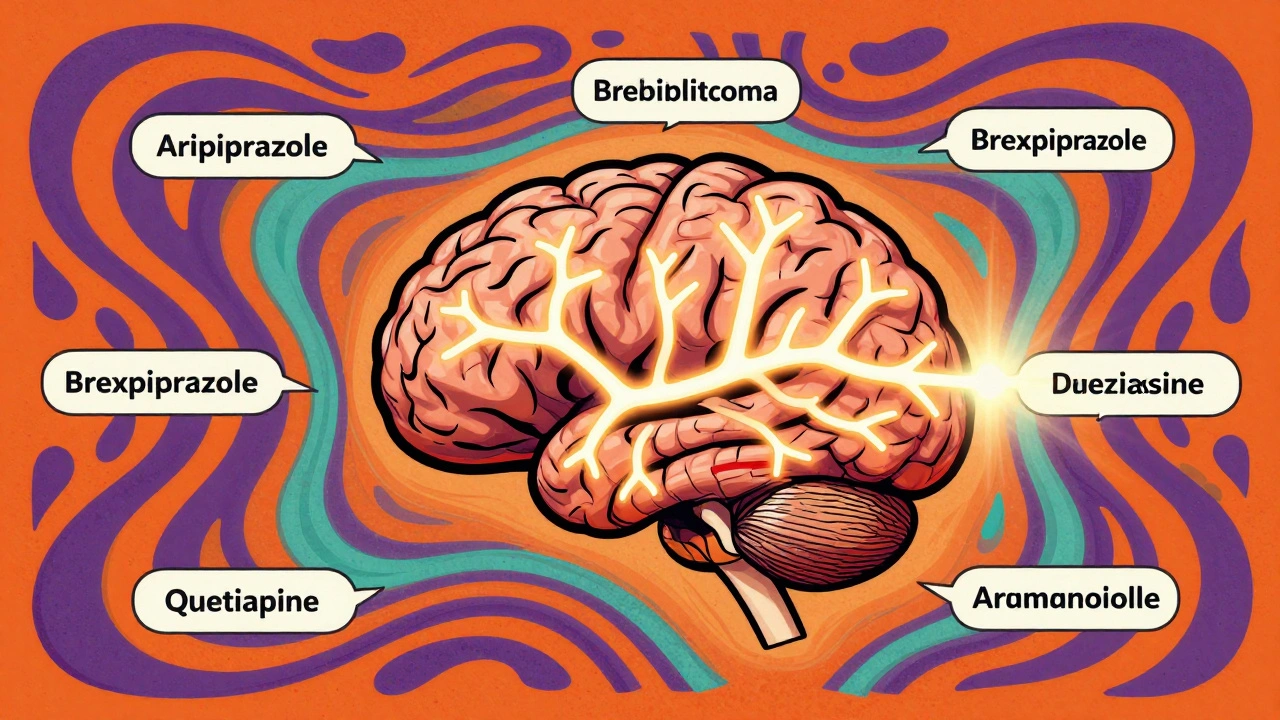
When antidepressants stop working, it’s not a failure of willpower-it’s a sign the brain needs a different kind of help. About 30 to 40% of people with major depression don’t get better after trying two or more standard antidepressants. This isn’t rare. It’s called treatment-resistant depression (TRD), and it’s one of the toughest challenges in mental health today.
What Counts as Treatment-Resistant Depression?
TRD isn’t just about not feeling better. It means you’ve tried at least two different antidepressants, each at the right dose for long enough-usually six to eight weeks-and still haven’t seen meaningful improvement. The landmark STAR*D trial, which tracked over 2,800 patients from 2001 to 2006, showed that nearly half of people don’t respond to their first antidepressant. After two tries, one in three still isn’t improving. That’s not a small group. That’s millions of people worldwide.Many assume if one drug fails, another will work. But with TRD, that’s not the case. The brain’s chemistry doesn’t always respond to the same tools. That’s why doctors turn to augmentation and advanced therapies-not as last resorts, but as necessary next steps.
Augmentation: Adding Something to Make It Work
Augmentation means sticking with your current antidepressant and adding another medication to boost its effect. It’s not about switching everything. It’s about fine-tuning.The FDA has approved four specific drugs for this purpose:
- Aripiprazole (Abilify)
- Brexpiprazole (Rexulti)
- Quetiapine extended-release (Seroquel XR)
- Olanzapine-fluoxetine (Symbyax)
These aren’t random choices. Each was tested in large trials and shown to improve response rates when added to SSRIs or SNRIs. For example, in the VAST-D trial, aripiprazole helped 24.8% of patients reach remission after 12 weeks-better than switching to another drug alone.
But the real picture is broader. A 2022 analysis of 65 studies found that even non-FDA-approved options like lithium, liothyronine (a thyroid hormone), and modafinil showed strong results. Lithium, for instance, had a 2.15 times higher chance of helping compared to placebo. It’s been used for decades, and it still works-when monitored properly. Blood levels need to stay between 0.3 and 0.6 mEq/L. Too high, and it becomes toxic. Too low, and it does nothing.
Some people respond better to certain augmenting agents based on their symptoms. If fatigue is your main issue, bupropion might help. If you’re struggling with anxiety or sleep, quetiapine can be useful. But side effects matter too. Aripiprazole can cause restlessness (akathisia) in up to 25% of users. Quetiapine often leads to drowsiness and weight gain. Olanzapine-fluoxetine can add 5 to 7% body weight over months.
There’s no one-size-fits-all. The goal is to match the augmentation to your body, your symptoms, and your tolerance for side effects.
When Medication Isn’t Enough: rTMS and Esketamine
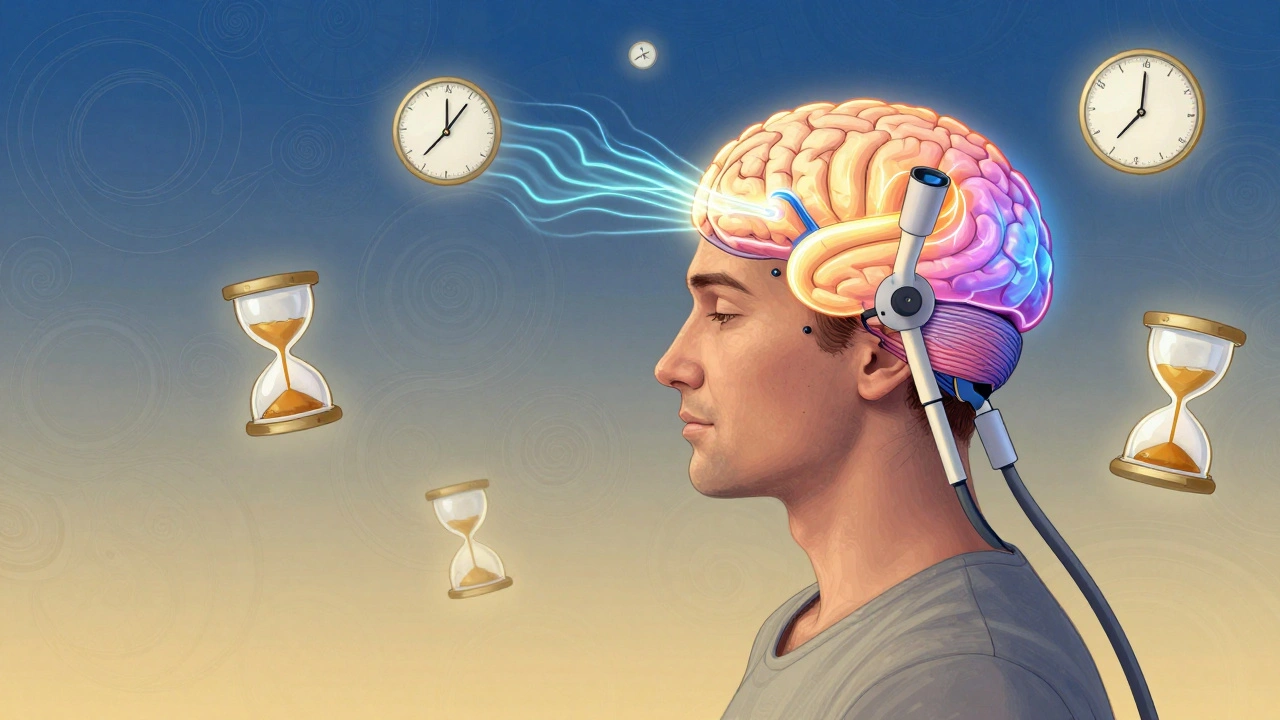
For many, even the best combination of pills doesn’t cut it. That’s when non-medication therapies come in.Repetitive transcranial magnetic stimulation (rTMS) is one of the most proven options. Over 50 clinical trials, involving more than 10,000 people, show it works. About half of patients see a meaningful improvement. One in three reach full remission. It’s non-invasive, doesn’t require anesthesia, and has almost no memory or cognitive side effects-unlike electroconvulsive therapy (ECT).
How it works: A magnetic coil is placed on the scalp, targeting the prefrontal cortex-the part of the brain that’s underactive in depression. Each session lasts about 20 to 40 minutes, five days a week, for four to six weeks. Most people can drive themselves to and from treatment. Side effects? Mild headaches or scalp discomfort. That’s it.
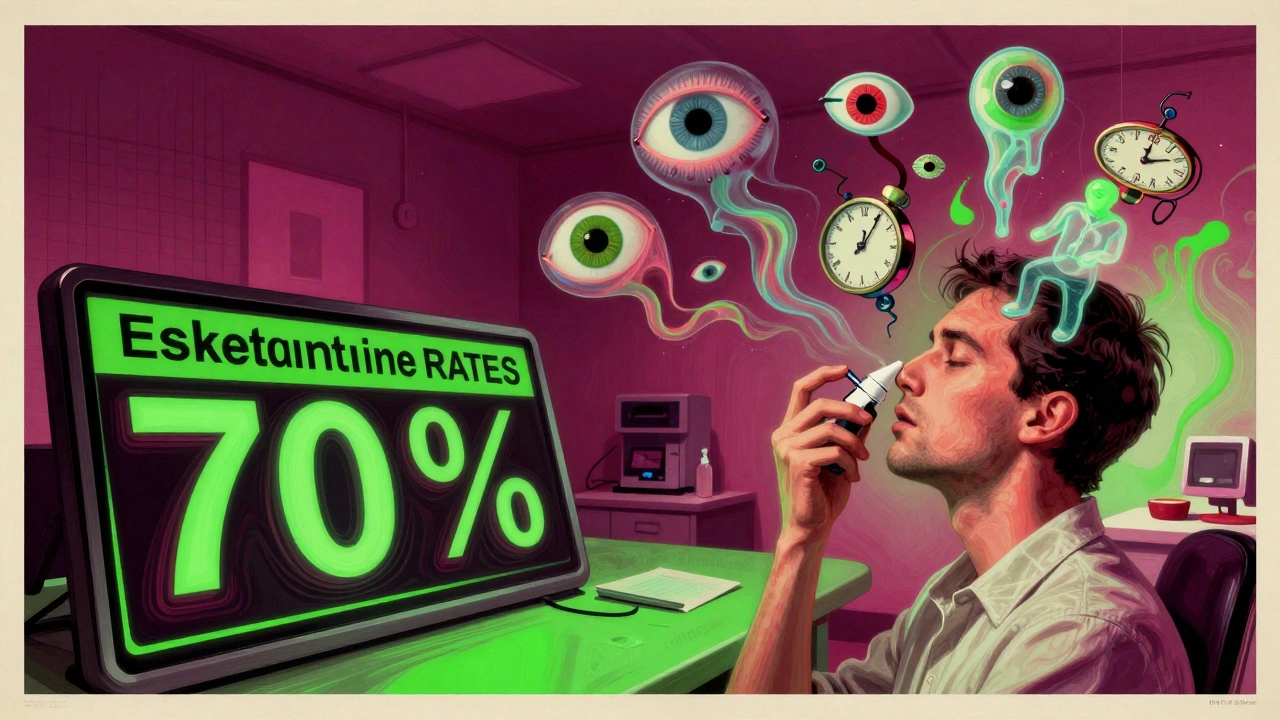
Then there’s esketamine (Spravato). Approved by the FDA in 2019, it’s the first rapid-acting antidepressant. Unlike traditional drugs that take weeks, esketamine can lift mood within 24 hours. In the TRANSFORM-2 trial, 70% of people responded after four weeks-compared to 47% on placebo.
But there’s a catch. Esketamine is given as a nasal spray in a certified clinic. You have to stay for two hours after each dose because it can cause dissociation-feeling detached from your body or surroundings. About 60% of users experience this. It’s not hallucinations, but it’s strong enough that you can’t drive or operate machinery for the rest of the day.
It’s not for everyone. But for those who’ve tried everything else, it’s a lifeline.
Advanced Therapies: What’s on the Horizon
Some patients need more than pills or rTMS. That’s where cutting-edge treatments come in.Deep brain stimulation (DBS) is still experimental, but results are striking. In one small study of six people with severe, long-term TRD, 92% responded after two years. Electrodes are surgically placed in the subcallosal cingulate cortex-a brain region linked to mood regulation. It’s invasive. It’s expensive. But for those who’ve suffered for decades, it’s a chance at a normal life.
Another emerging option is psilocybin, the active compound in magic mushrooms. A 2020 JAMA Psychiatry trial with 24 patients showed a 71% response rate after four weeks-compared to just 9% in the placebo group. The effects lasted. Many reported lasting changes in perspective, emotional openness, and reduced fear of death. Regulatory approval is still years away, but the data is too strong to ignore.
And then there’s inflammation. A 2022 study in Molecular Psychiatry found that people with TRD and high levels of inflammation (measured by hs-CRP) responded well to infliximab, a drug usually used for rheumatoid arthritis. Those with high inflammation had a 30.5% remission rate with infliximab-nearly double the placebo group. This suggests depression isn’t just a chemical imbalance. For some, it’s an immune issue.
Why So Many Fail to Get Better
Despite all these options, the numbers are sobering. The EU-NEURD registry found that only 28.4% of TRD patients achieve remission with standard augmentation. That means more than 70% still struggle.Why? Because depression isn’t one disease. It’s many. Some people have depression linked to low serotonin. Others have inflammation-driven depression. Some have brain circuits that are stuck in negative loops. Some have genetic factors that make them poor metabolizers of common antidepressants.
Right now, doctors guess. They try one thing, then another. But the future is personalization. Blood tests for inflammation. Genetic panels to predict drug metabolism. Brain imaging to spot underactive regions. These tools aren’t mainstream yet-but they’re coming.
What Works Best? A Quick Reference
Here’s what the evidence says about the most effective options for TRD:
| Treatment | Response Rate | Remission Rate | Time to Effect | Key Considerations |
|---|---|---|---|---|
| Aripiprazole (augmentation) | ~25% | 24.8% | 4-8 weeks | Best balance of efficacy and tolerability. Risk of restlessness. |
| Quetiapine ER | Up to 48% | 24.5% | 2-6 weeks | Strong sedation, weight gain. Good for sleep issues. |
| rTMS | 50-55% | 30-35% | 4-6 weeks | No anesthesia. Minimal side effects. Requires daily sessions. |
| Esketamine (Spravato) | 70.3% | Not fully reported | Within 24 hours | Must be administered in clinic. Dissociation common. |
| Lithium (augmentation) | ~25% | ~20% | 2-6 weeks | Requires blood monitoring. Safe at low doses. |
| Psilocybin (experimental) | 71% | Not yet established | Within 1-2 weeks | Still under research. Not FDA-approved. |
What to Do Next
If you’ve tried two or more antidepressants and still feel stuck, don’t wait. Don’t assume it’s your fault. Talk to your doctor about these options:- Confirm your diagnosis. Are you sure it’s depression? Could it be bipolar disorder, thyroid issues, or chronic stress?
- Review your past treatments. Were the doses high enough? Were you on them long enough?
- Ask about augmentation. Aripiprazole or lithium are good starting points.
- Consider rTMS if you’re not responding to meds. It’s safe, effective, and covered by most insurance.
- Ask about esketamine if you’re in crisis or need fast relief. It’s not for everyone, but it’s a game-changer for some.
- Look into clinical trials. Psilocybin, ketamine infusions, and anti-inflammatory treatments are still being studied.
Progress in TRD isn’t about finding one miracle cure. It’s about having more tools-and knowing which one fits your brain.
Frequently Asked Questions
How do I know if I have treatment-resistant depression?
You may have TRD if you’ve tried at least two different antidepressants, each at an adequate dose for at least six to eight weeks, and still haven’t seen a meaningful improvement in your symptoms. Your doctor will also rule out other causes like thyroid problems, substance use, or bipolar disorder before confirming TRD.
Is esketamine safe for long-term use?
Esketamine is approved for short-term use in TRD, with maintenance doses given weekly or biweekly after the initial phase. Long-term safety data is still being collected. The biggest concerns are dissociation during treatment and potential abuse risk, which is why it’s only available in certified clinics under supervision. There’s no evidence it causes brain damage, but ongoing monitoring is required.
Can I do rTMS while taking antidepressants?
Yes. rTMS is often used alongside antidepressants, and many patients continue their medication during treatment. In fact, combining rTMS with medication often leads to better outcomes than either alone. Your doctor will help you decide whether to adjust your meds during therapy.
Why isn’t lithium used more often for TRD?
Lithium is effective, but it requires regular blood tests to keep levels safe. Many doctors avoid it because it’s seen as outdated or because patients dislike the monitoring. But for those who tolerate it, lithium has one of the strongest evidence bases for augmentation-especially when combined with SSRIs. It’s underused, not ineffective.
Are there any natural supplements that help with TRD?
Some supplements like omega-3 fatty acids, vitamin D, and N-acetylcysteine have shown modest benefits in small studies, but none are proven to work for TRD on their own. They may help as add-ons, but they shouldn’t replace evidence-based treatments like augmentation, rTMS, or esketamine. Always talk to your doctor before starting any supplement.
15 Comments
Robert Gilmore December 5, 2025 AT 12:26
So let me get this straight-we’re now prescribing antipsychotics like they’re coffee creamer because SSRIs didn’t magically fix your existential dread? Brilliant. Next they’ll slap a fentanyl patch on your forehead for ‘low serotonin.’
Robert Gilmore December 6, 2025 AT 03:20
Y’all are gonna change someone’s life with this post. Seriously. I’ve been stuck in the TRD loop for 7 years and this is the first time I’ve felt seen-not just diagnosed. rTMS saved me. No drugs. No weird side effects. Just quiet, steady light coming back into my world. You’re not broken. You’re just waiting for the right key.
Robert Gilmore December 7, 2025 AT 05:30
Lithium isn’t outdated-it’s the OG mood stabilizer that still kicks ass. I’ve been on it for 12 years with my SSRI. Blood draws? Yeah. But I’d rather check my levels than check out of life. Doctors act like it’s 1970 but the data doesn’t lie. Low dose. Safe. Effective. Stop acting like it’s magic dust. It’s medicine. Use it.
Robert Gilmore December 9, 2025 AT 04:24
One thing nobody talks about is how the sheer exhaustion of trying every single option drains your will to even ask for help. I went through aripiprazole, then quetiapine, then rTMS, then esketamine-each time thinking ‘this has to be it,’ and each time feeling like I was failing again. It’s not the meds. It’s the system. We treat depression like a broken pipe you can just fix with a wrench. But it’s more like rebuilding the whole plumbing system while the house is flooding. And we’re expected to do it alone. The science is amazing. The access? Not so much.
Robert Gilmore December 10, 2025 AT 14:54
Psilocybin? Really? You’re seriously recommending hallucinogens as a legitimate treatment for a psychiatric condition? Next you’ll be prescribing ayahuasca and calling it ‘spiritual augmentation.’ This isn’t medicine-it’s a Silicon Valley wellness cult masquerading as neuroscience. If you want to trip, go to Burning Man. Don’t pathologize your poor life choices.
Robert Gilmore December 11, 2025 AT 17:21
Let’s be real-this whole ‘treatment-resistant’ label is just a fancy way of saying ‘we don’t know what’s wrong and we’re out of ideas.’ You throw a bunch of drugs at the wall and see what sticks. rTMS? It’s just a fancy TENS unit for your brain. Esketamine? A corporate cash grab wrapped in FDA branding. And don’t get me started on the ‘inflammation’ theory-next they’ll say depression is caused by bad Wi-Fi. This isn’t progress. It’s desperation dressed up as innovation.
Robert Gilmore December 12, 2025 AT 23:15
I just want to say thank you for writing this. I’ve been on six different meds over eight years. I’ve cried in waiting rooms. I’ve canceled plans because I couldn’t get out of bed. And no one ever told me it wasn’t my fault. You’re right-it’s not a failure of will. It’s biology. rTMS didn’t cure me, but it gave me back the ability to feel joy again, even for five minutes. That’s more than any pill ever did. You’re not alone.
Robert Gilmore December 12, 2025 AT 23:47
Of course you’re gonna love psilocybin. You probably meditate with crystals and drink bone broth lattes. But let’s not pretend that a 71% response rate in a 24-person trial is ‘evidence.’ That’s a party trick. Meanwhile, real people are dying because they can’t afford esketamine or rTMS. You’re celebrating flashy tech while the system ignores basic mental health access. You’re not helping. You’re performing.
Robert Gilmore December 13, 2025 AT 19:38
Important to note that the STAR*D trial showed diminishing returns with each subsequent treatment step. After four failed trials, remission rates dropped below 10%. That’s why early use of augmentation or rTMS matters. Waiting until you’ve tried five meds is like waiting for your car to catch fire before buying a fire extinguisher. Prevention beats crisis management every time.
Robert Gilmore December 15, 2025 AT 07:00
Just had my first rTMS session. Felt like someone was tapping my forehead with a tiny hammer. No side effects. No drugs. And honestly? I slept better last night than I have in years. Still don’t know if it’s working yet-but I’m willing to give it 6 weeks. Thanks for the hope.
Robert Gilmore December 16, 2025 AT 06:40
Love how this post doesn’t just list options but explains why they work. I’m from London and we don’t talk about mental health here unless it’s in a BBC documentary. But this? This feels like something you’d share with your mate over tea. Simple. Real. No fluff.
Robert Gilmore December 16, 2025 AT 20:14
For those considering lithium: please, please, please get your levels checked regularly. I once went from 0.5 to 1.2 mEq/L because I forgot to refill my prescription. Ended up in the ER with tremors, vomiting, and a heart rate of 140. It’s not scary-it’s manageable. But ignorance kills. Don’t be the person who thinks ‘it’s just a mood stabilizer’ and ignores the bloodwork. You’re not invincible.
Robert Gilmore December 17, 2025 AT 23:47
Just wanted to add-don’t underestimate the power of sleep hygiene and sunlight. I know it sounds basic, but when you’re in TRD, even tiny wins matter. I started walking outside for 20 minutes every morning. No phone. Just light. And after 3 weeks? My brain felt less foggy. It didn’t fix everything-but it made the meds and rTMS work better. Sometimes the smallest things are the most underrated tools.
Robert Gilmore December 19, 2025 AT 12:23
Depression is not a disease. It is a mirror. It shows you what you have refused to feel. The pills? They are bandages. The real healing? It comes when you stop running from the silence.
Robert Gilmore December 19, 2025 AT 22:51
This is an excellent, well-researched overview. Thank you for compiling the data clearly. I’ve shared it with my therapist. The table comparing treatments is especially useful. I hope more clinicians adopt this kind of evidence-based framework instead of defaulting to trial-and-error.