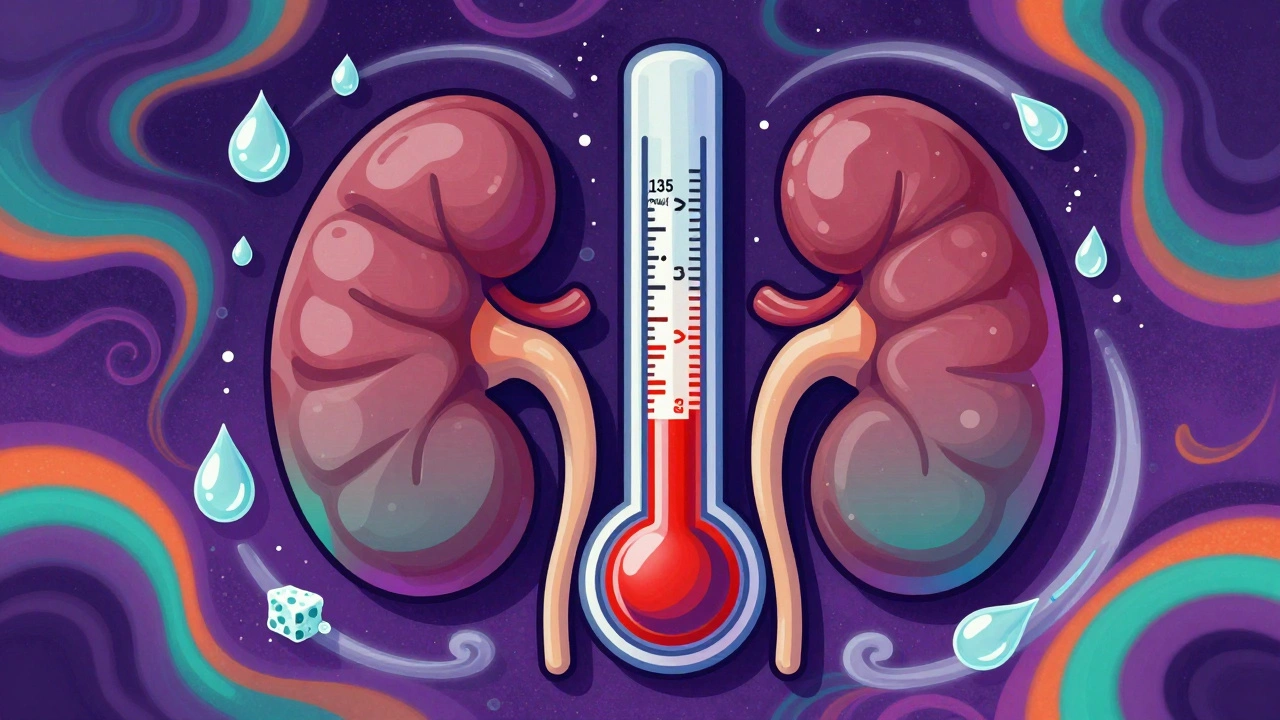
Hyponatremia: Causes, Risks, and Medications That Affect Sodium Levels
When your blood sodium drops too low, you have hyponatremia, a condition where sodium levels in the blood fall below 135 mmol/L, disrupting fluid balance and nerve function. Also known as low sodium, it’s not just about drinking too much water—it’s often tied to how your body handles fluids because of medications, illness, or aging. Sodium keeps your cells working right. When it dips, you might feel dizzy, nauseous, or confused. In severe cases, it can lead to seizures or coma. This isn’t rare—it shows up often in older adults, people with heart or kidney problems, and those on certain drugs.
Kidney disease, a condition where the kidneys can’t filter blood properly, leading to fluid and electrolyte imbalances is a major player in hyponatremia. When kidneys can’t remove excess water, sodium gets diluted. Drug interactions, when two or more medications change how the body processes sodium or water are another big cause. Think diuretics, antidepressants like SSRIs, or even pain meds—some make your body hold onto water or lose sodium. That’s why hyponatremia shows up in posts about renal dosing of antibiotics, alcohol and medication interactions, and how aging changes drug response. It’s not just one thing; it’s a chain reaction.
People with heart failure, liver cirrhosis, or even just taking too much water after a marathon can get it. But the real danger? Many don’t know they have it until symptoms hit hard. Doctors check sodium levels with simple blood tests, but it’s often missed because the signs look like fatigue, aging, or the flu. What’s worse, some meds meant to help—like those for depression or high blood pressure—can quietly push sodium down. And if you’re on multiple prescriptions, especially as you get older, the risk stacks up. You don’t need to panic, but you do need to know: if you’re on meds and feel off, low sodium could be hiding in plain sight.
The posts here cover exactly these connections. You’ll find real-world examples of how drugs like SSRIs, diuretics, and even some antibiotics can trigger hyponatremia. You’ll see how kidney function ties into it, how aging makes your body more vulnerable, and why checking for drug interactions isn’t optional. No fluff. Just what matters: what causes it, which drugs to watch, and how to protect yourself before it becomes serious.
Hyponatremia and hypernatremia are dangerous electrolyte imbalances in kidney disease, affecting up to 25% of CKD patients. Learn how kidney damage disrupts sodium balance, why common treatments can backfire, and how to manage them safely.