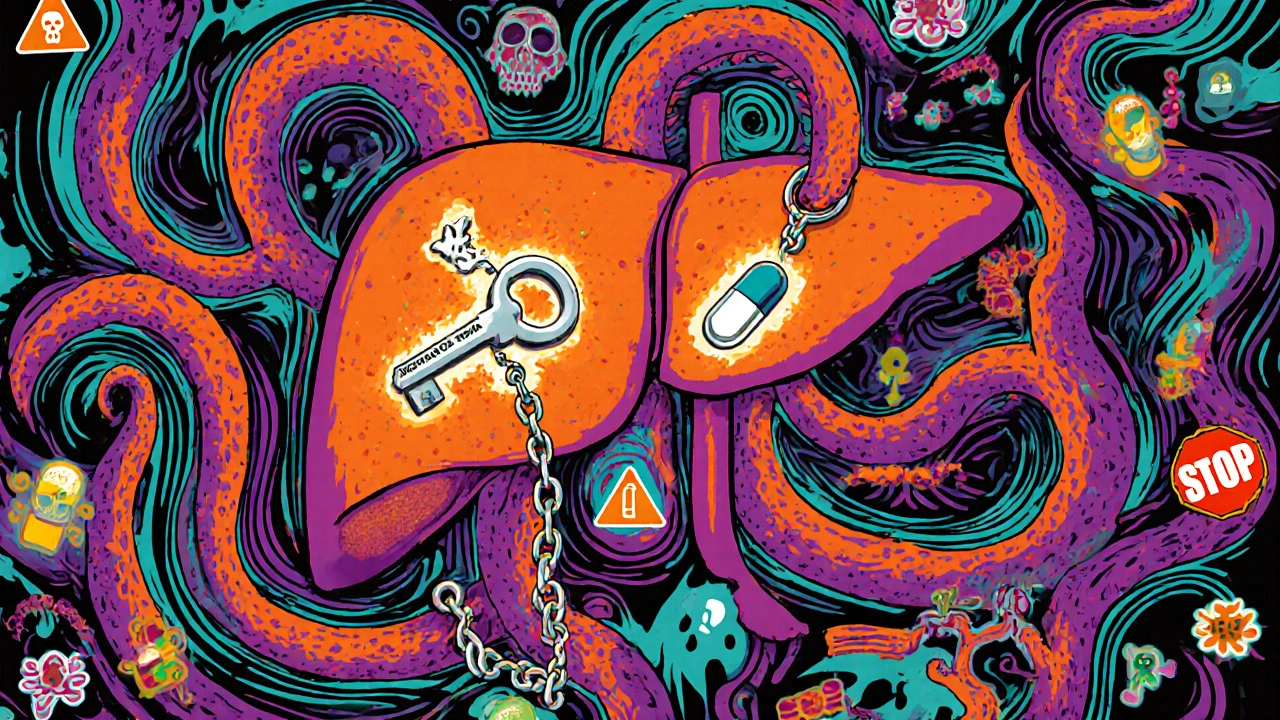
CYP3A4 Interactions: What Medications You Must Avoid Together
When your body breaks down drugs, one enzyme does most of the heavy lifting: CYP3A4, a liver enzyme responsible for metabolizing over half of all prescription medications. Also known as cytochrome P450 3A4, this enzyme is the gatekeeper that decides how fast your body clears drugs like statins, blood pressure pills, and painkillers. If something blocks or speeds up CYP3A4, your meds can either build up to toxic levels or wash out too fast to work.
That’s why CYP3A4 interactions aren’t just a footnote in drug guides—they’re a real threat. Take CYP3A4 interactions with grapefruit juice: one glass can shut down the enzyme for hours, turning a normal dose of simvastatin into an overdose that can wreck your muscles. Or consider common antibiotics like clarithromycin: they don’t just fight infection—they slow down CYP3A4 so much that blood thinners or anti-anxiety meds can pile up and cause dangerous drops in blood pressure or breathing trouble. Even some supplements like St. John’s wort can flip the switch the other way, making birth control or antidepressants useless by speeding up their breakdown. These aren’t rare edge cases. They happen every day in clinics and homes because most people don’t know their meds are playing hide-and-seek with their liver enzymes.
It’s not just about pills. The same enzyme handles everything from cholesterol drugs like atorvastatin to erectile dysfunction meds like sildenafil, cancer treatments like docetaxel, and even some anti-seizure drugs. That’s why a simple change—like switching from one antibiotic to another—can throw off your whole regimen. And if you’re on multiple meds, especially for chronic conditions like diabetes, heart disease, or depression, you’re already walking a tightrope. The posts below dig into real cases: how mixing PDE5 inhibitors with nitrates causes dangerous blood pressure drops, why benzodiazepines and opioids together can stop your breathing, and how insulin reactions or statin side effects can be worsened by unnoticed enzyme interference. You’ll find practical advice on spotting hidden risks, what to ask your pharmacist, and how to avoid the most common traps. No theory. No jargon. Just what you need to know to stay safe.
Lopinavir/ritonavir boosts HIV treatment by blocking CYP3A4, but this creates dangerous interactions with common drugs like statins, blood thinners, and sedatives. Know the risks before prescribing or taking it.