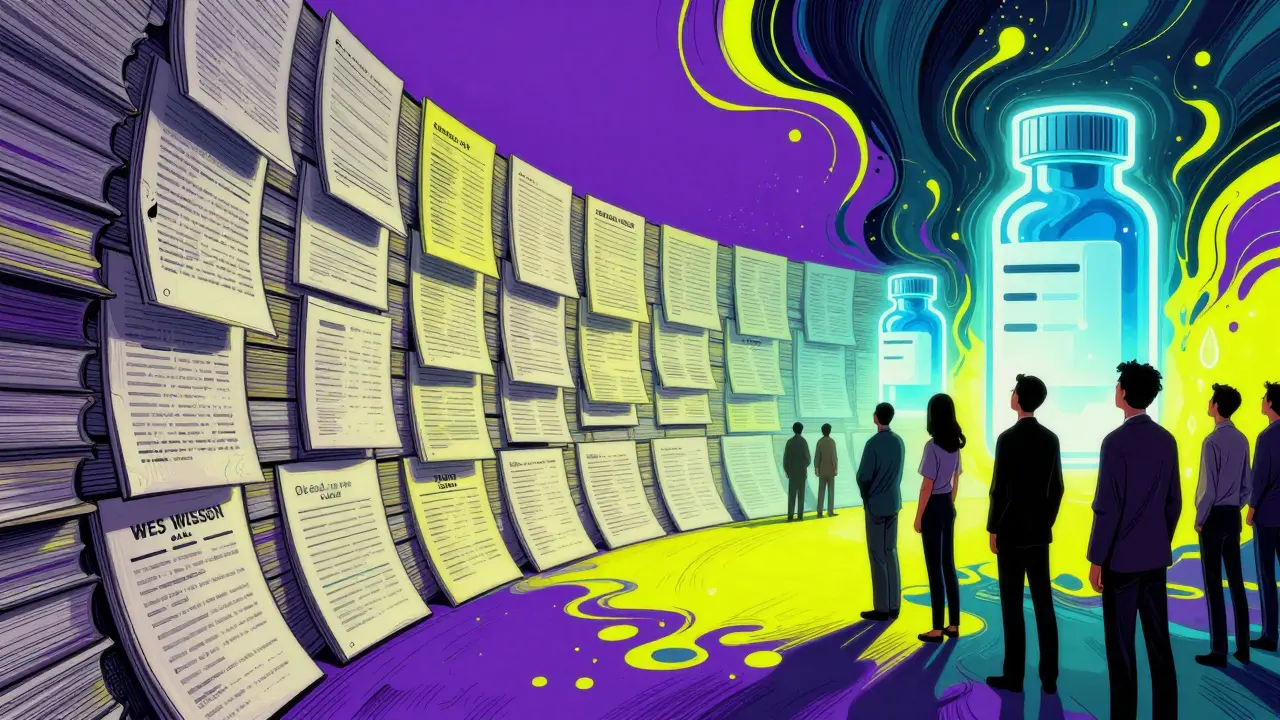
Imagine a situation where saving lives depends on signing a complex legal paper. That is exactly what happens when governments try to secure affordable medicines. You might think patent laws protect innovation, but for many people around the world, they often mean waiting longer for cures or paying prices they cannot afford. This conflict sits at the heart of the World Trade Organization’s agreement on intellectual property.
The core issue is straightforward. Rich countries demand protection for their drug companies to make money. Poorer nations need those same drugs for their sick citizens immediately. When these two goals clash, the result is usually expensive treatments locked behind legal barriers. Understanding how international treaties shape this balance helps us see why some patients get help while others do not.
What is the TRIPS Agreement? Defined
To understand the barrier, we must look at the rulebook itself. The Agreement on Trade-Related Aspects of Intellectual Property Rights is an international treaty. Commonly known as the TRIPS Agreement, it sets minimum standards for how countries protect intellectual property. TRIPS This agreement came into force on January 1, 1995, managed by the World Trade Organization(WTO). Before this date, nations could decide their own rules for patents. Some allowed local factories to copy drugs freely; others did not.
TRIPS changed that. It required every member country to provide patent protection for pharmaceutical products for 20 years. This standardization was meant to encourage invention. However, it also stopped countries like India from producing cheap versions of patented drugs. Previously, Indian manufacturers could sell medicines for roughly 5% to 10% of the price set by patent holders. Under TRIPS, that freedom vanished overnight for new inventions.
The Impact on Medicine Prices
When a patent lasts 20 years, the company owns the right to sell that specific drug alone. They set the price, often very high to recoup research costs. In wealthy markets like the United States, insurance companies pay these costs. In low-income regions, governments and families pay out of pocket. The difference is stark.
Generic Medicinesare copies of brand-name drugs produced after the original patent expires. Without these generics, treatment can cost tens of thousands of dollars per year. With them, the price drops significantly. For example, HIV medication in South Africa dropped from $10,000 per patient annually to about $87 thanks to the threat of competition and pressure from public health groups. This shows how powerful the market becomes once the monopoly ends.
- Patented Drugs: Limited supply, high prices, controlled by one manufacturer.
- Generic Drugs: Multiple suppliers, competitive prices, open market.
- Impact: A shift from generics to patents raised global medicine spending by billions.
This dynamic creates a crisis in healthcare. If a country follows TRIPS strictly, its citizens wait until patents expire for affordable care. Many die during that wait time. The legal framework thus acts as a gatekeeper to survival.
Flexibilities within the Law
By the early 2000s, the AIDS pandemic was raging. Governments realized strict TRIPS rules were killing people. They pushed back. In 2001, members adopted the Doha Declaration on the TRIPS Agreement and Public HealthA legal interpretation allowing countries to prioritize public health over patent rights during emergencies..
This declaration gave nations "flexibilities." These are escape routes built into the treaty. They allow a government to ignore a patent under specific conditions. The most important tool here is Compulsory LicensingA legal permission granted by a government authorizing the production of a patented product without the owner's consent..
A government can declare a national emergency-like an epidemic-and order a local factory to make a copy of the drug. They still have to pay the original company, but the fee is much lower than normal royalties. This mechanism acknowledges that health is a right, even when patents are a privilege.
| Mechanism | Speed of Access | Cost Reduction | Political Risk |
|---|---|---|---|
| Voluntary License | Slow, requires negotiation | Moderate | Low |
| Compulsory License | Fast, unilateral decision | High (up to 90%) | High (trade retaliation) |
| Parallel Importation | Medium, buying from other markets | Variable | Medium |

The Rwanda-Canada Experiment
There is a special case in the rules called the Article 31bis amendment. This fixed a loophole. If a country has no factory making medicine, it couldn't issue a license. The amendment allowed a country without manufacturing capacity to import generic drugs from another country. It sounds perfect in theory. In practice, it is slow.
In 2008, Rwanda became the first nation to use this system. It ordered HIV medicine from Canada through Apotex Corporation. The process took four years. By the time the deal closed, both sides agreed the paperwork was too heavy. Médecins Sans Frontières noted the system was unworkable. The bureaucracy involved notifying the WTO weeks in advance and satisfying export permits slowed everything down.
Rwanda paid for generic HIV drugs worth $1.3 million. While cheaper than the branded version, it was still 30% more expensive than if Rwanda had its own factory to make them. This single case highlights the difficulty of relying on foreign production when you lack domestic capacity.
Why Countries Hesitate to Act
You might wonder why nations do not use these flexibilities more often. A study from Duke University found that 92% of low- and middle-income countries lack dedicated staff to manage these procedures. It takes a team of lawyers and scientists to draft a valid compulsory license. Most ministries of health do not have that budget.
There is also the threat of political pressure. Wealthy nations sometimes warn developing countries not to issue licenses. In 2009, the U.S. placed Thailand on its Priority Watch List after Thailand licensed generic clopidogrel and imatinib. Thailand lost its special trade benefits, costing an estimated $57 million in exports. This kind of punishment makes governments think twice before using their legal rights.
Furthermore, Trade AgreementsBilateral deals that add stricter IP rules beyond international norms. often impose "TRIPS-plus" standards. These agreements require longer patent terms, sometimes extending beyond the 20-year limit. As of 2023, 58 LMICs were negotiating such deals, locking them into stricter rules than the WTO requires.
The Push for Reform
Despite these hurdles, activists and governments keep pushing. During the COVID-19 pandemic, India and South Africa proposed waiving IP rights for vaccines entirely. The WTO approved a partial waiver in June 2022. It covered vaccines but excluded medicines and tests, which limited its effect.
Recent meetings in 2024 urged reforms to prevent future pandemics. The consensus suggests that current rules are too rigid for global health crises. Organizations like the Medicines Patent Pool offer an alternative. Companies voluntarily license patents to manufacturers, creating a pool of technology available for generic production. While helpful, it covers only a small fraction of necessary drugs.
We are now seeing a shift toward local production rather than imports. Digital health strategies now reference these flexibilities to boost local tech manufacturing. The goal remains the same: ensuring that the law serves life, not just profit margins.
Frequently Asked Questions
Does TRIPS stop countries from making their own medicines?
Not entirely. TRIPS requires countries to respect patents, but allows exceptions like compulsory licensing. Governments can legally authorize local production of patented drugs during health emergencies.
What is the difference between a generic and a patent-protected drug?
A patent-protected drug is exclusive to the creator for 20 years. A generic drug is a bioequivalent copy made after patent expiry or via legal override, usually sold at a much lower price.
How does the Doha Declaration help poor countries?
It confirms that WTO members should interpret trade rules in a way that supports the right to protect public health. It explicitly validates the use of TRIPS flexibilities to fight disease.
Why are compulsory licenses rare?
Countries fear trade sanctions and have limited legal capacity. The administrative burden is high, and political pressure from powerful nations often discourages governments from proceeding.
Is there a faster way to access essential medicines?
Voluntary licensing through pools like the Medicines Patent Pool is faster than compulsory licensing because it avoids litigation, but it relies on companies agreeing to share their rights.
The relationship between international trade law and basic human health remains tense. As negotiations continue in 2026, the question is whether the legal frameworks will evolve to prioritize accessibility. Until then, millions continue to wait behind patent walls.
14 Comments
Robert Gilmore March 27, 2026 AT 03:30
The regulatory framework regarding intellectual property rights is fundamentally constrained by trade policy mandates.
Patent protection mechanisms designed for innovation often inadvertently stifle pharmaceutical accessibility in developing regions.
We observe a significant disparity between enforcement standards in high-income economies versus low-and-middle income counterparts.
This divergence creates systemic bottlenecks in supply chain logistics for essential therapeutics.
Furthermore, the Doha Declaration provisions offer legal pathways that remain underutilized due to bureaucratic inertia.
Robert Gilmore March 27, 2026 AT 10:05
It is wild how a piece of paper decides who gets to live or die somewhere else.
The machinery of commerce grinds through human suffering with such cold efficiency.
You see the stats and you know the game is rigged against the vulnerable populations.
Money talks louder than morality when profit margins are on the line.
We are stuck watching the legal chessboard while people wait for medicine.
Robert Gilmore March 28, 2026 AT 18:09
The assertion that patents save lives is factually incorrect in the context of emerging markets.
Rational actors prioritize revenue retention over humanitarian aid when given the choice.
This prioritization results in preventable mortality rates that exceed acceptable thresholds.
Governments must enforce domestic legislation to override international treaty obligations immediately.
Hesitation is complicity in the continued deprivation of basic healthcare.
Robert Gilmore March 30, 2026 AT 16:43
I believe we can find a middle ground where innovation thrives alongside access.
Collaboration between pharma giants and local manufacturers is the only viable path forward.
Optimism suggests that recent amendments to the WTO rules signal progress.
We have seen voluntary licensing pools emerge to help bridge this gap effectively.
The future depends on us choosing cooperation over litigation in these critical areas.
Robert Gilmore April 1, 2026 AT 01:40
its obvious big pharma owns the legislature so the rules never change in our favor
they want the monopoly because it feeds the elite machine that controls everything else
trust the science not the suits telling you prices have to stay high
Robert Gilmore April 1, 2026 AT 23:34
global south perspectives often get lost in these discussions dominated by western narratives.
cultural context matters when discussing access to life saving tools.
we need inclusive policies that respect sovereignty.
Robert Gilmore April 2, 2026 AT 16:51
i totally agrue with u cuz teh system is broken beyond repair sometimes.
like why shud we pay for drugs dat cost pennies to make?
its kinda crazy how lawyers make more money than doctors saving lives.
we gotta push for reform or ppl gonna keel over waiting too long.
Robert Gilmore April 3, 2026 AT 13:34
Your argument ignores the fundamental necessity of capital investment required for research.
Without robust financial incentives, the development pipeline collapses entirely.
Simplicity blinds the mind to complex economic realities governing drug creation.
Price gouging is not a primary feature of a functioning free market economy.
Those who demand cheap medication fail to acknowledge opportunity costs.
Robert Gilmore April 4, 2026 AT 08:46
Hope stays alive even when systems fail.
Robert Gilmore April 6, 2026 AT 03:14
🙄 This industry cares about profit over people literally every single day 🩸💊
So many families suffer because executives want bonuses 😡😤
We need to hold them accountable for the damage caused ❌
Access is a human right not a privilege ✨🌍
Robert Gilmore April 6, 2026 AT 07:54
:( The conspiracy angle is scary but true often times.)
Big corporations pull strings behind closed doors while we wait outside :(
Hope someone speaks up soon for the little guy :)
Change is possible if we keep talking about this together!)
Robert Gilmore April 8, 2026 AT 06:21
:) We should definitely focus on building up local manufacturing capabilities instead.)
Self-reliance is key for nations to avoid getting bullied by trade deals.:)
Education on these flexibilities empowers governments to protect citizens.):)
Looking forward to seeing more positive outcomes in global health policy!:)
Robert Gilmore April 9, 2026 AT 09:25
That is exactly right!!! We cannot ignore the structural flaws in the current system!!
People are dying because of red tape!!! It needs to stop!!!
We need bold action now!!!! Not slow negotiations that take years!!!!!
Every delay costs lives!!! The status quo is unacceptable!!
We must demand better transparency!!! And accountability!!! From all stakeholders!!!
Robert Gilmore April 10, 2026 AT 03:19
It is painfully obvious that the average layperson lacks the sophistication to grasp these nuances.
Intellectual property frameworks are not mere legalities; they are pillars of economic stability.
To dismantle them casually is to invite chaos into the pharmaceutical ecosystem globally.
Patents exist to reward risk-taking behavior essential for technological advancement.
We must distinguish between genuine advocacy and populist demagoguery disguised as humanitarian aid.
The suggestion that monopolies are purely evil ignores the innovation cycle.
Lowering barriers prematurely discourages long-term R&D investment significantly.
Developed nations bear the brunt of funding these discoveries initially.
Therefore, transfer pricing mechanisms should not be manipulated arbitrarily.
Compulsory licensing remains a desperate measure reserved for existential threats only.
We observe a degradation of norms when activists override legal precedents easily.
Economic theory dictates that scarcity drives valuation, regardless of sentiment.
Ignoring these principles leads to market failure and eventual stagnation.
We would simply run out of new medicines to discover in the future.
The proposed reforms lack a viable financial model for sustaining pipelines.