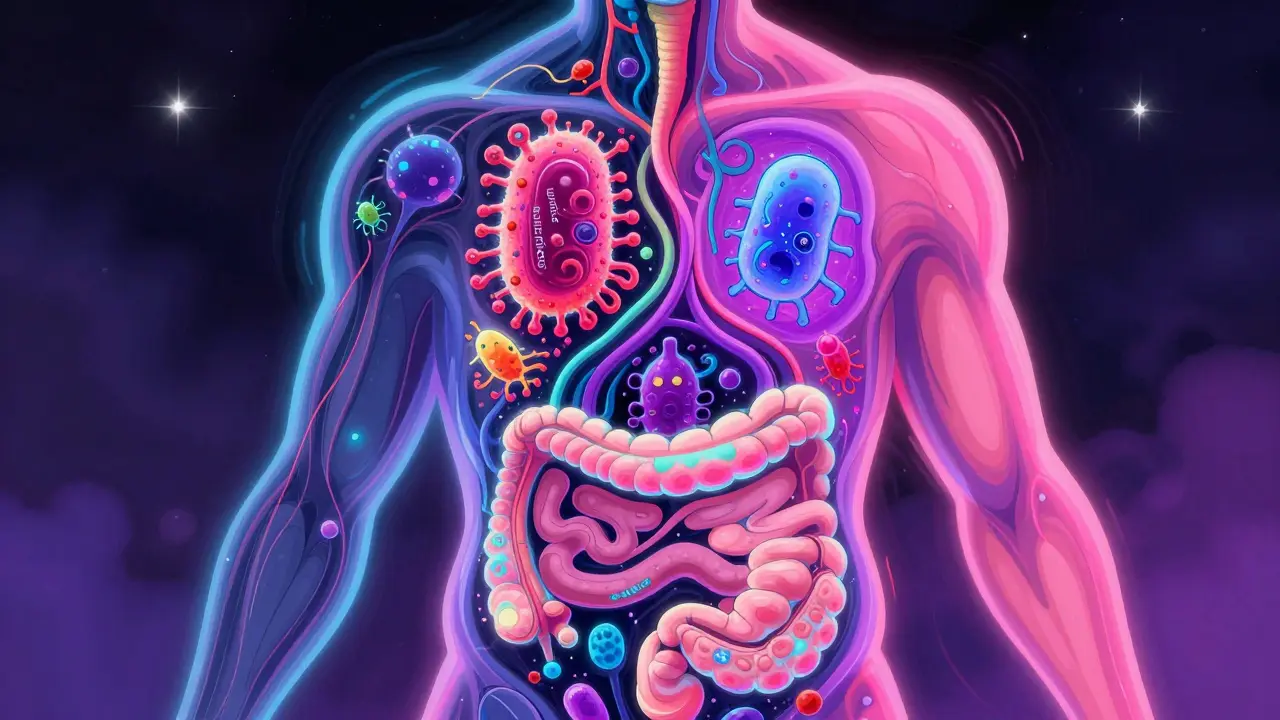
For years, people have blamed slow metabolism, lack of willpower, or too much sugar for obesity. But what if the real culprit is living inside you-trillions of bacteria, viruses, and fungi in your gut? The science is clear: your gut microbiota isn’t just along for the ride; it’s actively shaping how your body stores fat, processes food, and responds to hunger.
What Exactly Is Gut Microbiota?
Your gut is home to about 1-2 kilograms of microbes. That’s roughly the weight of a small bag of sugar. These aren’t just passive passengers-they’re active players in digestion, immune function, and even how many calories you pull from your food. The mix of these microbes, called the gut microbiota, varies wildly from person to person. And when it comes to obesity, the differences are striking. Studies since the mid-2000s have shown that obese individuals tend to have a different microbial fingerprint than lean people. One of the most consistent findings? A higher ratio of Firmicutes to Bacteroidetes. In obese adolescents, this ratio can hit 2.3:1, while lean peers hover around 1.7:1. Why does this matter? Firmicutes are better at breaking down complex carbs and pulling extra calories from food-up to 10% more in some cases. That means two people eating the same meal might absorb different amounts of energy, simply because of their gut bugs.How Gut Bacteria Make You Gain Weight
It’s not just about calorie extraction. Your gut microbiota influences obesity through multiple pathways:- Energy harvest: Certain bacteria ferment fiber into short-chain fatty acids (SCFAs) like acetate, propionate, and butyrate. While these can be beneficial, an imbalance leads to more energy being stored as fat. Obese individuals often have 15-20% lower levels of butyrate, which helps regulate inflammation and insulin sensitivity.
- Leaky gut: A damaged gut lining lets harmful bacterial byproducts like lipopolysaccharides (LPS) escape into the bloodstream. This triggers chronic low-grade inflammation, which is directly linked to insulin resistance-the root of metabolic syndrome and type 2 diabetes. Obese people show 40-60% higher levels of zonulin, a protein that loosens gut junctions.
- Hormone disruption: Gut microbes influence appetite hormones like GLP-1 and ghrelin. Some probiotics boost GLP-1 by 20-30%, helping you feel fuller longer and reducing cravings.
- Bile acid changes: Bacteria alter bile acid signaling, which affects fat digestion and fat storage. Disrupted bile acid flow can lead to increased fat accumulation in the liver and abdomen.
Put simply, an unhealthy gut microbiome doesn’t just reflect obesity-it actively drives it.
Probiotics: The Real Impact on Weight Loss
Probiotics are live bacteria that, when taken in the right amounts, offer health benefits. They’re not magic pills, but they’re not placebo either. A 2025 meta-analysis of 28 studies involving over 2,300 people found that probiotic supplementation led to an average weight loss of 1.78 kg and a waistline reduction of 2.56 cm over 8-12 weeks. That’s not dramatic, but it’s measurable-and it’s consistent across multiple trials. Not all probiotics are created equal. Some strains show stronger effects:- Lactobacillus gasseri SBT2055: In a 12-week Japanese trial, participants lost 7.9% of their visceral fat-the dangerous fat around organs. This strain seems to interfere with fat absorption and storage.
- Lactobacillus rhamnosus GG: Linked to modest weight loss in women, especially when combined with diet changes.
- Bifidobacterium longum: Helps reduce inflammation and improve insulin sensitivity.
- Mixed-strain formulas: Often more effective than single strains. One study using a blend of Bifidobacterium, Lactobacillus, and Streptococcus at 10 billion CFU per day improved cholesterol by 12.3%, insulin resistance by 18.7%, and CRP (a key inflammation marker) by 24.5% in just 12 weeks.
Effective doses typically range from 10^9 to 10^11 colony-forming units (CFU) daily. That’s 1 billion to 100 billion live bacteria. Most over-the-counter supplements contain far less-and many don’t even survive stomach acid.

Synbiotics: Why Combining Probiotics and Prebiotics Works Better
Probiotics alone can struggle to stick around. Enter synbiotics: combinations of probiotics and prebiotics (fiber that feeds good bacteria). A 2025 review found synbiotics led to 37% greater weight loss than probiotics alone. Why? Prebiotics like inulin, FOS, and resistant starch help probiotics colonize and thrive. In one trial, participants taking a synbiotic with inulin and Lactobacillus acidophilus saw a 15-25% increase in beneficial SCFAs. That’s not just about weight-it’s about lowering inflammation, stabilizing blood sugar, and improving gut barrier function. Synbiotics also help reduce endotoxins like LPS, which are elevated in obesity.Why Results Vary So Much
If probiotics work, why don’t they work for everyone? Three big reasons:- Baseline microbiome matters: People in Asian populations saw 22% better results than those in Western countries. Why? Diet, lifestyle, and early-life microbiome development shape how your gut responds. A person who eats lots of fiber and fermented foods may respond better than someone on a standard Western diet.
- Not all strains work: About 38% of studied probiotic strains showed no effect on weight. Just because a product says “probiotic” doesn’t mean it’s the right one.
- Effects fade fast: Sixty to eighty percent of the benefits disappear within 8-12 weeks after stopping. Probiotics don’t permanently change your microbiome-they need ongoing support.
Some people are “resisters”-their gut simply won’t let new bacteria take hold. Others are “responders.” Scientists are now developing algorithms to predict who will benefit based on their baseline microbiome. Early tests are 65-75% accurate.
What the Experts Really Say
There’s no consensus, but the debate is evolving. Dr. Susan S. Pereira from Oxford says manipulating the gut microbiome is a “promising and novel treatment approach”-but we need better trials. Dr. Chen Fei calls for large, long-term studies to find the right strains, doses, and durations. One 2025 Nature meta-analysis concluded probiotics had “no significant effect on BMI,” but that study included people with type 2 diabetes, which muddied the results. Other studies, like the 2023 Brazilian trial with 11 participants, showed clear weight loss: -2.4 kg in six weeks. The inconsistency isn’t because probiotics don’t work-it’s because we’re still learning how to use them right.What You Can Do Right Now
You don’t need a lab test to start improving your gut health. Here’s what works based on current evidence:- Choose the right probiotic: Look for products with Lactobacillus gasseri SBT2055, Bifidobacterium longum, or a multi-strain blend with at least 10 billion CFU per dose. Refrigerated brands often have higher viability.
- Add prebiotic fiber: Eat garlic, onions, leeks, asparagus, oats, bananas, and chickpeas daily. These feed good bacteria and boost synbiotic effects.
- Reduce sugar and processed foods: These starve good bacteria and feed harmful ones that promote inflammation.
- Don’t expect miracles: Probiotics work best alongside diet and movement. They’re a tool, not a replacement.
- Be consistent: Take probiotics daily for at least 12 weeks. Benefits build over time.
If you’re overweight and have tried dieting without lasting results, your gut might be part of the problem. Fixing it won’t happen overnight-but it might be the missing piece.
What’s Next for Gut Health and Obesity?
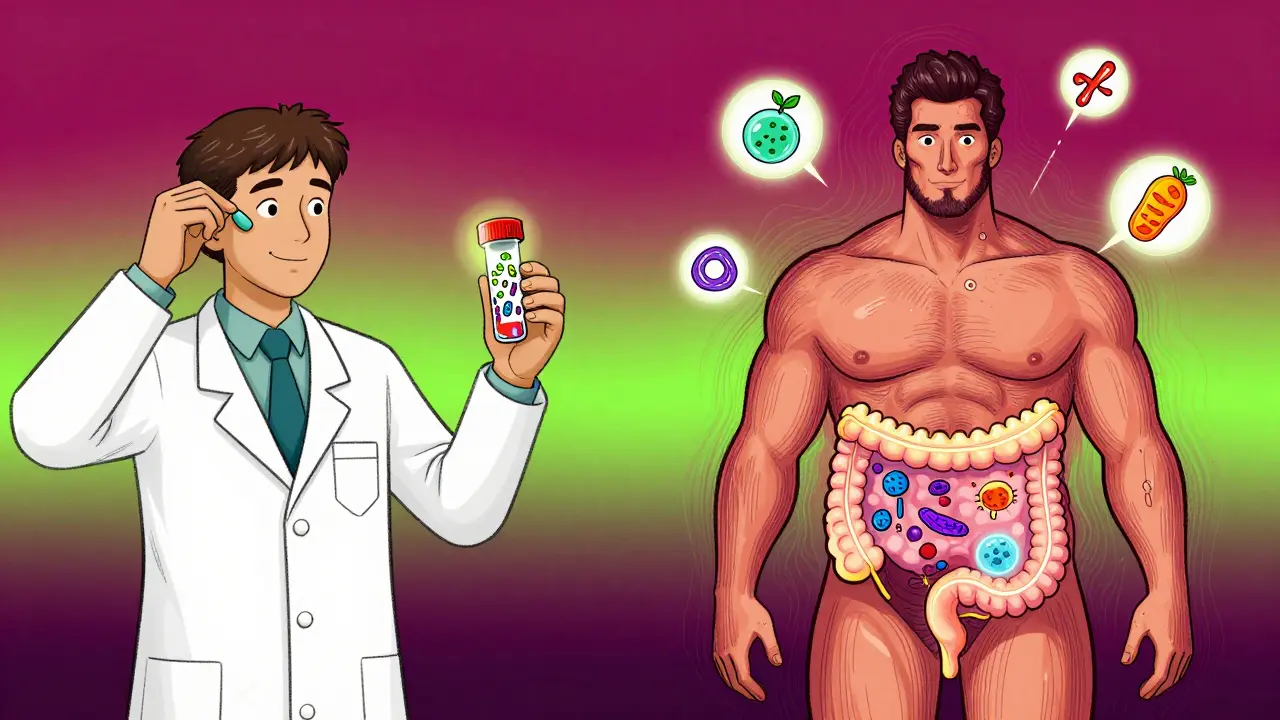
The future is personalized. Researchers are already testing microbiome-based diagnostics to match people with the probiotic strains most likely to help them. Imagine a simple stool test that tells you: “Your microbiome is low in Bacteroidetes. Try L. gasseri with inulin for 12 weeks.” Clinical trials are expanding beyond weight loss to include metabolic markers: insulin sensitivity, liver fat, cholesterol, and inflammation. One big question remains: Can we permanently reshape the gut microbiome-or do we need lifelong maintenance? For now, the evidence says this: Your gut bacteria influence your weight. You can support them. And doing so might just help you lose fat, feel better, and reduce your risk of diabetes.Can probiotics help me lose weight without changing my diet?
No. Probiotics alone won’t cause significant weight loss if your diet is high in sugar, refined carbs, and processed foods. They work best when combined with healthier eating. Studies show the biggest results come from pairing probiotics with reduced calorie intake and increased fiber. Think of them as a support system, not a shortcut.
Which probiotic strain is best for belly fat?
Lactobacillus gasseri SBT2055 has the strongest evidence for reducing visceral (belly) fat. In a 12-week trial, participants lost nearly 8% of their abdominal fat without changing their diet. Other strains like L. rhamnosus GG and Bifidobacterium longum help with overall weight and inflammation, but L. gasseri stands out for targeting stubborn fat around the organs.
How long do I need to take probiotics to see results?
Most studies show measurable changes after 8-12 weeks. Weight loss and metabolic improvements take time because gut bacteria need to shift their balance. Don’t stop after two weeks. Consistency matters more than high doses. If you stop taking them, benefits usually fade within 8-12 weeks.
Are store-bought yogurt and kefir enough for probiotics?
Not usually. Most commercial yogurts contain only a few strains, and many are killed during processing or have low CFU counts. Kefir is better, but unless it’s labeled with specific strains and CFU numbers (like L. gasseri or B. longum), it’s unlikely to deliver the doses used in clinical trials. For targeted results, use supplements with verified strains and counts.
Do probiotics have side effects?
Most people tolerate them well. Some experience mild bloating or gas in the first few days as their gut adjusts. This usually passes. People with weakened immune systems or severe illnesses should consult a doctor first. Probiotics are generally safe, but quality matters-choose reputable brands with third-party testing.
Next steps? Start with one proven strain, add more fiber, and track how you feel-not just the scale. Your gut is listening.
8 Comments
Robert Gilmore December 30, 2025 AT 11:25
Been taking L. gasseri for 3 months now-my belly fat dropped like it owed me money. Not magic, but it’s the first thing that actually worked after years of crash diets. Pair it with garlic and onions and you’re golden. Also, refrigerated brands? Non-negotiable. I learned that the hard way.
Also, stop buying yogurt thinking it’s enough. Most of that stuff is sugar bombs with a few dead bacteria floating around.
Robert Gilmore January 1, 2026 AT 00:11
While I appreciate the scientific rigor of this exposition, I must offer a counterpoint grounded in cultural anthropological observation: in many traditional diets-particularly in South Asia and the Mediterranean-fermented foods have been consumed for millennia without the need for synthetic probiotic supplementation. The modern fixation on CFU counts and strain-specific efficacy may be a symptom of our over-medicalized paradigm, rather than a genuine path to holistic health.
Perhaps the real intervention is not the probiotic capsule, but the reclamation of ancestral foodways: kimchi, kefir, natto, sourdough. These are not ‘supplements’-they are cultural rituals. And rituals, unlike pills, have rhythm, community, and meaning.
Robert Gilmore January 2, 2026 AT 08:48
Bro this is so true!! I started taking bifido longum + inulin and my bloating just vanished. I was like ‘wait is this real??’ I thought probiotics were just a scam but now I’m hooked. Also, I eat 1 banana a day and my poop is like a dream. No cap. Try it. 😍
Robert Gilmore January 4, 2026 AT 05:23
Y’all are acting like this is some new revelation. I’ve been screaming this since 2018. Gut health is everything. And no, you can’t just pop a pill and eat pizza every day and expect results. But also-why is everyone ignoring the fact that stress kills your microbiome faster than sugar? I’m not even mad. Just disappointed.
Also, if you’re not sleeping 7+ hours, none of this matters. Stop blaming bacteria and start blaming your 3 a.m. TikTok spiral.
Robert Gilmore January 5, 2026 AT 13:01
It’s fascinating how we’ve reduced health to a microbial equation. We’ve gone from ‘eat less, move more’ to ‘your gut bugs are the enemy’-but are we really any closer to understanding the self?
Maybe the microbiome isn’t the cause of obesity, but a mirror. A reflection of our isolation, our processed diets, our chronic stress. We don’t just feed bacteria-we feed our habits. And habits are harder to change than any strain of Lactobacillus.
Probiotics might help. But healing? That takes time. And presence. And maybe, just maybe, a little less obsession with optimization.
Robert Gilmore January 6, 2026 AT 02:52
Love this breakdown! Honestly, if you’re new to this, start simple: one probiotic with at least 10B CFUs, and throw some garlic in your eggs every morning. That’s it. No need to overcomplicate it. And don’t stress if you don’t see results in 2 weeks-it’s not a detox, it’s a rebuild.
Also, if you’re on antibiotics? Pause the probiotics during and start them again 2 hours after your last dose. And yes, they DO help with mood. Gut-brain axis is real. You’re not crazy for feeling better after fixing your gut. You’re just smart.
Robert Gilmore January 7, 2026 AT 11:07
Stop. Just stop. This is all snake oil dressed up with fancy graphs. 1.78 kg loss over 12 weeks? That’s barely a pound. And you’re telling me I need to spend $50 a month on supplements when I could just eat less bread? The entire field is funded by probiotic companies. Wake up.
Also, ‘synbiotics’? That’s just marketing. Prebiotics are fiber. Fiber is cheap. You don’t need a $40 jar of ‘advanced gut support’ to eat an onion.
Robert Gilmore January 8, 2026 AT 03:34
Actually, the real issue here is that you're all missing the fundamental truth: obesity is a moral failing disguised as a biological condition. People who are overweight lack discipline. They eat too much. They don't exercise. No amount of Lactobacillus gasseri will fix a person who chooses to eat a whole pizza while watching Netflix. The science is just a distraction from personal responsibility.
And as for those 'stool tests'? Please. You think your gut is special? Everyone's gut is the same. It's your choices that matter. Stop looking for magic pills and start looking in the mirror.