
When your knee, shoulder, or hip suddenly locks up with sharp pain, and even walking feels impossible, you might hear your doctor suggest a corticosteroid injection. It’s not a cure. But for many people, it’s the fastest way to get back on their feet - at least for a little while.
How Corticosteroid Injections Actually Work
Corticosteroid injections, often called cortisone shots, don’t fix broken cartilage or worn-out joints. They don’t regrow tissue. What they do is quiet the fire inside your joint. Inside inflamed joints, your body releases chemicals like interleukin-1 and tumor necrosis factor-alpha. These trigger swelling, heat, and pain. Corticosteroids work by slipping into cells and turning off the genes that make these inflammatory signals. They also reduce the number of white blood cells flooding the area and make the fluid in your joint thicker, which helps cushion movement. The injection usually contains a crystalline corticosteroid - like triamcinolone, methylprednisolone, or betamethasone - mixed with a local anesthetic like lidocaine. The anesthetic gives you immediate relief, but the real magic takes a few days. That’s when the steroid starts blocking inflammation at the source.Who Gets These Injections and Why
These shots aren’t for everyone. They’re most effective for sudden, painful flare-ups caused by inflammation, not just wear and tear.- Acute gout attacks: A single injection can clear up swelling and pain in hours.
- Tendonitis or bursitis: Think tennis elbow, shoulder bursitis, or hip pain from inflamed bursae. Injections often let people return to daily activities in days, not weeks.
- Rheumatoid arthritis flares: When medication isn’t enough, a joint injection can buy time until the next dose kicks in.
- Osteoarthritis: For mild to moderate cases, especially when pain is worse than expected for the level of joint damage.
How Long Does the Relief Last?
This is where expectations matter. Many people think a cortisone shot means “no more pain forever.” It doesn’t. Most patients feel better within 24 to 72 hours. The peak relief usually hits around week two. Then it fades. On average, pain relief lasts 2 to 4 weeks. For some, it’s 8 to 12 weeks - especially if the inflammation was mild and the joint wasn’t severely damaged. A 2023 meta-analysis of 15 studies found no meaningful benefit after 6 weeks, and by 24 weeks, there was no difference between those who got the shot and those who got a saltwater injection. One big reason people feel better longer? They rest. After the shot, they avoid overusing the joint. That rest helps the inflammation calm down naturally. The shot doesn’t heal - it just gives you a window to heal.How Many Times Can You Get One?
This is where things get tricky. Doctors generally recommend no more than 3 to 4 injections per joint per year. Why? Because repeated exposure to corticosteroids can weaken tendons, cartilage, and even bone. A 2023 study in AJR Online found that people who got knee or hip injections within 3 months before joint replacement surgery were more than twice as likely to develop a serious post-op infection. That’s not a small risk. Also, each injection carries a small chance of causing a flare-up - where the joint gets even more painful for a day or two after the shot. About 2 to 8% of patients experience this. It’s caused by tiny crystals in the steroid irritating the joint. Ice and ibuprofen usually fix it. And if you’re diabetic? Your blood sugar can spike for up to 72 hours after the injection. You’ll need to check your levels more often.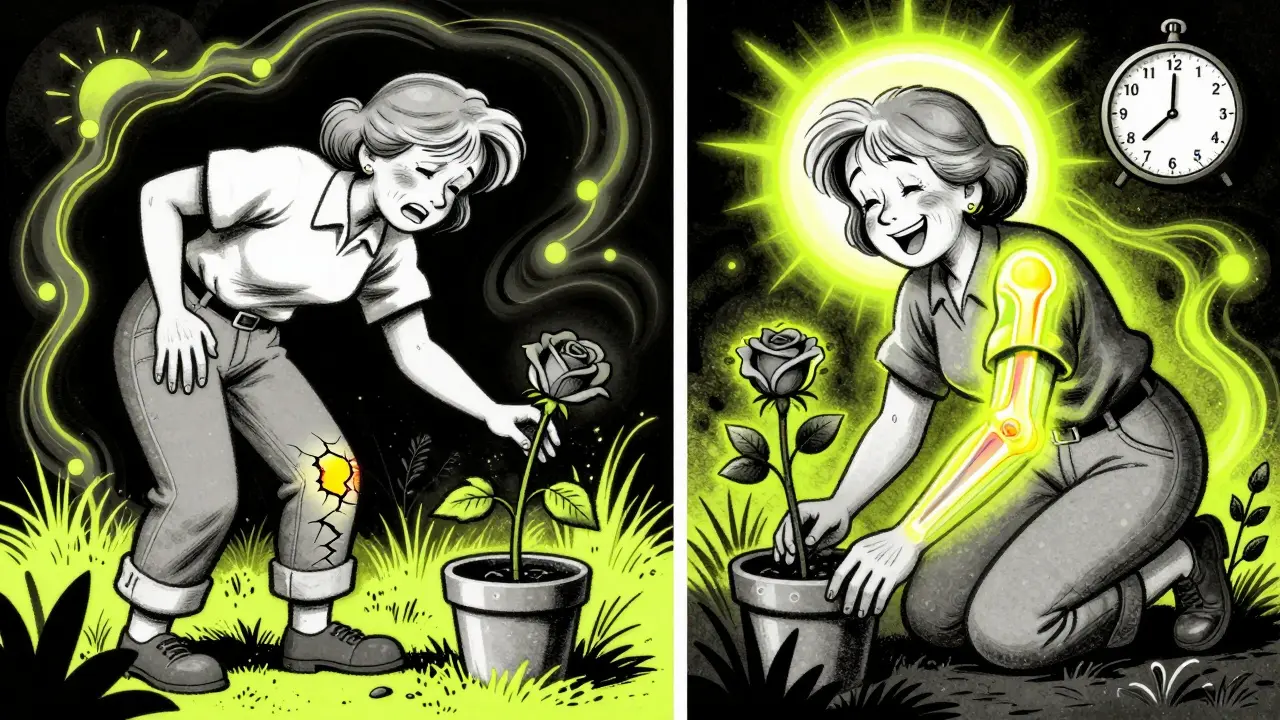
What You’ll Feel During and After the Shot
The procedure takes less than 10 minutes. Your doctor will clean the skin, numb it with a spray or tiny needle, then insert a longer needle into the joint. Ultrasound guidance is now standard in most clinics - it boosts accuracy from 70% to 95%. That means less chance of hitting the wrong spot. You’ll feel pressure, maybe a pinch. The anesthetic numbs the area quickly. Afterward, the joint might feel sore for a day. That’s normal. You’re usually told to avoid heavy lifting or strenuous activity for 48 hours. Why? To let the steroid settle and prevent it from moving out of the joint. If you jump back into running or lifting weights too soon, you might undo the benefit - or even cause damage.Cost and Accessibility
Without insurance, a corticosteroid injection costs between $100 and $300 in the U.S. That’s a fraction of what PRP ($500-$1,500) or hyaluronic acid shots ($500-$1,000) cost. But cost isn’t the only factor. PRP and stem cell therapies are growing in popularity, but they don’t work faster. Corticosteroids still win for immediate relief. In Australia, Medicare covers the cost if the injection is done by a qualified specialist and for an approved condition. Private clinics may charge more, but the drug itself is low-cost.When Corticosteroid Injections Are a Bad Idea
There are clear red flags:- You’ve had three or more injections in the same joint in the past year.
- Your joint shows advanced arthritis on X-ray or MRI.
- You have an active infection anywhere in your body.
- You’re scheduled for joint replacement surgery within the next 3 months.
- Your blood sugar is poorly controlled and you’re not monitoring it closely.
- You’ve had a bad reaction to a previous injection - like skin thinning, depigmentation, or a severe flare.

What’s New in 2026?
In 2023, the FDA approved a new extended-release version of triamcinolone called Zilretta. It’s designed to release slowly over 12 weeks. In trials, 45% of osteoarthritis patients had pain relief for 3 months - double the rate of standard shots. But it’s not a magic bullet. It still doesn’t stop joint damage. And it costs more - around $1,000 per injection. Most insurers require prior authorization. Researchers are now testing combinations - like pairing corticosteroids with PRP. The idea? Use the steroid to calm inflammation quickly, then let PRP help repair tissue over time. Early results are promising, but we’re still years away from knowing if this approach is safer long-term.Real Stories, Real Results
One patient in Sydney, 58, had severe hip bursitis that kept her from gardening. After her first injection, she was pain-free for 10 weeks. She went back to her weekly routine. The second shot lasted only 5 weeks. The third? A 3-day flare followed by 2 weeks of relief. She didn’t get a fourth. Instead, she started physical therapy. Now, she’s managing her pain with strength training and activity pacing. Another man, 64, with tennis elbow got a shot before a big golf tournament. He played the next day. Won his division. No pain. He didn’t need another shot for 18 months. These aren’t outliers. They’re typical. The shot works - but only if you use it wisely.Bottom Line
Corticosteroid injections are a powerful tool - but only for the right person, at the right time, and with the right expectations. They’re not for chronic, long-term pain. They’re not for advanced joint damage. They’re not a substitute for exercise, weight control, or physical therapy. But if you’re stuck with sudden, severe inflammation - and you need to move again, fast - they can be life-changing. Just don’t expect them to last. And never use them as a crutch. Use them like a reset button. Not a permanent fix.Do corticosteroid injections cure joint pain?
No. Corticosteroid injections reduce inflammation and relieve pain temporarily, but they don’t repair damaged cartilage, tendons, or bone. They’re a symptom management tool, not a cure. For long-term relief, physical therapy, weight management, and lifestyle changes are more effective.
How soon do corticosteroid injections start working?
The local anesthetic in the injection gives immediate, short-term numbness. The steroid itself takes 24 to 72 hours to reduce inflammation. Most people notice significant pain relief by day three. Full effect is usually reached by day five.
Can I get corticosteroid injections every month?
No. Most guidelines recommend no more than 3 to 4 injections per joint per year. More frequent injections increase the risk of tendon rupture, cartilage damage, bone death (osteonecrosis), and accelerated arthritis. Repeated use can weaken the very tissues you’re trying to protect.
Are corticosteroid injections safe for people with diabetes?
They can be, but with caution. Corticosteroids can raise blood sugar levels for up to 72 hours after the injection. Diabetic patients should monitor their glucose more frequently during this time and adjust medication or diet as needed under their doctor’s guidance. The risk is manageable but real.
What are the side effects of corticosteroid injections?
Common side effects include temporary pain or swelling at the injection site (post-injection flare), skin thinning or lightening, and elevated blood sugar. Less common but serious risks include tendon rupture, infection, cartilage damage, and accelerated joint degeneration. The risk of side effects increases with repeated injections.
Is ultrasound guidance necessary for corticosteroid injections?
It’s not always required, but it’s strongly recommended. Studies show ultrasound guidance increases accuracy from about 70% to 95%, especially for small joints like the wrist or shoulder. This means better results, fewer repeat injections, and lower risk of injecting into the wrong area.
Can corticosteroid injections delay joint replacement surgery?
Sometimes, yes - but only briefly. For people with advanced arthritis, injections may delay surgery by a few months by reducing pain and inflammation. However, they don’t stop the underlying damage. If you’re considering joint replacement, avoid injections within 3 months of surgery due to increased infection risk.
Are there better alternatives to corticosteroid injections?
For long-term joint health, yes. Physical therapy, weight loss, braces, and activity modification are safer and more sustainable. PRP and stem cell therapies are alternatives, but they cost more and don’t work faster. For acute inflammation, corticosteroids still offer the quickest relief. The best approach often combines short-term steroid use with long-term rehab.
11 Comments
Robert Gilmore January 13, 2026 AT 06:25
Let’s be real-cortisone shots aren’t magic; they’re a temporary truce with your body. I’ve had three in my knee over two years, and each time, the relief lasted less. The fourth? I skipped it. Started PT. Now I can squat without wincing. The shot didn’t fix me-my discipline did.
Robert Gilmore January 14, 2026 AT 04:16
I’m from a family where everyone gets these shots like they’re candy-grandma, uncle, cousin. But after reading this, I’m gonna sit my aunt down and explain why she shouldn’t get another one until she’s done with PT. She’s got advanced OA and keeps asking for another ‘quick fix.’ It’s not just about pain-it’s about protecting what’s left of her joints.
Robert Gilmore January 14, 2026 AT 21:13
Okay so i read this whole thing and i have to say the 2026 thing is total bs because the FDA never approved zilretta in 2023-wait no, it was 2020? Or was it 2021? Anyway, the study they cited? 15 studies? That’s not a meta-analysis, that’s a google doc with 15 links from pubmed that someone copy-pasted. Also, the part about ‘rest helps the inflammation calm down’? Duh. That’s like saying ‘water is wet.’ And why is no one talking about how these shots are overprescribed by cash-hungry ortho clinics? I mean, come on.
Robert Gilmore January 15, 2026 AT 05:25
Think about this: corticosteroids are essentially synthetic cortisol-your body’s own stress hormone. So when you inject it, you’re not just suppressing inflammation-you’re hijacking your hypothalamic-pituitary-adrenal axis. You’re telling your adrenals, ‘Hey, no need to produce your own. We got this.’ And when you stop? Boom. Adrenal fatigue. Not just joint pain-you’re now emotionally brittle, chronically tired, and your immune system is in shambles. This isn’t medicine. It’s a biochemical gamble with your entire endocrine system. And we call this ‘standard of care’? Pathetic.
Robert Gilmore January 16, 2026 AT 12:44
Man, in India, we call these ‘pain killers in a needle’-and everyone wants them. My cousin got one for his shoulder and thought he could lift weights again the next day. Broke his rotator cuff. Now he’s doing yoga and eating turmeric. I told him: ‘If you want to dance again, you gotta stop treating your body like a broken phone you keep patching.’
Robert Gilmore January 17, 2026 AT 11:21
Doctors are lazy. They’d rather inject you than teach you to move right. This isn’t medicine-it’s a Band-Aid on a bullet wound.
Robert Gilmore January 18, 2026 AT 04:37
I’ve seen this too many times-people get one shot, feel better, go right back to their old habits, then come back angry because it didn’t last. The body doesn’t lie. If your joint hurts, it’s screaming. You don’t silence the scream-you listen. I’m not saying don’t get the shot. I’m saying: get it, then do the work. PT, walk, stretch, lose weight if you need to. Otherwise, you’re just buying time… and pain.
Robert Gilmore January 18, 2026 AT 12:21
So let me get this straight: you’re telling me the ‘magic’ of cortisone is that it makes you rest? That’s it? The steroid doesn’t heal-it just makes you too sore to move? So it’s not a treatment… it’s a forced vacation? Brilliant. I’m sure the pharmaceutical reps love this angle. ‘Just lie down and let the poison do its thing.’
Robert Gilmore January 19, 2026 AT 21:29
Oh, darling, this is just another capitalist fantasy dressed up as science. We’ve turned the human body into a machine you can ‘service’ with a syringe. No wonder we’re all falling apart. We’ve forgotten that pain is not an enemy-it’s a messenger. And we’re silencing the messenger… while the house burns down. Zilretta? More like ‘Zilch-ett-a.’ It’s not innovation-it’s commodification with a fancy label.
Robert Gilmore January 21, 2026 AT 06:47
lol i got one of these last year and my sugar went nuts for 3 days. i had to check it every hour. my doc was like ‘eh, just drink water.’ thanks, doctor. also i got it because i was gonna play basketball. guess what? i didn’t play. i sat on the couch. so yeah, the shot worked… because i didn’t use the joint. thanks, science.
Robert Gilmore January 21, 2026 AT 19:12
My mom got her first cortisone shot for her hip and cried because it hurt more the next day. Then she got better. Then she went back to gardening like nothing happened. Got a second shot. Then a third. Now she can’t walk without a cane. She says, ‘It’s fine, I just need another one.’ I don’t know how to make her listen. I just want my mom to be able to dance at my wedding. Not just sit and smile through the pain.