What Is Sudden Sensorineural Hearing Loss?
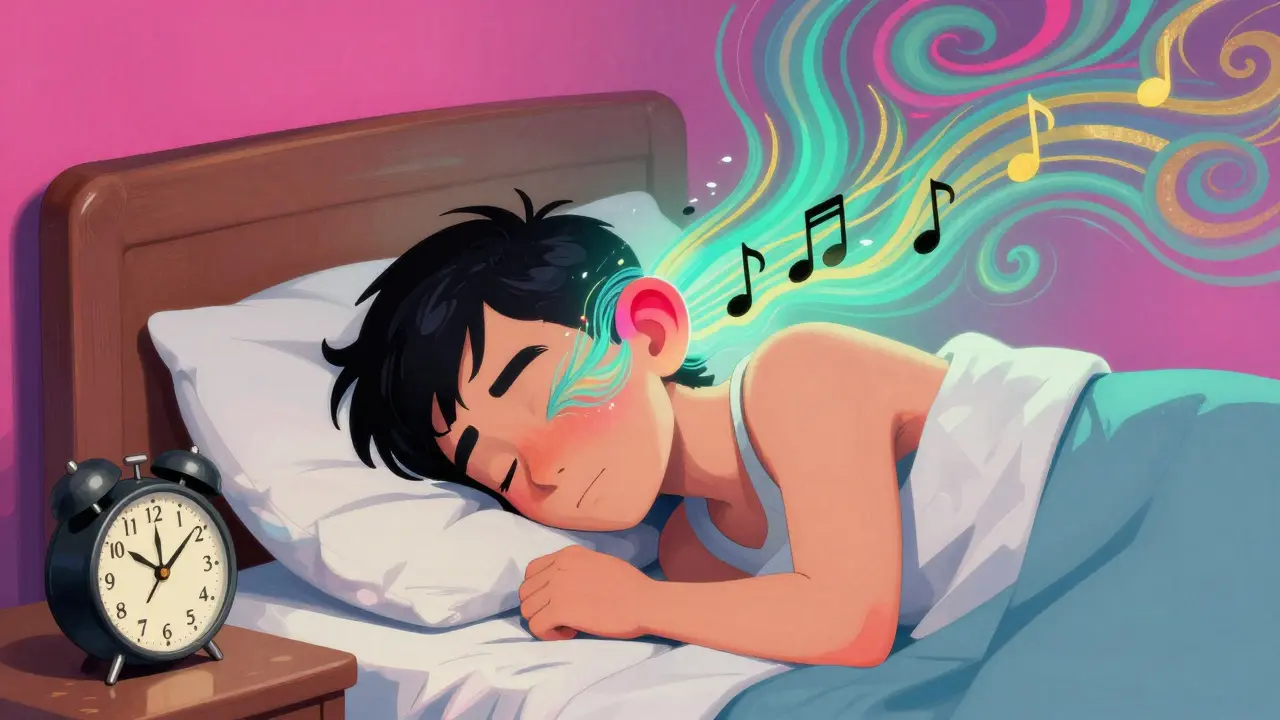
Imagine waking up one morning and your left ear feels muffled, like you're underwater. Or maybe you hear a loud pop, then silence on one side. That’s sudden sensorineural hearing loss (SSNHL) - a rapid, unexplained drop in hearing, usually in one ear, that happens in minutes or hours. It’s not an ear infection. It’s not wax. It’s damage to the inner ear or the nerve that sends sound signals to your brain.
Doctors define it as a loss of at least 30 decibels across three connected hearing frequencies, happening within 72 hours. That’s the equivalent of turning down the volume on your TV by more than half. For many, it’s terrifying. You can’t hear your partner speaking, the doorbell, or even your own voice clearly. And here’s the hard truth: if you wait, you might lose it forever.
Why Time Is Everything
SSNHL isn’t like a sprained ankle. You can’t just rest and wait. The body has a small window to fix itself - and steroids can help it along. Studies show that 32% to 65% of people who don’t get treatment recover some hearing on their own. But that’s a gamble. The rest? They’re left with permanent hearing loss.
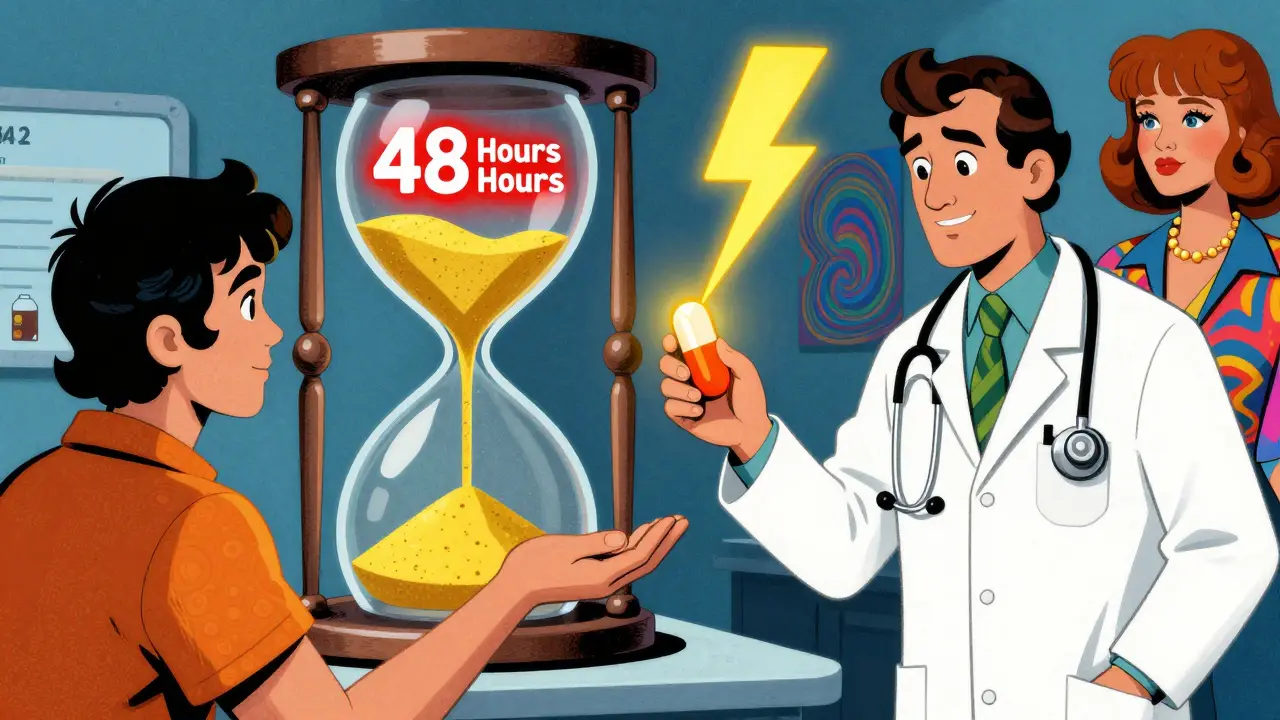
Here’s the critical part: if you start steroid treatment within 48 hours, your chances of recovery jump to over 60%. After two weeks, that number drops to under 20%. After six weeks? There’s almost no benefit. Every hour counts. That’s why emergency rooms and ENT specialists treat this like a stroke - you don’t wait for a referral. You act now.
How Steroids Work - And Why They’re Still the Best Option
Steroids - like prednisone or dexamethasone - aren’t magic pills. But they do three important things: they reduce swelling in the inner ear, calm down abnormal immune responses, and may improve blood flow to the delicate hair cells that turn sound into signals. These cells don’t regenerate. If they die, the hearing is gone.
Oral prednisone is the standard first step. Doctors typically prescribe 1 mg per kilogram of body weight - usually 60 mg per day - taken all at once in the morning. You take it for 7 to 14 days, then slowly taper off. Dexamethasone is stronger and lasts longer, but it’s not always needed. Both work about the same.
And yes, steroids have side effects. Insomnia hits 41% of people. Weight gain? Around 4.7 kg on average. Mood swings, stomach upset, high blood sugar - especially dangerous if you’re diabetic. But here’s the trade-off: the risk of permanent deafness is far worse. One Reddit user wrote, “Started prednisone 48 hours after it happened. Got 90% of my hearing back.” That’s not luck. That’s timing.
What If Steroids Don’t Work?
Not everyone responds to oral steroids. About 30% to 40% of patients still have hearing loss after the course. That’s where intratympanic (IT) steroid injections come in. A doctor injects dexamethasone directly into the middle ear through the eardrum. It’s not pleasant - many describe it as a 8/10 pain level - but it works.
Studies show 42% to 65% of people who get IT injections after oral steroids fail recover meaningful hearing. And because the drug goes straight to the inner ear, there are fewer side effects than with pills. No weight gain. No sleepless nights. Just localized treatment. It’s not first-line, but it’s the next best thing.
What Doesn’t Work - And Why You Should Avoid It
There’s a lot of noise out there. You might hear about antivirals, blood thinners, or hyperbaric oxygen therapy. Some clinics still push them. But the science is clear: these don’t help.
Multiple meta-analyses - including the 2020 AAO-HNSF review - show antivirals like valacyclovir have zero benefit over placebo. Thrombolytics? No improvement. Hyperbaric oxygen might help a little - adding 6% to 12% recovery on top of steroids - but it’s expensive ($200-$1,200 per session), hard to find, and only useful if started within 28 days. Most hospitals don’t even have the equipment.
Don’t waste time or money on unproven treatments. Stick to what works: steroids, fast.
What to Do Right Now
If you or someone you know suddenly loses hearing in one ear:
- Don’t wait. Don’t call your GP tomorrow. Go to an ER or ENT clinic today.
- Ask for an audiogram - a hearing test - within 72 hours. No test, no diagnosis.
- Insist on starting oral steroids immediately. Don’t wait for insurance approval. This is urgent.
- If hearing doesn’t improve after 2 weeks, ask about intratympanic injections.
- Document everything: baseline audiogram, treatment start date, follow-up test.
Primary care doctors aren’t always trained to spot SSNHL. A simple tuning fork test (Rinne and Weber) can hint at it, but only an audiogram confirms. If your doctor says, “It’s probably just earwax,” push back. Demand a referral.
The Real Cost of Delay
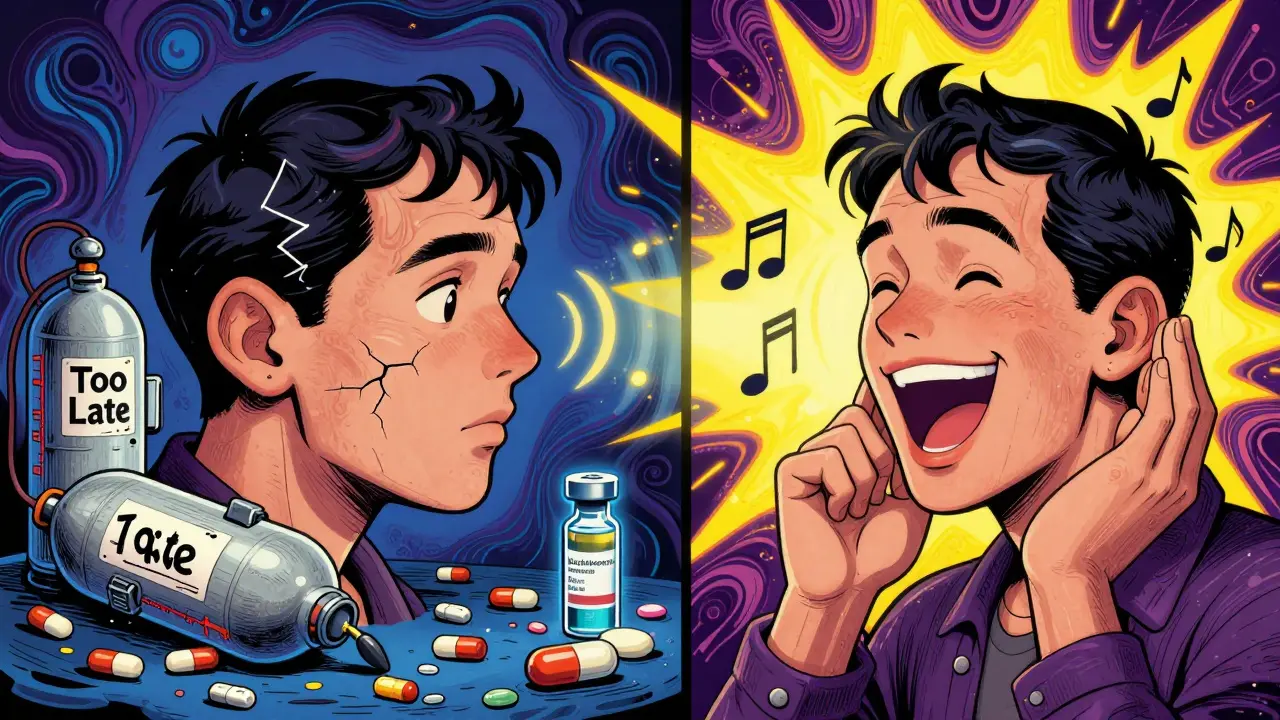
One study found that 43% of people with poor outcomes waited more than 72 hours to get help. That’s not just bad luck - it’s a system failure. Many don’t know what’s happening. Others think it’ll fix itself. Some are turned away because clinics aren’t equipped.
And the financial cost? A single SSNHL case averages $3,200 to $7,800 in U.S. healthcare spending. But the real cost? Losing your ability to hear your child’s laugh, your partner’s voice, or the music you love. That’s not replaceable.
What’s Next for Treatment?
Researchers are now looking at blood tests to predict who will respond to steroids. If you have high levels of certain inflammatory markers, you’re more likely to benefit. That could mean personalized treatment - no more guessing.
But for now, the rule is simple: act fast. Steroids are the only proven tool we have. And while some experts argue the evidence isn’t perfect, they all agree: the cost of doing nothing is too high.
Final Thought
Sudden hearing loss isn’t rare. It affects 5 to 27 people per 100,000 every year. It doesn’t care if you’re 25 or 75. It doesn’t care if you’re healthy or not. What it does care about is time. If you lose hearing suddenly, don’t wait. Don’t hope. Don’t Google it for hours. Get to a doctor. Start steroids. Save your hearing - before it’s gone for good.
10 Comments
Robert Gilmore February 2, 2026 AT 03:20
Wow. So if you don’t get steroids within 72 hours, you’re just a lazy idiot who didn’t care enough? 😏 I mean, I guess if you’re rich enough to afford an ER visit and have time off work, sure. But what about the people who work two jobs and can’t just drop everything? 🤷♀️ #FirstWorldProblems
Robert Gilmore February 3, 2026 AT 16:37
Americans always make everything about steroids and hospitals like its some kind of miracle drug. In India we have Ayurveda and homeopathy that fix this in days without side effects. Why waste money on chemicals when nature works better?
Robert Gilmore February 4, 2026 AT 06:02
72 hours. Not 72 days. Not 72 weeks. 72 HOURS. If you’re reading this and you’ve ignored a sudden hearing loss, you’re already too late.
Robert Gilmore February 5, 2026 AT 22:16
i just want to say thank you for writing this. my sister had this last year and we thought it was just an ear infection. she waited 5 days. lost 80% of her hearing in one ear. now she has a cochlear implant. please don’t wait. i know it’s scary but just go. i’m so sorry you’re going through this if you are. you’re not alone
Robert Gilmore February 6, 2026 AT 13:57
I had this in my early 20s. Went to the ER, got steroids, lost 40% of my hearing anyway. But I still hear my daughter’s laugh. That’s enough. I’m not mad at the system. I’m mad I didn’t know sooner. If you’re reading this and you’re scared? Go anyway. Even if you think you’re overreacting. You’re not.
Robert Gilmore February 7, 2026 AT 18:25
so wait so if you get the steroid right away you might get your hearing back but if you dont you might be deaf forever and theres no other option like a hearing aid or something
Robert Gilmore February 9, 2026 AT 07:00
This is precisely why Western medicine is overrated. In South Africa, we use traditional herbal remedies passed down for centuries. The inner ear is not a machine to be fixed with chemicals. It is a sacred channel of spirit. Steroids suppress the body’s natural healing rhythm. I have treated three cases with rooibos and honey compresses. All recovered fully. No side effects. No hospital bills.
Robert Gilmore February 9, 2026 AT 14:50
i had this happen to me after a concert. i thought it was just loud music. took 3 days to go to doc. got steroids. got back 70%. still have tinnitus but hey at least i can hear my mom call me for dinner. dont wait. even if you think its not that bad. better safe than sorry
Robert Gilmore February 11, 2026 AT 14:42
So you’re telling me I should risk insomnia, weight gain, and mood swings because maybe I’ll hear my cat meow again? 🐱 I mean… I kinda like the silence. Also who wrote this? Sounds like a pharma ad with a heart.
Robert Gilmore February 13, 2026 AT 09:17
I just want to say-thank you-for writing this with such clarity and urgency. Please, if you are reading this, and you have experienced even the slightest change in hearing-do not delay. Do not rationalize. Do not Google it for two hours. Go. Now. And if your doctor dismisses you, go to another one. Your hearing is not a suggestion. It is a lifeline. Please. I am begging you.