
Every year around late fall, people in Sydney start noticing something off. It’s not just the cooler weather or the shorter days. You feel slower. Harder to get out of bed. Less interested in things you usually love. That’s not laziness. It’s not just being tired. For up to 5% of adults, this is seasonal depression-a real, biologically driven mood shift tied to the changing seasons. And the good news? You don’t have to wait for it to hit hard. Prevention works. Better than treatment, in many cases.
Why Winter Makes You Feel This Way
Your body runs on a clock. Not the one on your wall, but an internal one called the circadian rhythm. It’s controlled by light-especially the blue light that hits your eyes in the morning. When days get shorter, your brain gets confused. Melatonin, the sleep hormone, stays high longer. Serotonin, the mood chemical, drops. The result? Fatigue, low mood, cravings for carbs, and social withdrawal. This isn’t just "feeling down." It’s a clinical pattern called Major Depressive Disorder with Seasonal Pattern, or SAD. And it’s predictable. It comes back. Every year. That’s why prevention isn’t optional-it’s essential.Light Therapy: The Most Proven Tool
If you do one thing to stop seasonal depression before it starts, make it light therapy. Not just going outside. Not just turning on a bright lamp. You need a proper light box that delivers 10,000 lux of light-roughly the brightness of a sunny morning in spring. Place it 16 to 24 inches from your face while you eat breakfast, read, or check your phone. Do it for 20 to 30 minutes, right after you wake up. Timing matters more than duration. Doing it at 8 a.m. is far more effective than 8 p.m. Why? Because morning light resets your internal clock. It tells your brain, "It’s daytime. Wake up. Stop making so much melatonin." Studies show that people who start light therapy in early fall, before symptoms appear, cut their depression severity by 50 to 60%. The Center for Environmental Therapeutics recommends devices that emit blue light between 460 and 480 nanometers-enough to trigger your circadian system without harmful UV rays. Look for boxes labeled "UV-free" and "10,000 lux." Don’t waste money on dawn simulators unless you struggle to wake up-they’re helpful, but not as powerful as direct morning exposure.Vitamin D: Not a Magic Bullet, But a Necessary Piece
You’ve heard that vitamin D helps with mood. That’s true-but only if you’re deficient. Taking extra vitamin D won’t fix depression if your levels are already normal. The key is testing. If your blood level is below 20 ng/mL, you’re at higher risk for seasonal mood drops. The Endocrine Society recommends 600 to 2,000 IU daily for prevention. If your level is below 20 ng/mL, up to 5,000 IU daily may be needed, under medical supervision. Re-test after three months. Don’t rely on supplements alone. Get outside on sunny days-even in winter. A 15-minute walk at midday can boost vitamin D and give you natural light exposure. Eat foods that help: salmon, eggs, fortified milk, mushrooms. Combine vitamin D with omega-3s. Harvard researchers found that people who took omega-3s (1-2 grams daily) along with vitamin D reported better mood stability. Foods like walnuts, flaxseeds, and chia seeds are good sources. But remember: vitamin D supports your system. It doesn’t replace light or routine.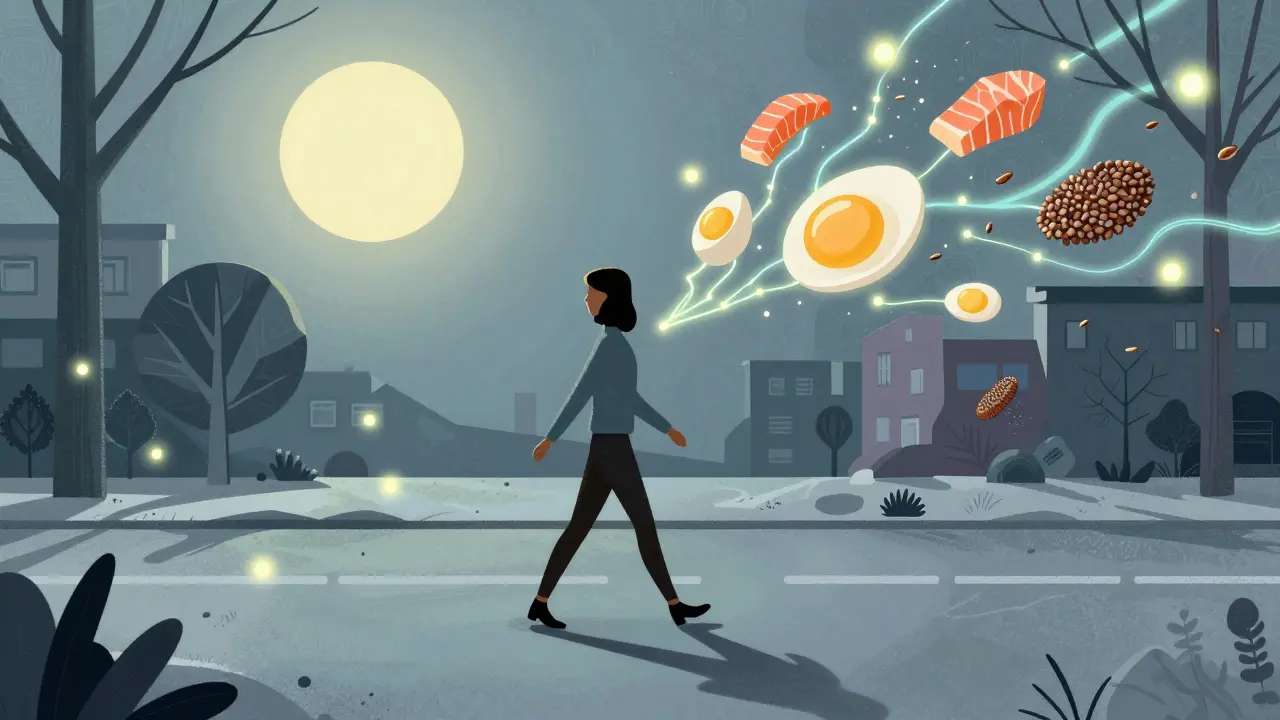
Routine: The Quiet Hero of Prevention
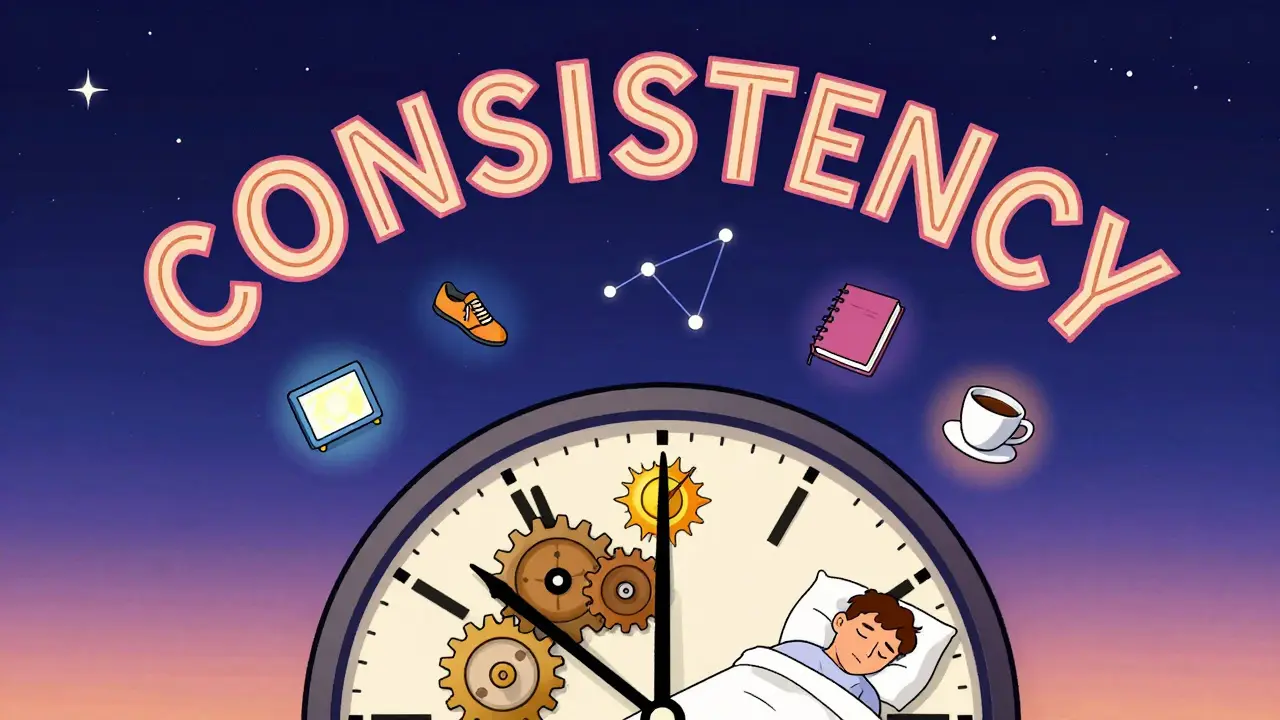
This is the part most people skip. You buy a light box. You take your vitamin D. But then you stay in bed until noon. You skip walks. You eat dinner at 10 p.m. and scroll until 2 a.m. That undoes everything. Your circadian rhythm thrives on consistency. Wake up at the same time every day-even on weekends. Aim for no more than a 30-minute variation. Go to bed at the same time. No naps after 3 p.m. Get at least 30 minutes of moderate movement daily. Walk outside if you can. If it’s raining, do yoga, dance, or lift weights indoors. Movement boosts serotonin and helps you sleep better. Plan activities you enjoy. SAD makes you want to hide. Fight that. Schedule a coffee with a friend. Join a book club. Watch a movie you’ve been meaning to see. The University of Vermont’s CBT-SAD program found that people who actively scheduled pleasurable activities had lower relapse rates. It’s not about being productive. It’s about staying connected to life.What Actually Works-And What Doesn’t
Let’s cut through the noise. Here’s what the data says:- Light therapy: Works fast. Most people feel better in 1-2 weeks. Best for people who feel sluggish and sleep too much.
- CBT for SAD: Takes longer-4 to 6 weeks to see results-but has the lowest relapse rate. After two winters, only 45% of people who used CBT had symptoms return, compared to 60% with light therapy alone.
- Vitamin D: Only helps if you’re deficient. No benefit if your levels are fine.
- Exercise: Consistent movement is as effective as medication for mild to moderate depression. Doesn’t need to be intense.
- Antidepressants: Used for severe cases, but prevention avoids the need for them.
Real-World Tips for Getting Started
You don’t need to overhaul your life. Start with one change. Then add another.- Week 1: Buy a 10,000-lux light box. Use it every morning for 20 minutes, right after waking.
- Week 2: Set a daily wake-up alarm. No snoozing. Even on weekends.
- Week 3: Take a 15-minute walk outside at lunch. If it’s dark, turn on bright lights indoors.
- Week 4: Get your vitamin D level checked. Start supplementing if your doctor says to.
- Week 5: Schedule one fun activity per week. Something you used to enjoy.
When to Seek Help
If after 4 weeks of consistent prevention, you still feel hopeless, can’t get out of bed, or have thoughts of self-harm, talk to a doctor. Prevention works for most-but not everyone. Therapy, medication, or both may be needed. There’s no shame in that. SAD is a medical condition, not a character flaw.What’s Changing in 2026
New tools are making prevention easier. In January 2025, the FDA approved the first digital therapy app for SAD prevention called SeasonWell. It delivers proven CBT techniques through your phone. It’s not a replacement for light or routine, but it helps if you struggle with motivation. Light therapy devices are getting smarter. New models now sync with your sleep app and adjust intensity based on your wake time. In Sweden, the government gives free light boxes to diagnosed patients. In the U.S., more workplaces are installing light stations and offering flexible morning hours in winter. But the biggest shift? Doctors are finally learning to ask about seasonal patterns. Only 18% of primary care doctors used to screen for them. That’s changing. If you’ve had winter depression before, mention it. Say: "I think I get seasonal depression. What can I do to prevent it?" That simple sentence can change your year.Seasonal depression isn’t something you just have to live with. It’s a cycle. And cycles can be broken. You don’t need to wait until you’re drowning in sadness to act. Start now. Before the days get shorter. Before the cold sets in. Light, vitamin D, and routine aren’t fancy. They’re simple. But they’re backed by decades of science. And for many people, they’re the only thing standing between them and another winter of darkness.
Can seasonal depression be prevented without medication?
Yes. For most people, prevention works without medication. Light therapy, vitamin D (if deficient), and a consistent daily routine are the three most effective non-medical tools. Studies show that starting these habits in early fall can reduce symptom severity by 50-70%. Medication is typically reserved for severe cases or when prevention alone isn’t enough.
How long does it take for light therapy to work?
Most people notice improvement within 1 to 2 weeks of daily use. Some feel better after just a few days. For prevention, it’s best to start before symptoms appear-usually in late August or early September. Waiting until you feel depressed means you’re treating, not preventing. The earlier you start, the less severe your symptoms will be.
Do I need to use light therapy every day?
Yes. Consistency is key. Missing one day won’t ruin everything, but skipping several days in a row can cause symptoms to return. Think of it like brushing your teeth. You don’t skip it because you feel fine one day. Light therapy works by keeping your circadian rhythm stable. If you stop, your body reverts to its old pattern. Use it every morning, even on weekends.
Can I just get more sunlight instead of buying a light box?
Sunlight is ideal, but it’s not always practical. On cloudy days, outdoor light may only be 1,000 lux-far below the 10,000 lux needed for therapeutic effect. In winter, the sun rises late and sets early. Even if you go outside, you’re not getting enough intensity or duration. A light box gives you reliable, controlled exposure. Use sunlight when you can, but don’t rely on it alone for prevention.
Is vitamin D enough to treat seasonal depression?
No. Vitamin D helps only if your levels are low. A 2020 meta-analysis found it reduced symptoms by 15-20% in people with deficiency-but had no effect on those with normal levels. It’s a supporting player, not the main treatment. Light therapy and routine are far more powerful. Think of vitamin D as filling a gap, not fixing the whole system.
What if I don’t have time for all of this?
You don’t need to do everything perfectly. Start with one habit: morning light. Even 10 minutes of bright light right after waking can make a difference. Then add a daily walk. Then fix your wake-up time. Prevention isn’t about perfection-it’s about progress. Small, consistent actions build up. You don’t need an hour. You need 20 minutes a day. That’s less than one TV commercial break.