Every pill, every vial, every bottle that reaches a patient’s hands should be safe. But in 2024, law enforcement agencies around the world uncovered 6,424 incidents of counterfeit, stolen, or illegally diverted medicines. These weren’t just minor cases-they involved over 2,400 different drugs, from life-saving cancer treatments to common antibiotics. And when these fake medicines slip through, it’s often a pharmacist who’s the last person standing between a patient and harm.
Why Pharmacists Are the Last Line of Defense
Pharmacists don’t just fill prescriptions. They’re the final checkpoint in a long, complex supply chain. A doctor writes a script. A wholesaler ships it. A distributor delivers it. But when something goes wrong-when a batch of insulin is laced with cheap chemicals, or when fake blood pressure pills are repackaged to look real-it’s the pharmacist who has to spot it. The Partnership for Safe Medicines calls pharmacists the “last line of defense.” And it’s not just a slogan. In 2025, Interpol’s Operation Pangea XVI shut down 13,000 illegal online pharmacies and seized over 50 million counterfeit doses. Many of those fake drugs were already in transit to pharmacies. Without trained staff to catch them, they’d have ended up on shelves.What Makes a Drug Counterfeit?
Not all fake drugs look obviously wrong. Some have the right color, shape, and packaging. Others are even labeled with real batch numbers. But here’s what they often lack:- Active ingredients (or the wrong amount)
- Proper manufacturing controls
- Valid supply chain documentation
- Authentic tamper-proof seals
How Training Has Evolved
Ten years ago, pharmacists checked for counterfeits by comparing labels, calling distributors, and hoping the paperwork matched. Today, that’s not enough. In 2021, the International Pharmaceutical Federation (FIP) and the World Health Organization launched a groundbreaking curriculum-bilingual, competency-based, and tested on 355 pharmacy students in Cameroon, Senegal, and Tanzania. After training, students’ ability to identify fake drugs improved by over 70%. That’s not just better knowledge-it’s saved lives. The WHO is rolling out an updated global toolkit in late 2024, with new modules on online counterfeit sales, a growing threat since 2020. Criminals now sell fake vaccines, weight-loss drugs, and erectile dysfunction pills through Instagram ads and fake Amazon listings. Pharmacists need to know how to spot these digital traps too.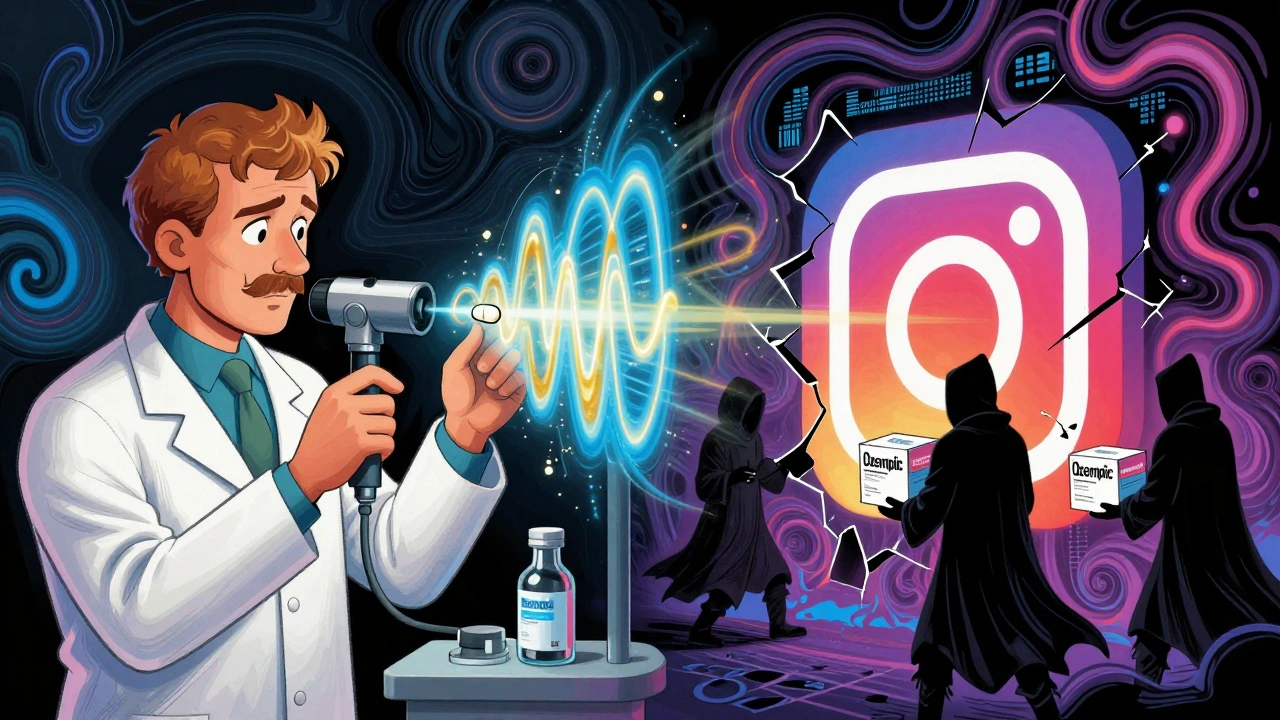
Technology Is Changing the Game
The days of squinting at barcodes and making phone calls are over. Tools like RxAll’s handheld spectrometer can scan a pill in under five seconds. Using AI and spectral analysis, the device compares the drug’s chemical signature against a database of authentic products. If it’s off-even slightly-it flags it. This isn’t science fiction. Pharmacists in Australia, the U.S., and parts of Europe are using these devices daily. One community pharmacist in Sydney told me she used to spend 15 minutes verifying a single specialty drug. Now, with the scanner, it’s under a minute. And her confidence? It’s doubled. RxAll also runs an online forum where pharmacists share real cases: “This bottle came in from a new supplier-look at the seal.” “The batch number doesn’t match the manufacturer’s website.” These aren’t hypotheticals. They’re lived experiences.Online Training: What Works
Not every pharmacy can afford a $2,000 scanner. But everyone can access online training. Courses like TrainingNow.com’s 45-minute Medicare Fraud, Waste, and Abuse (FWA) module are popular-not because they’re mandatory (CMS stopped requiring their specific course in 2019), but because they’re practical. They include real-world scenarios: “A patient offers to buy 100 pills of a controlled substance for $50.” “A rep shows up with unmarked boxes labeled ‘pharmacy supply.’” Other programs, like PowerPak’s “Fakes in the Pharmacy,” teach pharmacists to recognize red flags:- Prices far below wholesale acquisition cost
- Suppliers not listed on the manufacturer’s authorized distributor page
- Missing or altered lot numbers
- Unusual packaging-wrong font, mismatched colors, blurry printing
Global Gaps and Local Realities
The U.S. has the most advanced drug tracking system in the world-the Drug Supply Chain Security Act (DSCSA)-a 10-year plan that’s nearly complete. By 2023, every prescription drug in the U.S. must have a unique identifier, traceable from manufacturer to pharmacy. But in many low-income countries, there’s no such system. No scanners. No digital records. No regulatory oversight. That’s why the FIP/WHO curriculum was so important. It gave pharmacy students in sub-Saharan Africa tools they didn’t have before: knowledge, confidence, and a framework to act-even without high-tech tools. Pharmacists in these regions rely on observation: Is the blister pack cracked? Does the liquid have particles? Is the label in the wrong language? These aren’t ideal solutions-but they’re what’s working right now.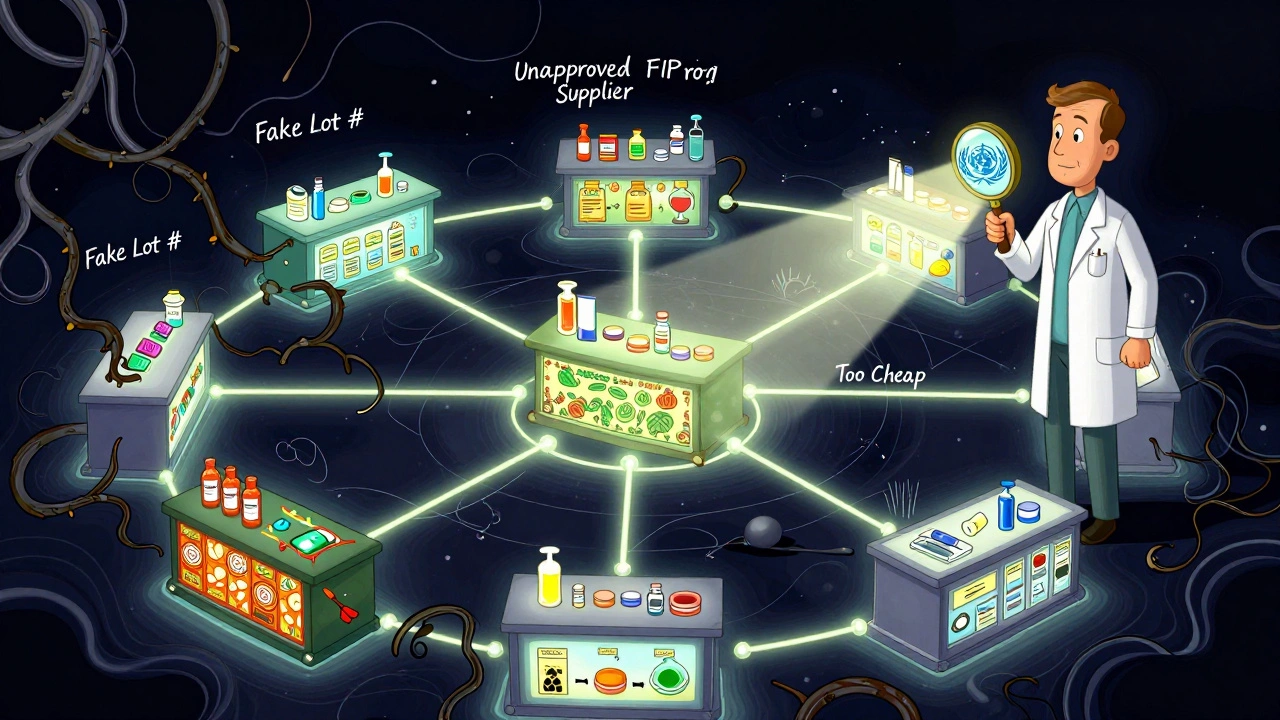
What Pharmacists Should Do Today
You don’t need a degree in forensics to protect patients. Here’s what works:- Verify suppliers. Always check the manufacturer’s website for their list of authorized distributors. If the supplier isn’t on it, don’t accept the product.
- Question unusually low prices. If a drug is 60% cheaper than your usual source, it’s not a deal-it’s a danger.
- Use available tech. Even basic UV lights or magnifiers can reveal hidden watermarks or altered printing.
- Report suspicious products. Don’t assume someone else will handle it. Report to your state board, the FDA, or your national drug authority.
- Stay updated. Counterfeiters adapt fast. So must you. Subscribe to alerts from WHO, Interpol, or your pharmacy association.
The Bigger Picture
This isn’t just about pills. It’s about trust. Patients trust that the medication they’re given will work. That’s a sacred promise. When a pharmacist catches a fake drug, they’re not just protecting one person. They’re breaking a chain. That fake insulin might have gone to a child with Type 1 diabetes. That counterfeit antibiotic could have been given to someone with pneumonia. One mistake can be fatal. And the threat isn’t going away. Criminal networks are getting smarter. They’re now counterfeiting biologics-complex, expensive drugs made from living cells. These are harder to replicate, but not impossible. And when they do, the consequences are even deadlier.What’s Next?
The future of counterfeit detection is AI, blockchain, and real-time verification. But until those tools are universal, the most powerful weapon is still education. Pharmacists need ongoing training-not just once, but regularly. They need access to affordable tech. They need networks to share intel. And they need to know they’re not alone. The global response is growing. Interpol, WHO, and pharmaceutical companies are working together. But the real change happens in the pharmacy, behind the counter, when a pharmacist pauses, looks closer, and says, “This doesn’t look right.” That moment-that quiet, careful check-is what keeps millions safe every day.What are the most common signs of a counterfeit drug?
Common signs include mismatched or blurry packaging, incorrect spelling on labels, unusual pill color or texture, missing or altered batch numbers, and prices that are far below the typical wholesale cost. Packaging may also have poor-quality seals, inconsistent fonts, or missing tamper-evident features. Always cross-check the manufacturer’s authorized distributor list and verify lot numbers directly with the company.
Can pharmacists use smartphones to detect fake drugs?
Some apps claim to detect counterfeit drugs using smartphone cameras, but most are unreliable. Real detection requires spectral analysis or chemical verification-tools like RxAll’s handheld devices. These use AI and light spectroscopy to compare a drug’s molecular signature against verified databases. Smartphones lack the precision needed for this. Don’t rely on apps. Use certified tools or verify through manufacturer channels.
Is counterfeit drug training mandatory for pharmacists?
In the U.S., Medicare Fraud, Waste, and Abuse (FWA) training is required within 90 days of hire, but the specific course is no longer mandated by CMS after 2019. In Australia and the EU, there’s no national law requiring counterfeit detection training, but many pharmacy boards and employers require it as part of continuing education. In low-income countries, training is often voluntary due to lack of infrastructure. Regardless of legal requirements, it’s a professional responsibility.
How can pharmacists report suspected counterfeit drugs?
In the U.S., report to the FDA’s MedWatch program or your state pharmacy board. In Australia, contact the Therapeutic Goods Administration (TGA). In the EU, use EudraGMDP. Always document the product details: batch number, manufacturer, supplier, date received, and photos of packaging. If you suspect criminal activity, contact local law enforcement or Interpol’s global database. Never return or destroy suspected counterfeits-preserve them for investigation.
Are online pharmacies more likely to sell fake drugs?
Yes. Over 95% of online pharmacies operate illegally, according to the National Association of Boards of Pharmacy. Many sell fake versions of popular drugs like Viagra, Ozempic, and insulin. These sites often look professional, use fake seals, and offer “discounts.” Always check for the VIPPS seal (Verified Internet Pharmacy Practice Sites) in the U.S. or equivalent certification in your country. If the site doesn’t require a prescription or ships from an unknown country, avoid it.
14 Comments
Robert Gilmore December 7, 2025 AT 09:23
Let’s be real-this whole ‘last line of defense’ narrative is just PR fluff. Pharmacists aren’t trained forensic scientists. Most of them are overwhelmed, underpaid, and working 12-hour shifts with zero time to inspect every pill. The real problem? Corporations outsourcing supply chains to the lowest bidder. The pharmacist gets blamed because they’re the only one left standing when the house collapses.
Robert Gilmore December 9, 2025 AT 05:50
Whoa, hold on-so now we’re trusting AI scanners and ‘spectral analysis’? That’s just a fancy way of saying Big Pharma is pushing surveillance tech to control what we can buy. Next thing you know, your local pharmacy will need a government license just to stock ibuprofen. And don’t get me started on ‘authorized distributors’-those lists are forged as often as the pills themselves. This whole system is rigged.
Robert Gilmore December 9, 2025 AT 16:44
India’s been fighting this war for decades-and we did it without $2000 scanners or fancy AI. We used our eyes, our hands, and our damn common sense. If the blister pack looks like it was printed on a 1998 inkjet? Throw it out. If the bottle smells like chemical cleaner? Don’t touch it. No PhD needed. The West acts like this is some new frontier-bro, we’ve been surviving this since the 90s.
Robert Gilmore December 11, 2025 AT 12:15
So… let me get this straight. We’re supposed to believe that pharmacists in rural Nigeria are catching fake cancer drugs by squinting at labels? That’s not vigilance-that’s tragic. And yet somehow, the article treats this as ‘resourceful.’ It’s not. It’s a failure of global infrastructure. We’re asking people to do the impossible and calling it heroism.
Robert Gilmore December 13, 2025 AT 07:40
It is deeply concerning that this piece frames counterfeit drug detection as a matter of individual responsibility, rather than systemic regulatory collapse. The onus should not rest on the shoulders of overworked pharmacists, but on the legislative bodies that have failed to enforce international supply chain transparency. This is not a training issue-it is a governance failure of monumental proportions.
Robert Gilmore December 14, 2025 AT 18:08
They say ‘trust but verify.’ But when your boss says ‘just take the shipment,’ and the supplier’s name isn’t on the list… what are you gonna do? Quit? The system’s designed to silence you. I’ve seen it. I’ve seen the emails. I’ve seen the ‘don’t rock the boat’ meetings. The tech is great-but it’s useless if you’re not allowed to use it.
Robert Gilmore December 15, 2025 AT 16:55
Let me tell you something-back in Lagos, we used to keep a notebook. Every suspicious batch? We wrote down the lot number, the date, the supplier, and the weird smell. We shared it with other pharmacists over WhatsApp. No fancy database. No AI. Just word of mouth. That’s how we stopped a fake insulin shipment from reaching three clinics. Knowledge isn’t in the curriculum-it’s in the community.
Robert Gilmore December 16, 2025 AT 06:38
I appreciate the thoroughness of this piece. It is indeed commendable that global initiatives like FIP and WHO are addressing this issue with structured, competency-based training. The 70% improvement in detection rates among students in sub-Saharan Africa is a statistically significant outcome that warrants replication. I urge all institutions to adopt similar frameworks-rigorous, evidence-based, and culturally adapted. The stakes are too high to rely on ad hoc measures.
Robert Gilmore December 17, 2025 AT 22:27
Here’s the uncomfortable truth: counterfeit drugs aren’t a pharmaceutical problem-they’re a moral one. We live in a world where profit is sanctified and human life is a line item. The fact that we need scanners to tell us if a pill is real says everything about how far we’ve fallen. The solution isn’t more training-it’s a complete rethinking of value. What are we saving when we save a pill, if we’ve lost our humanity in the process?
Robert Gilmore December 18, 2025 AT 19:12
Just wanted to add that the RxAll forum is a game-changer. I’ve posted three cases myself-two turned out to be real supply chain errors, one was definitely fake. The feedback from pharmacists in Canada and Kenya helped me spot patterns I’d never noticed before. It’s not just tech-it’s collective intelligence. We’re building a global watchdog network, one bottle at a time.
Robert Gilmore December 18, 2025 AT 23:55
cool. so now we’re all supposed to be detectives? what’s next-pharmacists doing DNA tests on aspirin? just let the fda do their job. stop making frontline workers into unpaid federal agents.
Robert Gilmore December 20, 2025 AT 20:38
Look, I don’t care if some guy in Bangalore uses a flashlight to check a pill. This is America. We’ve got the DSCSA, we’ve got blockchain, we’ve got the best tech on earth. Why are we even talking about this? If you can’t afford the tools, maybe you shouldn’t be in the business. Stop romanticizing third-world ‘resourcefulness.’ It’s not grit-it’s negligence.
Robert Gilmore December 21, 2025 AT 11:19
OMG I just cried reading this. 😭 Pharmacists are the REAL heroes. 💪 Like, imagine being the one who says ‘NO’ to a fake insulin vial… and knowing that one decision saved a child’s life. 🥺💔 I’m so proud of my sister who’s a pharmacist in Delhi-she doesn’t even have a UV light but she still checks every seal like it’s her own kid’s life. 🙏 #PharmacistHeroes #NeverUnderestimateTheCounter
Robert Gilmore December 22, 2025 AT 01:02
So let me get this straight-after spending billions on tech and training, we’re still relying on ‘unusual smells’ and ‘blurry fonts’? That’s not a solution-that’s a national security failure. And now we’re giving out awards to pharmacists for doing their job? What kind of society lets this happen? This isn’t heroism. This is a broken system screaming for a revolution.