When you hear the word biosimilar, you might think it’s just another name for a generic drug. But that’s not true. Biosimilars aren’t copies like the generic pills you pick up at the pharmacy. They’re complex, living medicines made from living cells-like the biologic drugs they’re based on. And when it comes to how Europe and the United States handle them, the difference isn’t just small. It’s massive.
Europe Got There First-and Built a System
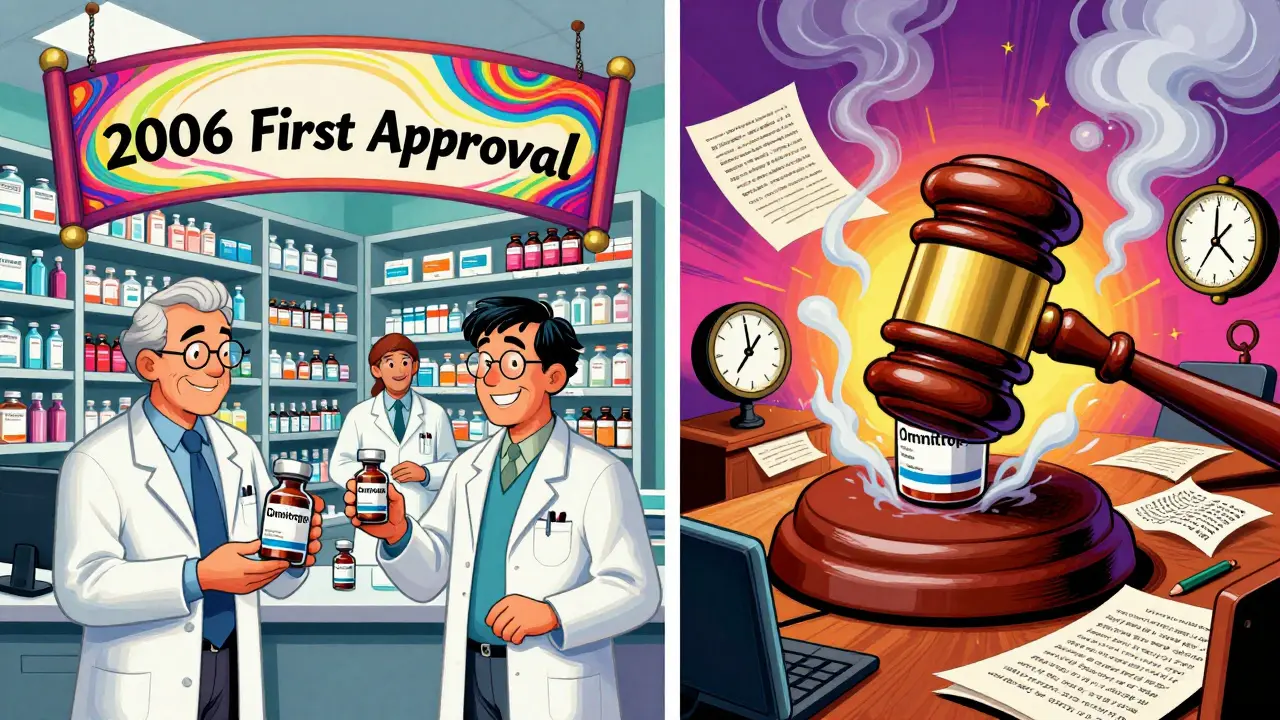
Europe didn’t just get ahead of the US in biosimilars. It created the blueprint. In 2006, the European Medicines Agency (EMA) approved the world’s first biosimilar, Omnitrope, a version of the growth hormone somatropin. That wasn’t an accident. The EMA had spent years building a clear, science-based pathway for approval. They didn’t demand endless new clinical trials. Instead, they looked at the whole picture: how the molecule was made, how it behaved in the lab, and whether it worked the same way in patients as the original.
That approach worked. By 2024, Europe’s biosimilar market hit $13.16 billion in revenue, according to Precedence Research. Germany, France, and the UK led the charge. Hospitals there started using tender systems-where they bid for the cheapest effective drug-and biosimilars won, every time. In countries like Germany, biosimilars now make up over 80% of the market for key drugs used in rheumatoid arthritis and cancer.
Why? Because doctors trusted them. Pharmacists could substitute them without asking. Payers-governments and insurers-pushed them hard because they saved money. A biosimilar in Europe typically launched at 20-30% less than the original biologic. That’s not a discount. That’s a revolution in cost.
The US Started Late-and Got Stuck
The US passed the Biologics Price Competition and Innovation Act (BPCIA) in 2009, five years after Europe. But approval didn’t mean adoption. The first US biosimilar, Zarxio, didn’t hit shelves until 2015. And even then, it moved slowly.
Why? Patent lawsuits. Big drugmakers used legal tricks-called "patent dances"-to delay biosimilar entry. They filed dozens of lawsuits over minor patent claims. Some companies even paid biosimilar makers to stay off the market. That’s called "pay-for-delay." It happened with Humira, one of the most profitable drugs ever. By 2024, 14 Humira biosimilars were approved in the US-but only six were actually sold because of legal settlements.
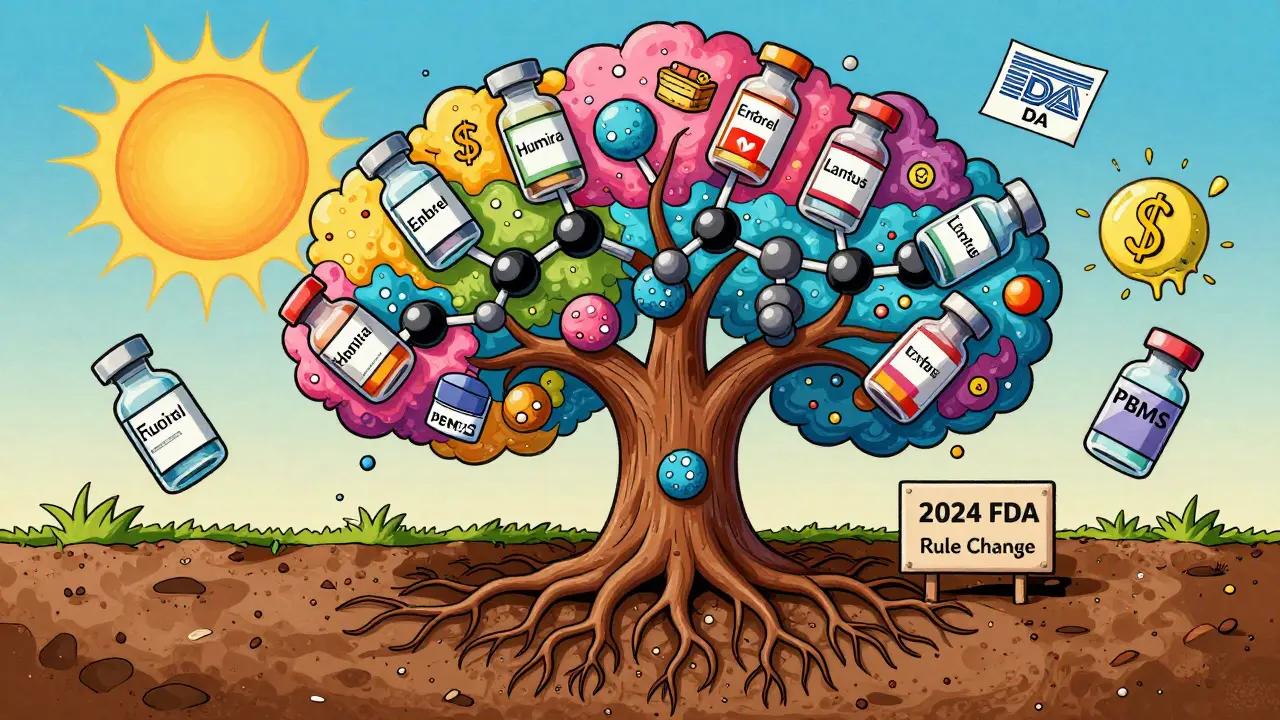
Another problem? The FDA used to require switching studies. That meant proving that patients could safely switch from the original drug to the biosimilar and back again. Europe never asked for that. But the US did-until June 2024, when the FDA dropped the requirement. That change alone could unlock dozens of new biosimilars in the next two years.
Market Size: Europe Leads, But the US Is Catching Fast
In 2024, Europe’s biosimilar market was worth about $13.16 billion. The US market was $10.9 billion, according to Alira Health. But the US is growing faster. While Europe’s market grew at 13% annually from 2020 to 2024, the US grew at 11%. But projections show the US will accelerate. IMARC Group predicts the US market will hit $30.2 billion by 2033, growing at 18.5% per year. Europe’s growth is steady at 17.34%-still strong, but not explosive.
Why the surge? Patent cliffs. Over 118 biologic drugs will lose patent protection in the US between 2025 and 2034. That’s a $232 billion opportunity, according to IQVIA. Humira’s biosimilars are just the start. Drugs like Enbrel, Remicade, and Lantus are next. And with the Inflation Reduction Act of 2022, Medicare Part D now covers biosimilars without the dreaded coverage gap. That means more patients can use them.
Who’s Making Them? Who’s Buying?
In Europe, the big players are Sandoz (Novartis), Fresenius Kabi, and Amgen. These companies have spent decades building manufacturing plants in Germany and Switzerland. Germany, in particular, has become the biosimilar factory of the world. It’s not just selling drugs-it’s making them at scale, for the whole continent and beyond.
In the US, Pfizer, Merck, and Samsung Bioepis are leading. But the US market is more fragmented. Private insurers, pharmacy benefit managers (PBMs), and hospital systems all have different rules. A biosimilar might be approved by the FDA, but if a PBM doesn’t list it on their formulary, doctors can’t prescribe it easily.
Therapeutic areas also differ. Europe led with autoimmune diseases-rheumatoid arthritis, Crohn’s, psoriasis. The US started with supportive care: drugs like filgrastim that help cancer patients recover from chemo. Now, the US is catching up. Biosimilars for cancer drugs like bevacizumab and rituximab are finally gaining traction.

Regulatory Shifts: The US Is Learning From Europe
The biggest change in the US biosimilar landscape came in June 2024. The FDA proposed new rules eliminating the need for switching studies to get "interchangeable" status. That’s huge. Interchangeable means a pharmacist can swap the biosimilar for the original drug without asking the doctor. In Europe, that’s standard. In the US, it was nearly impossible.
Dr. Rachel Sherman of the FDA said the old rule created "unnecessary barriers." She was right. Those studies were expensive, slow, and didn’t add real safety value. Now, with the rule gone, companies like Pfizer and Sandoz are rushing to submit applications for interchangeable biosimilars. That could mean more than 15 new interchangeable biosimilars by 2027.
Europe’s system isn’t perfect. Pricing pressure is fierce. Some manufacturers are cutting prices so low they struggle to make a profit. But the trade-off? More patients get access. The US is now copying that model-just later.
What’s Next? The Race to Save Billions
By 2034, the global biosimilar market could hit $176 billion, according to Precedence Research. North America will likely overtake Europe in market size by 2027. But Europe will still lead in experience, manufacturing, and policy maturity.
The real win? Cost savings. A single biosimilar for a biologic like adalimumab can save the US healthcare system $2 billion a year. Multiply that by 20 drugs. That’s tens of billions saved annually.
Both markets are moving toward the same goal: affordable, safe, high-quality medicines. Europe showed how it’s done. The US is finally learning. And patients? They’re the ones who win.
Are biosimilars the same as generics?
No. Generics are exact chemical copies of small-molecule drugs, like aspirin or metformin. Biosimilars are copies of large, complex biologic drugs made from living cells-like antibodies or hormones. They’re highly similar, but not identical. Even small changes in manufacturing can affect how they work. That’s why they need more testing than generics.
Why are biosimilars cheaper than the original biologics?
Biologics cost billions to develop and take over a decade to bring to market. Biosimilars don’t need to repeat all those expensive clinical trials. They rely on data from the original drug, plus targeted studies to prove they’re similar. That cuts development costs by 60-70%. Savings get passed on-biosimilars usually launch at 15-30% lower than the original.
Can pharmacists substitute biosimilars for brand-name drugs in the US?
Only if the biosimilar has "interchangeable" status from the FDA. Until June 2024, that was nearly impossible to get because of strict switching study rules. Now, with those rules gone, more biosimilars are expected to qualify. But even then, state laws vary. Some states allow automatic substitution; others require doctor approval. It’s still a patchwork.
Which region has more biosimilars approved?
Europe. Since 2006, over 100 biosimilars have been approved in the EU. The US approved its first in 2015 and had only around 20 approved by 2025. But the US is catching up fast, especially now that the FDA has eased its rules. Expect that gap to shrink dramatically over the next five years.
Is the US biosimilar market bigger than Europe’s now?
Not yet. In 2024, Europe’s market was worth about $13.16 billion, while the US was at $10.9 billion. But the US is growing faster-projected at 18.5% annual growth through 2033. North America as a whole is expected to surpass Europe in market size by 2027 due to the wave of expiring patents and new policy support.
What’s the biggest barrier to biosimilar adoption in the US?
The biggest barrier used to be legal and regulatory: patent lawsuits and strict FDA requirements like switching studies. Now, those are fading. The new challenge is education. Many doctors and patients still don’t trust biosimilars, even though they’re proven safe. Payers and PBMs also need to make them the default option-instead of letting brand-name drugs stay on top through rebates and incentives.
11 Comments
Robert Gilmore December 16, 2025 AT 14:18
Biosimilars are such a game-changer for people who can't afford biologics. In India, we see families choosing between medicine and rent every month. If these cheaper options become more accessible globally, it could save millions. Simple science, huge impact.
Robert Gilmore December 18, 2025 AT 01:05
Europe’s system? More like a socialist fantasy. US innovators built the original biologics-why should they get screwed by copycats? And don’t even get me started on ‘tender systems’-it’s price-fixing with a lab coat.
Robert Gilmore December 19, 2025 AT 16:06
OMG YES. The FDA finally dropping those stupid switching studies? HUGE. I’ve been screaming about this for years. Pharma’s been playing games with patents like it’s Monopoly. Time to flip the board. Biosimilars = more money in patients’ pockets. Let’s gooo!!! 🚀
Robert Gilmore December 20, 2025 AT 07:18
The regulatory divergence between the EU and the US reflects a deeper philosophical chasm: one prioritizes collective access through structured, evidence-based policy; the other, fragmented by litigation and market capture, clings to intellectual property as a sacred, unassailable altar. The FDA’s recent shift is not merely procedural-it is moral.
Robert Gilmore December 21, 2025 AT 22:58
US is finally catching up!! 🙌 I know a lady with RA who couldn’t afford Humira-now she’s on a biosimilar and back to playing with her grandkids. This is what healthcare should look like. 💙
Robert Gilmore December 22, 2025 AT 10:47
It’s interesting how cultural attitudes shape policy. Europe treats healthcare as a public good. The US treats it like a subscription service. The biosimilar gap isn’t just regulatory-it’s ideological. And honestly? Europe’s model is more humane.
Robert Gilmore December 23, 2025 AT 04:43
One must question whether the European model is truly sustainable-or merely a temporary illusion of efficiency, propped up by state subsidies and the quiet suppression of innovation incentives. One cannot build a thriving pharmaceutical ecosystem on the back of commoditized biologicals.
Robert Gilmore December 23, 2025 AT 15:06
My uncle got a biosimilar for his diabetes medicine. It cost half. He’s fine. No side effects. Why make people suffer for profit?
Robert Gilmore December 23, 2025 AT 22:02
The emergence of interchangeable biosimilars represents not merely a technical advancement, but a profound recalibration of therapeutic equity. When pharmacists can dispense without physician intervention, we move closer to a system where access is not contingent upon bureaucratic whim, but upon clinical necessity. This is medicine as a right, not a privilege.
Robert Gilmore December 25, 2025 AT 07:32
Europe’s ‘leadership’? They’re just cheap. And now the U.S. is copying them? Pathetic. We invented the biologics. We funded the R&D. We should be charging what we want-and if patients can’t afford it? Too bad. That’s capitalism. Also, ‘tender systems’? Sounds like communism with a stethoscope.
Robert Gilmore December 26, 2025 AT 18:23
Interesting how the US is now mimicking EU regulations-except with more lawsuits. The real win is that patients will finally get affordable options. But who’s going to fix the PBM mess? That’s where the real gatekeeping happens.