Azathioprine Dose Calculator
Patient Information
Personalized Dosing Recommendation
Based on your information, your recommended starting dose is:
Standard dose: 1.5-2.5 mg/kg/day
Recommended starting dose
Important safety note: Your doctor will monitor your blood counts weekly for the first month. If your white blood cell count drops below 3.0 x 10⁹/L, treatment should be paused immediately. Even with normal TPMT results, drug interactions can cause serious side effects.
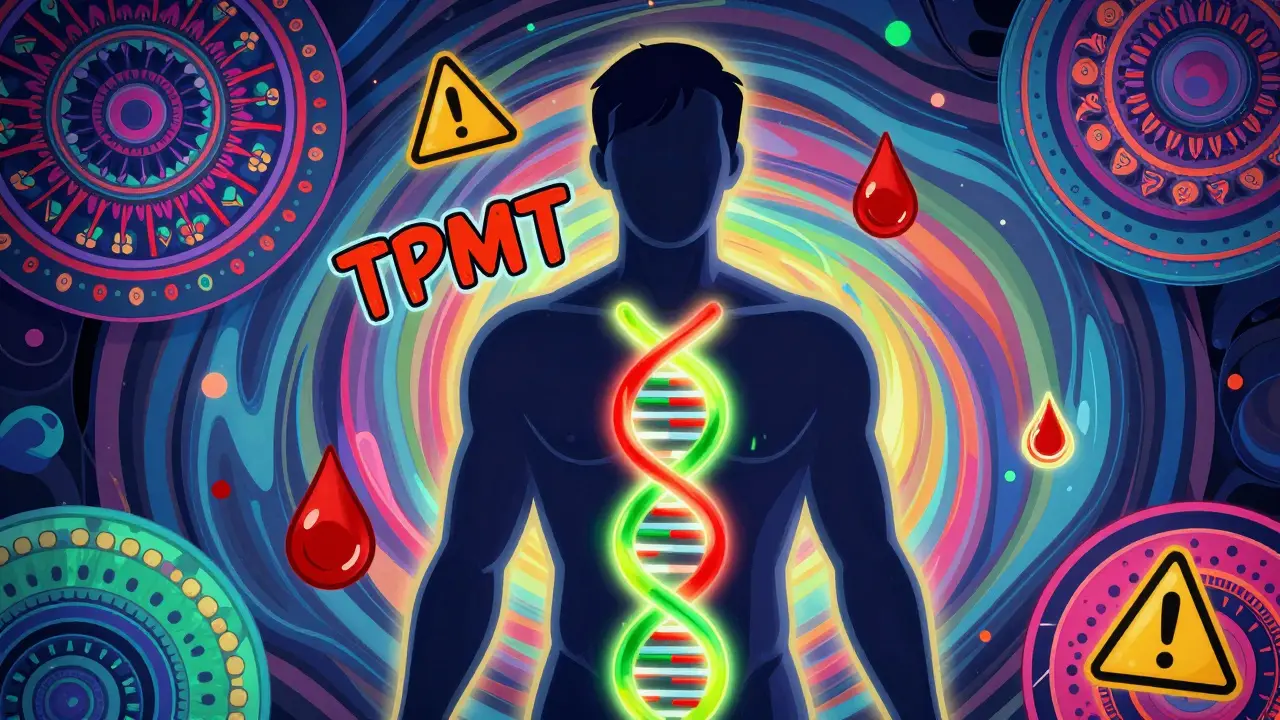
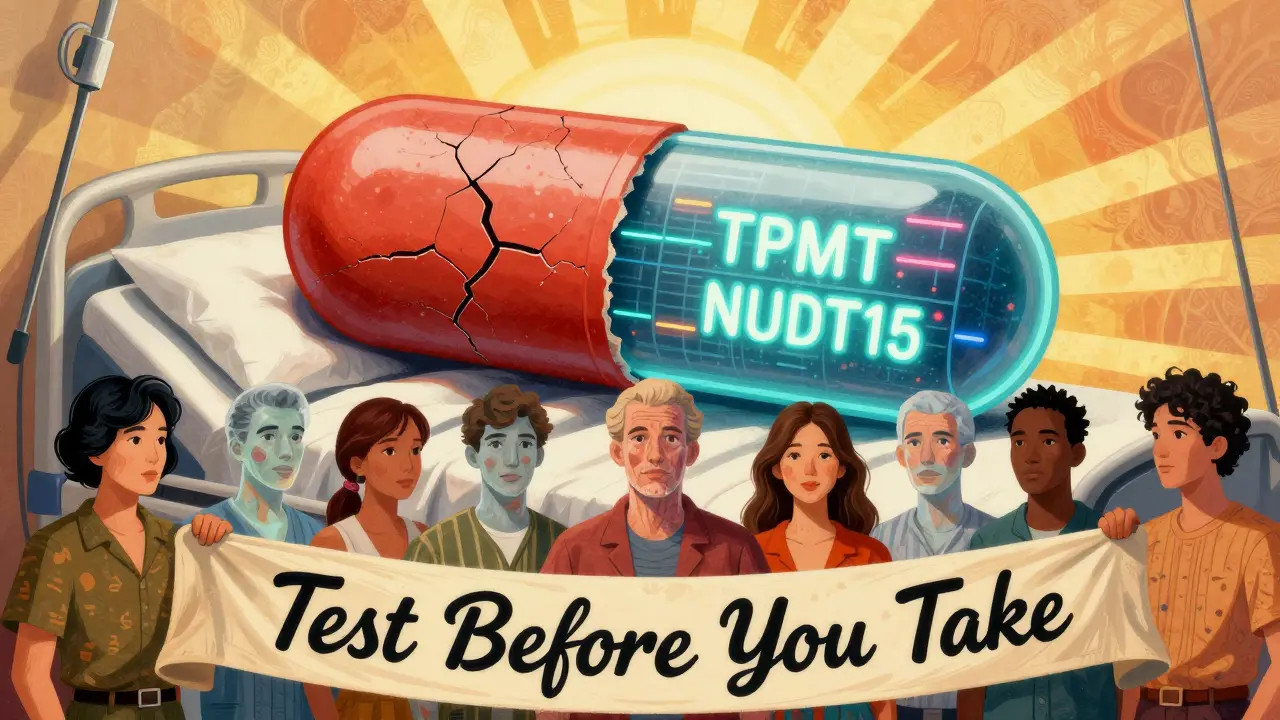
For decades, azathioprine has been a go-to drug for managing autoimmune diseases like Crohn’s disease, ulcerative colitis, and lupus. It’s cheap, effective, and works well for long-term treatment. But for some people, it can cause life-threatening side effects-especially when their bodies can’t process it properly. That’s where TPMT testing comes in. This simple genetic test can stop severe bone marrow damage before it starts. And it’s not optional anymore-it’s a critical safety step. Azathioprine breaks down into active compounds that suppress the immune system. But it also produces toxic byproducts that can crash your white blood cell count. This is called myelosuppression. When it happens fast, it can lead to infections so severe you end up in the ICU. The enzyme responsible for breaking down these toxins? Thiopurine methyltransferase, or TPMT. Some people are born with low or no TPMT activity. They’re not weak or careless. They just have a genetic variation that makes standard doses dangerous. About 0.3% of people-roughly 1 in 300-have two broken copies of the TPMT gene. That’s homozygous deficiency. If you’re one of them and you take the usual dose of azathioprine, your body can’t clear the drug. Toxic buildup happens fast. Within weeks, your bone marrow shuts down. Your red blood cells, white blood cells, and platelets drop to dangerously low levels. Without intervention, death is possible. Then there’s the middle group: about 10% of people in the U.S. have one working copy and one broken copy. That’s heterozygous. They can still process the drug, but slower. Their risk of side effects is higher than average. Most doctors will cut their dose by 30% to 70%. Still, even with a reduced dose, monitoring is key. A single test doesn’t guarantee safety. But here’s the catch: TPMT testing alone won’t catch everything. A 2000 study in JAMA Dermatology looked at 139 patients on azathioprine. Only one out of 13 who had to stop the drug because of side effects had low TPMT activity. That means 12 others had problems for other reasons-liver damage, pancreatitis, nausea, or interactions with other meds. One patient developed severe liver toxicity even though their TPMT levels were normal. Another got sick because they were also taking allopurinol, a gout drug that blocks the same metabolic pathway. TPMT testing doesn’t predict those. That’s why guidelines from the American Gastroenterological Association (AGA) and the European Crohn’s and Colitis Organisation (ECCO) say this: Test, but don’t stop monitoring. You still need regular blood tests. A complete blood count (CBC) every week for the first month, then every few weeks after that. Liver enzymes too. If your white blood cell count drops below 3.0 x 10⁹/L, you need to pause the drug-even if your TPMT result was normal. Now there’s another gene to consider: NUDT15. It’s especially important for people of Asian descent. Up to 20% of people in some Asian populations carry variants that reduce NUDT15 function. These patients can develop severe myelosuppression at doses that are perfectly safe for others. In fact, for many in this group, NUDT15 deficiency causes more toxicity than TPMT. That’s why the Clinical Pharmacogenetics Implementation Consortium (CPIC) updated its guidelines in 2022 to include both tests. Today, many labs offer a combined TPMT and NUDT15 panel. The cost? In the U.S., testing runs $200 to $400. Results come back in 3 to 7 days. Insurance usually covers it, especially if you’re being treated for IBD or another autoimmune condition. In Australia, public hospitals often include it as standard before starting azathioprine. Private clinics may charge out-of-pocket, but it’s still cheaper than a hospital stay. Let’s talk about real numbers. The standard dose is 1.5 to 2.5 mg per kilogram of body weight per day. For a 70kg person, that’s 105 to 175 mg daily. If you’re heterozygous for TPMT, you might start at 50 to 70 mg. If you’re homozygous deficient? Don’t take azathioprine at all. Use methotrexate or another non-thiopurine drug. The risk is too high. A 2011 randomized trial with 333 patients showed something surprising: TPMT testing didn’t reduce overall side effects. The group that got tested had 29% adverse reactions. The group that didn’t had 28%. So why do it? Because it prevents the worst-case scenarios. That one patient in the study with homozygous deficiency? They had a near-fatal drop in white blood cells. Without testing, they might’ve died. Testing saved them. What about cost? Azathioprine costs $20 to $50 a month. Biologics like infliximab? $1,500 to $2,500 per dose. So even with testing, azathioprine is still the most affordable long-term option. But if you skip testing and end up hospitalized for bone marrow failure? That single admission costs tens of thousands. Testing pays for itself. Doctors sometimes delay starting azathioprine because they’re waiting for test results. That’s understandable. But if you’re in acute flare and need treatment now, start at a low dose while you wait. Don’t wait weeks. Use your CBC as your guide. If your counts stay stable after two weeks, you’re probably fine. If they dip, adjust. And don’t forget drug interactions. Allopurinol is the big one. So are certain blood pressure meds like ACE inhibitors. If you’re on any of these, your doctor needs to know. Even with normal TPMT, mixing azathioprine with allopurinol can cause severe toxicity. Some patients develop pancreatitis or liver damage even when their genes are fine. There’s also a practical tip most patients miss: azathioprine can make your skin more sensitive to sunlight. Wear sunscreen. Cover up. Sunburns aren’t just painful-they can trigger flares in autoimmune diseases. So who should get tested? Anyone starting azathioprine. No exceptions. Especially if you’re of Asian, Hispanic, or Indigenous descent. Or if you’ve had blood transfusions recently-that can mess up enzyme tests. Genotyping is more reliable in those cases. Testing isn’t magic. It doesn’t prevent nausea, hair loss, or mild liver enzyme changes. But it prevents death. It prevents months in the hospital. It prevents the need for a bone marrow transplant. That’s worth it. The future? Multi-gene panels. Companies like OneOme and GeneSight now offer panels that include TPMT, NUDT15, and even glutathione-S-transferase variants. As costs drop and access improves, testing will become routine-not just for IBD, but for lupus, rheumatoid arthritis, and even organ transplant patients. Bottom line: If your doctor is about to prescribe azathioprine, ask for TPMT and NUDT15 testing. Don’t assume you’re fine because you’re young or healthy. Genetics don’t care. Your life depends on this test. And if they say it’s not necessary? Push back. You have the right to know before you start.
What happens if you skip TPMT testing?
If you skip testing and have homozygous TPMT deficiency, you’re essentially gambling with your life. Standard dosing can lead to pancytopenia-where all your blood cells crash. White blood cells drop, leaving you vulnerable to infections. Red blood cells fall, causing fatigue and shortness of breath. Platelets disappear, making you bleed easily. One patient in a 2019 case report developed sepsis from a minor cut because their white count was below 0.5 x 10⁹/L. They survived, but only after weeks in intensive care and multiple transfusions. Testing would’ve caught this before it started. Even heterozygous patients who skip testing and take full doses often need to stop the drug within months due to low counts. One study found that 40% of heterozygous patients on full doses had to discontinue azathioprine within six months. With dose adjustments, that number drops to under 10%.
How is TPMT testing done?
There are two ways: genotyping and phenotyping. Genotyping looks at your DNA. It checks for specific gene variants like *2, *3A, *3B, and *3C. This is the most common method today. It’s accurate, fast, and not affected by blood transfusions. Phenotyping measures enzyme activity in your red blood cells. It’s cheaper but unreliable if you’ve had a transfusion in the last 3 months. Transfused blood has normal enzyme levels, which can hide your true genetic status. That’s why genotyping is now the gold standard. Most labs now offer both tests together. If you’re unsure which one to ask for, request the genotyping panel.

What if your test shows intermediate TPMT activity?
Start with 30% to 70% of the standard dose. For example, if the usual dose is 150 mg/day, start at 50-100 mg. Monitor your CBC weekly for the first month. If your white blood cell count stays above 3.0 x 10⁹/L and your platelets are normal, you can slowly increase the dose. Many patients stabilize at 50-75 mg/day. Don’t rush. Let the numbers guide you. Also, check your liver enzymes. Some patients with intermediate TPMT activity produce too much of a metabolite called 6-MMP. When levels go above 5700 pmol/8 x 10⁸ RBC, liver toxicity becomes likely. Your doctor may check this too.
Is TPMT testing covered by insurance?
In the U.S., most commercial insurers cover TPMT and NUDT15 testing when ordered by a specialist for IBD, lupus, or transplant patients. Medicaid coverage varies by state. In Australia, Medicare covers the test if you’re under a specialist’s care for autoimmune disease. In Europe, it’s standard practice in IBD centers. If your provider says it’s not covered, ask them to submit a prior authorization using the diagnosis code for your condition (e.g., K50 for Crohn’s disease). It’s almost always approved.
What are the alternatives if TPMT is deficient?
If you’re homozygous deficient, azathioprine is off the table. Your options:
- Methotrexate: A weekly oral or injectable drug. Less liver toxicity than azathioprine, but still needs monitoring. Works well for arthritis and IBD.
- 6-MP (mercaptopurine): Not a replacement-it’s the same class of drug. Same risk. Avoid.
- Biologics: Infliximab, adalimumab, vedolizumab. Effective but expensive. Often used if you can’t take oral drugs.
- Ustekinumab: A newer biologic with good safety in long-term use.
9 Comments
Robert Gilmore February 22, 2026 AT 12:09
just got my tpmt results back and was shocked to find out i’m heterozygous. my doc didn’t even mention testing until i asked. glad i did. started at 60mg instead of 150 and my wbc stayed stable. no more panic attacks before every blood test. also, sunscreen is now my best friend. no more sunburns = no more flares. thanks for the heads up, OP.
Robert Gilmore February 22, 2026 AT 13:50
The ethical imperative here cannot be overstated. We are not merely managing pharmacokinetics-we are upholding the Hippocratic oath in its most literal form. Genetic predisposition does not equate to personal failing; it is a biological variable as neutral as blood type. To withhold TPMT/NUDT15 screening is not negligence-it is systemic malfeasance. The cost of a single hospitalization for pancytopenia exceeds the annual testing budget of many outpatient clinics. This is not a luxury. It is a baseline standard of care. We must institutionalize this-not as a suggestion, but as a mandate.
Robert Gilmore February 23, 2026 AT 22:20
India has been doing this for years. We don’t wait for people to nearly die before we test. Our hospitals screen everyone before starting azathioprine. Even in rural clinics, we have cheap genotyping kits now. Why is the US so slow? We have 20% of our population with NUDT15 variants. You think this is just a Western problem? It’s global. Stop acting like testing is optional. It’s basic.
Robert Gilmore February 25, 2026 AT 06:35
bro i had azathioprine for 3 months before they tested me. lost 8lbs, felt like a zombie, wbc down to 2.1. doc said ‘oh maybe you’re just sensitive’ lol. then they did the test and were like ‘ohhhhh’. started at 40mg. now i’m fine. just saying… if your doc hasn’t mentioned testing, ask. don’t wait for a hospital trip. it’s not that hard. 😅
Robert Gilmore February 26, 2026 AT 16:42
TPMT testing isn’t just about avoiding side effects-it’s about dignity. Imagine being told your body is broken when it’s just coded differently. This test doesn’t label you as high-risk. It empowers you to live without fear. I’ve seen patients cry when they find out they can safely take the drug they need. That’s healthcare. Not just chemistry. Not just dollars. Humanity. Let’s make this routine everywhere.
Robert Gilmore February 28, 2026 AT 01:17
If you need a genetic test to take a 50-year-old drug, maybe you shouldn’t be on it at all. Biologics exist for a reason. This is just pharmacology theater. Stop pretending this is cutting-edge. It’s just damage control.
Robert Gilmore March 1, 2026 AT 20:28
why is this even a debate? we test for everything else. why not this? my cousin died because they didn’t test. her wbc dropped to 0.3. she was 28. this isn’t science. it’s survival. if your doc doesn’t offer it, find one who does. period.
Robert Gilmore March 3, 2026 AT 17:39
My doctor said, ‘You’re young. You’ll be fine.’ I said, ‘I’m not a statistic.’ I demanded the test. Turned out I was heterozygous. I’m alive because I refused to be passive. Don’t let them gaslight you into thinking you’re ‘overreacting.’ You’re not. You’re smart.
Robert Gilmore March 3, 2026 AT 18:49
the fact that we still have to beg for this test is wild. it’s like asking for seatbelts in 1965. ‘oh but people might not like it!’ no, we don’t need permission to not die. i’m now a walking ad for tpmt testing. if you’re on azathioprine and haven’t been tested, drop everything and get it. your future self will high-five you. 🤘