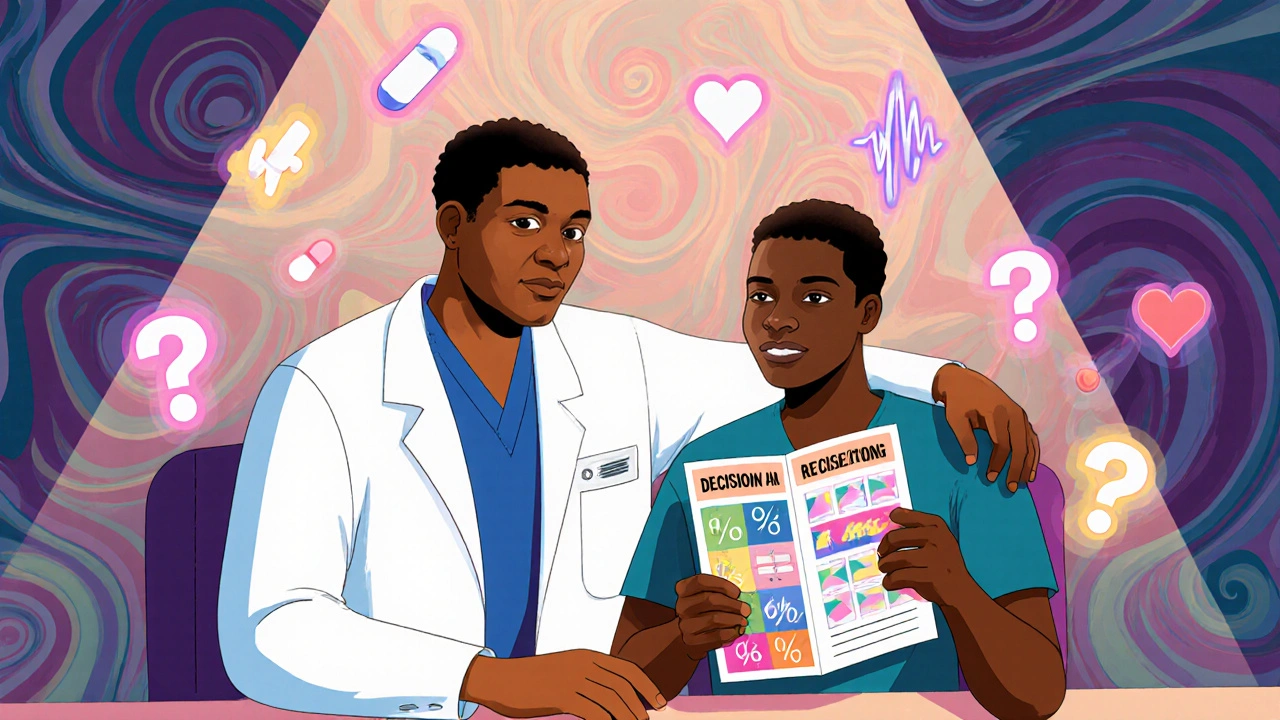
Personalized Medication Risk-Benefit Calculator
This tool helps you understand your personalized risk for heart disease or stroke and how medication options might affect your health outcomes. Based on your input, it calculates your 10-year risk score and shows potential benefits versus side effects of treatment options.
When you’re told you need a new medication, do you ever feel like you’re being handed a prescription without really understanding why? You might nod along, worried about sounding confused, or too overwhelmed to ask the right questions. That’s not just a personal frustration-it’s a widespread safety issue. Medication errors are one of the leading causes of preventable harm in healthcare, and many stem from patients not fully understanding their options. Enter patient decision aids: simple, evidence-based tools designed to turn passive recipients of care into active participants in their own treatment. And the data shows they’re making a real difference.
What Exactly Are Patient Decision Aids?
Patient decision aids (PDAs) aren’t brochures or YouTube videos. They’re structured tools-digital, paper, or video-that help people understand their medical choices by laying out the facts: what each option does, what the risks are, what the chances are of benefit or harm, and how it might affect daily life. They’re built on the principle of shared decision-making: the idea that your values matter as much as your doctor’s clinical expertise. These tools follow strict quality standards set by the International Patient Decision Aids Standards (IPDAS) Collaboration. That means they must present balanced information, explain probabilities clearly (like your 10-year risk of heart attack being 7.2%, not just "high risk"), and include exercises to help you figure out what matters most to you. For example, a statin decision aid might ask: "Would you rather reduce your chance of a heart attack by 2% but deal with muscle pain, or avoid the pill and accept a slightly higher risk?" There are over 150 validated decision aids available today, covering conditions like diabetes, high blood pressure, depression, and even elective surgeries. The Ottawa Hospital Research Institute’s library alone offers 107 tools used by patients across 17 countries. These aren’t theoretical-they’re used in clinics from Mayo Clinic to community health centers in rural Australia.How Do They Actually Improve Medication Safety?
Medication errors happen when patients don’t understand why they’re taking a drug, how to take it, or what side effects to watch for. PDAs tackle this at the root by improving three things: knowledge, confidence, and alignment with personal values. Studies show that people who use decision aids score 13.28 points higher on medication knowledge tests than those who just get a verbal explanation. That’s not a small bump-it’s the difference between thinking "this pill might make me feel better" and knowing "this reduces my chance of stroke by 1 in 20 over five years, but gives me a 1 in 50 chance of muscle pain." They also cut down on decisional conflict. People using PDAs report 8.7 points less stress and uncertainty on the Decisional Conflict Scale. That matters because when people feel unsure, they’re more likely to skip doses, stop taking meds early, or take someone else’s pill out of desperation. Perhaps most importantly, PDAs help patients make choices that match what they truly care about. In one trial, 35% of patients changed their initial preference about starting statins after using a decision aid. One patient, u/Type2Journey on Reddit, shared how the tool revealed his actual 10-year cardiovascular risk was 7.2%-not the vague "high risk" his doctor mentioned. That clarity helped him avoid starting a medication he didn’t need, with side effects he didn’t want.Real Impact: Adherence, Errors, and Outcomes
Better understanding leads to better behavior. When patients are involved in choosing their meds, they stick with them longer. At Mayo Clinic, using decision aids in diabetes care boosted medication adherence from 58% to 75% in just six months. That’s not magic-it’s because patients weren’t just told what to do; they were helped to choose it. In another study, patients using a decision aid for diabetes medications showed a 17.3% improvement in adherence at six months. That’s 17 out of every 100 people who would’ve stopped taking their pills now staying on track. That reduces hospitalizations, complications, and long-term costs. And while we don’t yet have proof that PDAs directly cut death rates, they’re already reducing harm. A 2020 analysis found that patients using decision aids were less likely to remain undecided about treatment-by 43%. That’s huge. Indecision often leads to delays, wrong prescriptions, or no treatment at all. PDAs push people toward informed action, not paralysis.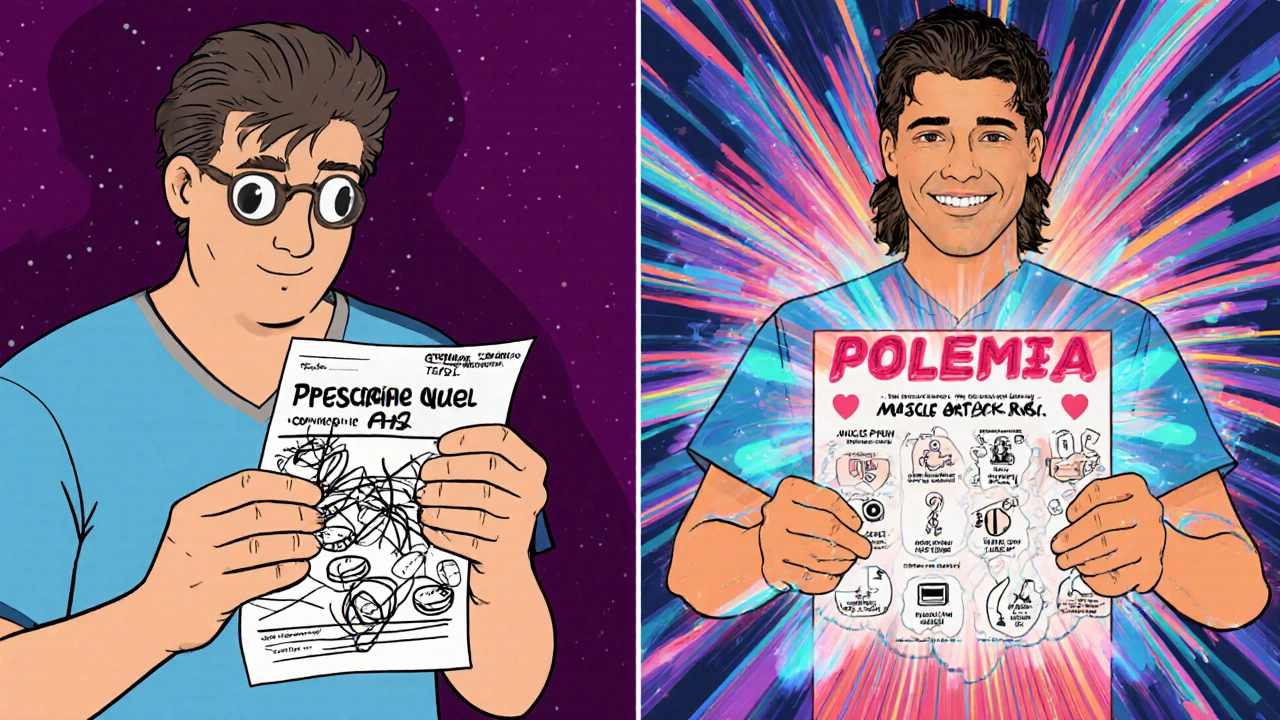
Who Benefits Most-and Who Doesn’t?
The evidence is strong, but it’s not universal. PDAs work best for preference-sensitive decisions: situations where there’s no single right answer, and personal values tip the scale. That includes starting statins, choosing insulin vs. oral meds for diabetes, or deciding whether to take long-term antidepressants. But they’re less effective in emergencies, for patients in acute distress, or when health literacy is very low. That’s not a flaw in the tool-it’s a flaw in how we deliver it. Dr. Richard Hoffman from the VA found that patients with low literacy or limited English often need extra support: simpler language, visual aids, or a family member present. The same tool that helps a college professor choose between two blood pressure meds might overwhelm someone who reads at a 5th-grade level. That’s why successful clinics use teach-back methods: asking patients to explain the decision in their own words. If they can’t, the clinician rephrases. It’s not about dumbing down-it’s about making sure the message lands.Implementation: The Real Challenge
You can have the best decision aid in the world, but if your doctor doesn’t have time to use it, it won’t help. That’s the biggest barrier. Clinicians report adding 3 to 8 minutes per visit when using PDAs. In a 15-minute appointment, that’s a lot. But the most successful clinics found a fix: distribute the tool before the visit. Send it via patient portal, email, or even mail. Patients review it at home, come in with questions, and the appointment becomes a conversation-not a lecture. Digital tools are getting smarter. Newer PDAs integrate with electronic health records (EHRs) through FHIR APIs, pulling in your lab results, allergies, and current meds to personalize the options. The NIH’s Personalized Medication Decision Support System, launched in 2022, uses your EHR data to suggest only the meds that fit your profile-no more generic lists. And yes, training matters. Clinicians need 2-3 hours of initial training and a few supervised uses to feel comfortable guiding the conversation. The OPTION scale-a 12-item checklist-helps measure how well they’re doing. Are they asking what matters to you? Are they letting you lead? Are they checking your understanding? These aren’t soft skills-they’re safety skills.
Where Is This All Headed?
The market for patient decision aids is growing fast-projected to hit $386 million by 2028. Why? Because value-based care is replacing fee-for-service. Hospitals and insurers now get paid for better outcomes, not more visits. Fewer medication errors mean fewer ER trips, fewer hospitalizations, and lower costs. Medicare Advantage plans have included shared decision-making with PDAs as a quality metric since 2020. Twenty-nine U.S. states have passed laws requiring their use in certain situations. And in 2022, the FDA recognized certain decision aids as part of medication labeling for complex drugs. By 2027, experts predict 75% of high-stakes medication decisions will involve validated decision aids. The tools are evolving too-AI is being tested to adjust recommendations based on real-time patient feedback. Imagine a PDA that learns you’re more worried about side effects than long-term risk, and shifts its focus accordingly. The biggest hurdle? Reimbursement. Right now, most health systems don’t get paid for the time spent using these tools. Until that changes, adoption will be uneven. But the data is clear: when patients understand their choices, they make safer ones.What This Means for You
If you’re facing a new medication decision-whether it’s for cholesterol, diabetes, depression, or pain-ask your provider: "Do you have a decision aid for this?" If they say no, request one. You have the right to understand your options, not just be told what to do. If you’re a clinician, start small. Pick one condition where patients often feel confused-like starting statins or choosing insulin-and try one validated tool. Use it before the visit. Watch how the conversation changes. You’ll see fewer "I didn’t know" moments, fewer missed doses, and more confident patients. Patient decision aids aren’t magic. But they’re one of the few tools in modern medicine that actually give patients back control-without adding complexity. In a world where medication errors kill thousands every year, that’s not just helpful. It’s essential.Are patient decision aids only for complex medications?
No. While they’re especially useful for preference-sensitive decisions-like choosing between statins, insulin, or antidepressants-they can help with any medication where there’s more than one option or where side effects matter. Even for common drugs like blood pressure pills, a decision aid can help you understand why one might be better for you than another based on your age, other conditions, or lifestyle.
Can I use a decision aid on my own without seeing a doctor?
You can use a decision aid to prepare for your appointment, but not to replace it. These tools are designed to support shared decision-making, not replace clinical judgment. They help you ask better questions and understand what your doctor says, but they don’t diagnose or prescribe. Always discuss your choices with a healthcare provider before making any changes to your treatment.
Do decision aids work for elderly patients or those with low health literacy?
They can, but only if they’re adapted. Many tools are too text-heavy or assume a high level of understanding. The most effective ones for older or low-literacy patients use large fonts, simple language, visuals like icons or pictograms, and audio support. Clinics that succeed with these groups often pair the tool with a trained facilitator who uses the teach-back method-asking the patient to explain the decision in their own words.
Are patient decision aids covered by insurance?
Not directly. You won’t get billed for using a decision aid. But Medicare Advantage plans and some private insurers now reward providers for using shared decision-making tools as part of quality metrics. This means your doctor’s office may be incentivized to use them-even if they’re not paid per use. Some health systems provide them free through patient portals.
Where can I find a reliable patient decision aid?
Start with the Ottawa Hospital Research Institute’s Decision Aids Library, which hosts over 100 tools validated by IPDAS standards. Other trusted sources include the National Institutes of Health (NIH), the Agency for Healthcare Research and Quality (AHRQ), and major health systems like Mayo Clinic and Kaiser Permanente. Look for tools that mention IPDAS certification and include clear information on benefits, risks, and values clarification.
14 Comments
Robert Gilmore December 1, 2025 AT 08:24
pdas are just corporate bs to make docs feel good while they rush through 20 patients an hour
Robert Gilmore December 1, 2025 AT 23:58
I work in a rural clinic and we’ve started using the Ottawa statin aid before visits. Patients come in with questions like "What does 2% reduction actually mean for my grandma?" It’s changed the whole dynamic. No more nodding and leaving confused. Just real talk.
Also, printing the PDFs in 14pt font helped our older patients. Small tweak, huge difference.
Robert Gilmore December 3, 2025 AT 10:09
The epistemological rupture in clinical paternalism is palpable when PDAs operationalize ontological agency through probabilistic framing-shifting the patient from epistemic passive to co-constitutive actor. This isn’t just informed consent; it’s hermeneutic co-authorship of therapeutic narratives.
But the structural contradiction remains: if value-based care incentivizes outcomes, why aren’t PDAs reimbursed as CPT codes? The commodification of autonomy remains undercapitalized.
And let’s not pretend the algorithmic personalization of AI-PDAs doesn’t risk reifying algorithmic bias under the guise of customization. The datafication of lived experience is not neutrality-it’s a new form of medical surveillance.
Robert Gilmore December 4, 2025 AT 12:03
Did you know the FDA approved a PDA last year as part of the drug label? That means your doctor is legally required to show you this tool before prescribing. They’re not telling you because they’re scared of liability.
Big Pharma doesn’t want you to understand your options-they want you to take the pill, not question it. This is how they control the narrative. You’re being manipulated by the system.
And don’t get me started on EHR integration. Your data is being sold to insurers who use it to deny care later. You think this is about safety? It’s about control.
Robert Gilmore December 6, 2025 AT 07:47
YES YES YES I used the diabetes PDA before my appointment and finally understood why my doc pushed metformin over sulfonylureas-no more guessing!
My husband even said "I didn’t realize you were so scared of low blood sugar" and we talked about it for the first time. This tool saved our relationship and my health. Thank you for sharing this!!
Everyone needs to ask for this. No excuses. Just do it. 💪
Robert Gilmore December 7, 2025 AT 19:38
So now we’re giving people worksheets to decide if they want to live or die? This is socialism in medicine. If you can’t handle a pill, you shouldn’t be allowed to take it. Let the experts decide. We don’t need your feelings in the ER
Also why are we using Canadian tools? Do we not have our own? America First
Robert Gilmore December 9, 2025 AT 07:42
The IPDAS criteria are methodologically sound but empirically overstated. Most studies are single-center, underpowered, and suffer from selection bias-patients who use PDAs are already more health-literate. The effect size on adherence is negligible when adjusted for confounders.
Also, 3-8 minutes per visit? That’s not time-it’s a liability multiplier. No primary care physician has that bandwidth. This is a policy fantasy dressed as innovation.
Robert Gilmore December 10, 2025 AT 17:52
This is how they normalize medical coercion. You think you’re making a choice but you’re being steered by a tool designed by Big Pharma’s consultants. The "values clarification" is just a way to make you feel guilty for not taking the drug.
My cousin was pressured into statins using one of these. She had no symptoms. Now she has chronic muscle pain and no one will listen. This isn’t empowerment-it’s gaslighting with a PDF.
Robert Gilmore December 11, 2025 AT 15:07
India has been using community health workers with pictorial decision aids for decades. No internet. No EHR. Just a poster with icons and a trained auntie asking "What matters to you?"
Why are we reinventing this with AI and FHIR when the solution was always human connection? The West thinks tech fixes everything. It doesn’t.
Robert Gilmore December 12, 2025 AT 12:37
Used the hypertension aid last month. It showed me my 10-year risk was 4.1%-way lower than my doctor said. I asked for a second opinion and switched to lifestyle first. No meds. 15 lbs down. Blood pressure normal.
Don’t let anyone tell you your numbers are "high" without showing you the real math. You deserve to know.
Robert Gilmore December 14, 2025 AT 02:38
Let’s be real-this is just another way for hospitals to avoid paying for actual care. If you’re using a decision aid, you’re not getting a real consult. You’re getting a checklist.
And who’s writing these tools? Harvard PhDs who’ve never met a patient who works two jobs and can’t afford co-pays.
Meanwhile, my uncle died because his doctor didn’t have time to explain his meds. This tool won’t bring him back.
It’s all performative. We’re just playing doctor now.
Robert Gilmore December 14, 2025 AT 06:56
I’m a nurse and I hand out the depression PDA to every new patient. Some cry. Some laugh. Some say "I didn’t know I had options."
One woman told me she didn’t want antidepressants because she didn’t want to lose her creativity. The tool helped her see that therapy + lifestyle changes could be just as effective. She’s been off meds for a year now.
This isn’t about technology. It’s about dignity.
Robert Gilmore December 14, 2025 AT 09:03
Why is no one talking about how these tools are used to justify insurance denials? "You had a decision aid, so you chose this risk."
My friend got denied a knee replacement because she "chose" physical therapy using a PDA. She couldn’t walk for 6 months. Now she’s on disability.
These aren’t tools for empowerment-they’re tools for cost-cutting. 🤡
Robert Gilmore December 15, 2025 AT 08:57
The empirical evidence base for patient decision aids remains methodologically heterogeneous and clinically inconclusive. While observational studies suggest marginal improvements in knowledge acquisition, randomized controlled trials demonstrate negligible impact on long-term clinical outcomes or medication adherence when adjusted for socioeconomic covariates.
Furthermore, the integration of AI-driven personalization introduces algorithmic opacity, which undermines the foundational principle of transparency in shared decision-making.
Until standardized regulatory oversight and reimbursement protocols are enacted, these interventions remain well-intentioned but structurally unsustainable.