For years, millions of people took a daily low-dose aspirin to prevent their first heart attack or stroke. It seemed simple: one pill a day, cheap and easy, with the promise of protection. But today, that advice has flipped. If you’ve never had a heart attack, stroke, or stent, and you’re over 60, aspirin is more likely to hurt you than help you.
Why the Big Change?
In the 1990s, studies like the Physicians’ Health Study showed aspirin could cut heart attack risk in half for men. That led to a wave of recommendations. By 2016, nearly 1 in 4 American adults between 40 and 79 were taking daily aspirin for prevention. But those early studies didn’t fully account for the cost: bleeding. By 2022, the U.S. Preventive Services Task Force (USPSTF) reversed course. They found that for adults 60 and older, the risk of serious bleeding - in the stomach, brain, or elsewhere - outweighed the tiny benefit of preventing a first heart event. For people under 60, the math is tighter. Some might still benefit. But for most, the answer is now: skip it.Who Definitely Should Not Take Aspirin Daily
If you fall into any of these groups, don’t start - and if you’re already on it, talk to your doctor about stopping.- Age 60 or older - This is the clearest cutoff. The USPSTF gives a Grade D recommendation: don’t start. The risk of major bleeding increases with age. At 65, you’re 3 times more likely to have a dangerous bleed than a 45-year-old on aspirin.
- History of stomach ulcers or GI bleeding - Even one past ulcer raises your risk of another bleed by 50%. Aspirin irritates the stomach lining. If you’ve had one, you’re not a candidate.
- On blood thinners like warfarin, apixaban, or rivaroxaban - Combining aspirin with these drugs doubles your bleeding risk. No exceptions.
- Regularly taking NSAIDs like ibuprofen or naproxen - These also irritate the stomach. Add aspirin on top? You’re asking for trouble. About 1 in 5 adults over 65 take both.
- High risk of falls or frailty - Even a minor bump can turn into a brain bleed if you’re on aspirin. This is especially true for older adults with balance issues or osteoporosis.
- Known bleeding disorders or liver disease - Your body can’t clot properly. Aspirin makes that worse.
What About People Under 60?
If you’re 40 to 59, it’s not a flat no. But it’s not a blanket yes either. You need two things: a 10-year cardiovascular risk of 10% or higher, and no increased bleeding risk. How do you know your risk? Doctors use the Pooled Cohort Equations - a calculator that looks at your age, sex, race, cholesterol, blood pressure, diabetes status, and smoking habits. Let’s say you’re a 55-year-old woman with high LDL cholesterol, borderline high blood pressure, and you smoke. Your 10-year risk might be 14%. You might benefit. But if you also have a history of frequent heartburn or take ibuprofen for arthritis, the scales tip the other way. The American Heart Association says aspirin can be considered in this group - but only after a detailed conversation. Not because the math says yes, but because some people are willing to accept the risk for a small chance of benefit.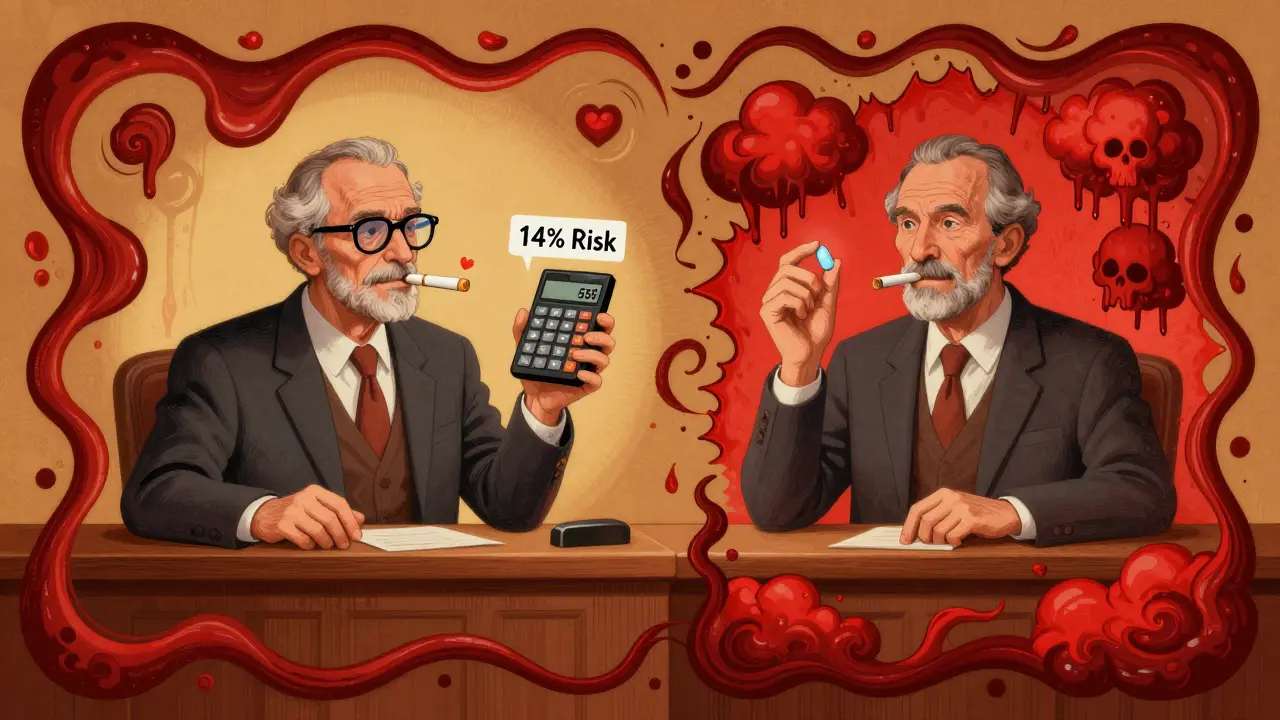
What About Diabetes?
Diabetes raises your heart disease risk. So, should diabetics take aspirin? The 2025 AHA/ACC guidelines say: maybe, but only if you’re 40-70 and your 10-year ASCVD risk is 15% or higher - and you have no bleeding risk. But here’s the twist: some diabetics with very high calcium scores (CAC >300) or elevated Lp(a) levels - a genetic cholesterol marker - might still benefit. One 2024 study found aspirin reduced heart events by 19% in diabetics with high Lp(a). But for those with normal levels? No benefit at all. That’s why blanket advice doesn’t work. One size doesn’t fit all - even within the same diagnosis.Why Do So Many People Still Take It?
Despite the guidelines, about 41% of adults over 60 in the U.S. still take daily aspirin for prevention. Why?- Fear of stopping - Many believe aspirin is a “shield” they can’t afford to lose. One Reddit user wrote, “I’ve been on it since 2010. My doctor says stop, but I’m scared.”
- Confusion with secondary prevention - If you’ve had a heart attack, stroke, or stent, aspirin is still lifesaving. But many don’t know the difference between preventing a first event and preventing a second one.
- Doctor disagreement - A 2023 JAMA study found 57% of patients reported getting conflicting advice. Cardiologists are more likely to keep patients on aspirin than primary care doctors.
- Marketing and habit - “Aspirin for heart health” ads still run. Pharmacies sell it in packs labeled “daily heart support.” It feels normal.
What’s the Real Risk?
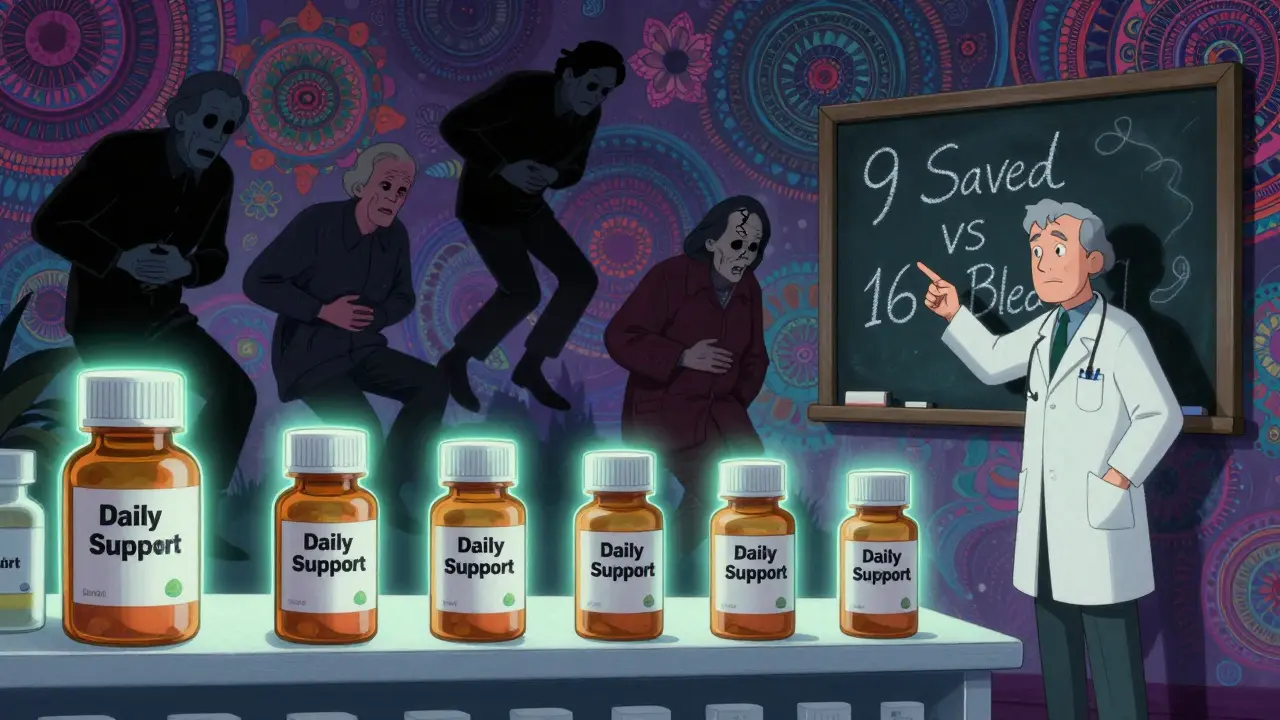
Let’s break down the numbers. For every 1,000 people aged 60+ taking aspirin daily for 10 years:- 9 fewer will have a heart attack
- But 16 more will have a major bleed
What Should You Do?
If you’re not sure whether you should be on aspirin:- Don’t start - If you’re not already on it, don’t begin without a full risk assessment.
- Don’t stop cold turkey - If you’ve been on it for years, talk to your doctor. Stopping suddenly can, in rare cases, trigger a clot.
- Ask for your 10-year risk score - Request the Pooled Cohort Equations calculation. Know your number.
- Ask about bleeding risk - Have you had ulcers? Are you on other meds? Do you fall often?
- Consider alternatives - Statins, blood pressure control, quitting smoking, and exercise reduce heart risk more reliably than aspirin - and without the bleeding risk.
The Bottom Line
Aspirin isn’t magic. It’s a drug with real, measurable risks. For most people without existing heart disease, those risks now outweigh the benefits - especially after age 60. The era of “take one a day for safety” is over. Modern heart health isn’t about pills you take out of habit. It’s about knowing your numbers, understanding your risks, and making smart, personalized choices. If you’re unsure, don’t guess. Talk to your doctor. Bring this article. Ask: “Based on my health, am I in the 10% who might benefit - or the 90% who are better off without it?”Should I stop taking aspirin if I’ve been on it for years?
Don’t stop abruptly. If you’re over 60 and taking aspirin for primary prevention, talk to your doctor. They’ll help you weigh your individual risks. For most, stopping is safer than continuing. But if you’ve been on it for over a decade, your doctor may recommend tapering or monitoring for rebound effects, though these are rare.
Is baby aspirin safer than regular aspirin?
No. Low-dose (81 mg) aspirin is the standard for prevention - but it still carries the same bleeding risks as higher doses. The benefit doesn’t increase with higher doses, but the risk does. So even “baby” aspirin isn’t safe for everyone.
Can I take aspirin only once a week instead of daily?
There’s no solid evidence that occasional aspirin prevents heart attacks. Daily low-dose aspirin works because it constantly blocks platelets. Taking it once a week won’t give you consistent protection - and still carries bleeding risk. Don’t use it as a half-measure.
What about people with high calcium scores?
A coronary calcium score (CAC) over 100, especially over 300, means you have significant plaque buildup. Some experts believe these patients may still benefit from aspirin, even over 60. But this is still debated. The upcoming ASPRIN trial (results expected 2028) will clarify this. Until then, it’s a personalized decision - not a guideline.
Does aspirin help prevent cancer?
Some studies suggest long-term aspirin use might lower colon cancer risk. But that benefit takes 10+ years to show. For primary prevention, the bleeding risk still outweighs the potential cancer benefit. No major guideline recommends aspirin for cancer prevention.
Are there natural alternatives to aspirin for heart health?
Yes - and they’re safer. Exercise, quitting smoking, managing blood pressure, lowering LDL cholesterol with statins, and eating more fiber and omega-3s reduce heart risk more than aspirin - and without bleeding. These are the real pillars of prevention.
Why do some doctors still prescribe it?
Some doctors follow older habits, especially cardiologists who see patients with advanced heart disease. Others worry about liability - they fear if they stop aspirin and the patient has a heart attack, they’ll be blamed. But guidelines are clear: the evidence now supports stopping for most. Shared decision-making is key.
What if I’m over 60 and have no risk factors?
If you’re over 60, healthy, and have no diabetes, high blood pressure, or smoking history, your 10-year heart risk is likely below 10%. Aspirin offers no benefit here - and still carries bleeding risk. Skip it.
13 Comments
Robert Gilmore January 5, 2026 AT 20:55
Finally, someone laid this out clearly. I’ve been telling my mom for years to stop her daily aspirin-she’s 68, healthy, no history of heart issues, but she’s been on it since 2012 because ‘everyone does it.’ This article gave me the ammo I needed to get her to the doctor. Thank you.
Robert Gilmore January 6, 2026 AT 15:21
The medical establishment has been lying to us for decades. Aspirin is a tool of the pharmaceutical industry to keep people dependent. They profit from bleeding events, hospitalizations, and surgeries. Don’t be fooled by their ‘guidelines’-they’re written by men in suits who never feel the pain.
Robert Gilmore January 7, 2026 AT 01:46
Let’s be real-this isn’t about guidelines, it’s about risk stratification. The USPSTF Grade D recommendation for >60 is evidence-based, but clinicians are still stuck in the 2000s. The number needed to harm (NNT=267) vs. NNT=265 for benefit? That’s not a gray area-it’s a statistical zero-sum game. And don’t get me started on NSAID co-prescribing; that’s a recipe for GI perforation. If your doc still prescribes this for primary prevention, fire them.
Robert Gilmore January 9, 2026 AT 01:25
I’m 58, prediabetic, high LDL, smoke occasionally. My doctor ran the Pooled Cohort Equations and my 10-year risk is 12%. He said aspirin could be considered. I’m not taking it yet. I’m doing the real stuff: walking 8K steps daily, cutting sugar, statin started last month. If I need aspirin in five years, fine. But right now? I’d rather not bleed.
Robert Gilmore January 10, 2026 AT 01:49
They say aspirin doesn’t help-but what about the 19% reduction in heart events for diabetics with high Lp(a)? That’s not a fluke. And if you’re not taking it, you’re letting Big Pharma win. They don’t want you healthy-they want you on expensive drugs. Aspirin is cheap. That’s why they buried the data. Wake up.
Robert Gilmore January 10, 2026 AT 10:59
As a cardiologist in rural Texas, I see this daily. Patients come in with calcium scores over 800, no symptoms, and refuse aspirin because ‘it’s dangerous.’ Meanwhile, their LDL is 190 and they eat fried chicken for breakfast. The real problem isn’t aspirin-it’s that we’ve outsourced prevention to pills instead of lifestyle. Statins, exercise, and smoking cessation are the real MVPs. Aspirin? A footnote.
Robert Gilmore January 11, 2026 AT 03:01
did u kno that asprin is linked to the cia mind control progs? they used it in the 70s to make ppl docile. now its back as a 'heart pill' to keep u distracted. they dont want u thinking. just take the pill. the bleeding? its just a side effect they dont tell u about. check the papers. its all in the archives.
Robert Gilmore January 11, 2026 AT 17:05
It’s not that aspirin doesn’t work-it’s that people are too lazy to do the actual work. Exercise? Hard. Eating vegetables? Unfashionable. Taking a pill? Easy. But here’s the truth: if you’re over 60 and still taking aspirin for prevention, you’re not being proactive-you’re being passive. And passive health decisions kill. You don’t get to outsource your longevity to a pharmacy shelf.
Robert Gilmore January 12, 2026 AT 10:22
They’re taking away our aspirin because they want us to buy those $1000/month heart drugs. That’s how the system works. I’m 62, been on baby aspirin since 2009. I’m still standing. My neighbor? Died of a stroke last year. He stopped his aspirin because his doctor told him to. Coincidence? I think not. America’s health system is rigged.
Robert Gilmore January 12, 2026 AT 22:22
The data is unequivocal. The 2022 USPSTF recommendation is grounded in high-quality meta-analyses including the ASPREE and ARRIVE trials. The absolute risk reduction for cardiovascular events in primary prevention cohorts is less than 0.5% over 10 years, while the absolute increase in major gastrointestinal or intracranial hemorrhage exceeds 0.6%. The net harm is statistically and clinically significant. Any deviation from this consensus constitutes medical malpractice.
Robert Gilmore January 14, 2026 AT 10:33
They’re hiding the truth. Aspirin doesn’t just prevent heart attacks-it prevents cancer, Alzheimer’s, and even depression. But the FDA and AMA are in bed with Big Pharma. They don’t want you to know that a $0.02 pill can do what their $10,000 drugs can’t. They’re killing people by telling them to stop. I’ve been on it for 20 years. I’m 71. I feel better than my 40-year-old neighbors. They’re trying to silence us.
Robert Gilmore January 14, 2026 AT 20:43
It’s refreshing to see someone break this down without fear or fluff. I’m 52, had a scare last year-cholesterol through the roof, BP up, sedentary job. I ditched the aspirin and started walking, meditating, and eating real food. My numbers improved faster than any pill ever could. Aspirin was a crutch. Real health? That’s a lifestyle. And it’s never too late to start.
Robert Gilmore January 16, 2026 AT 05:32
Oh, so now we’re supposed to trust guidelines written by bureaucrats who’ve never held a stethoscope? I’ve seen patients die from stopping aspirin cold turkey. The ‘rebound effect’ isn’t a myth-it’s a clinical reality. Your doctor doesn’t care if you bleed. They care about their metrics. Don’t be a guinea pig. Keep the aspirin. The math is rigged.