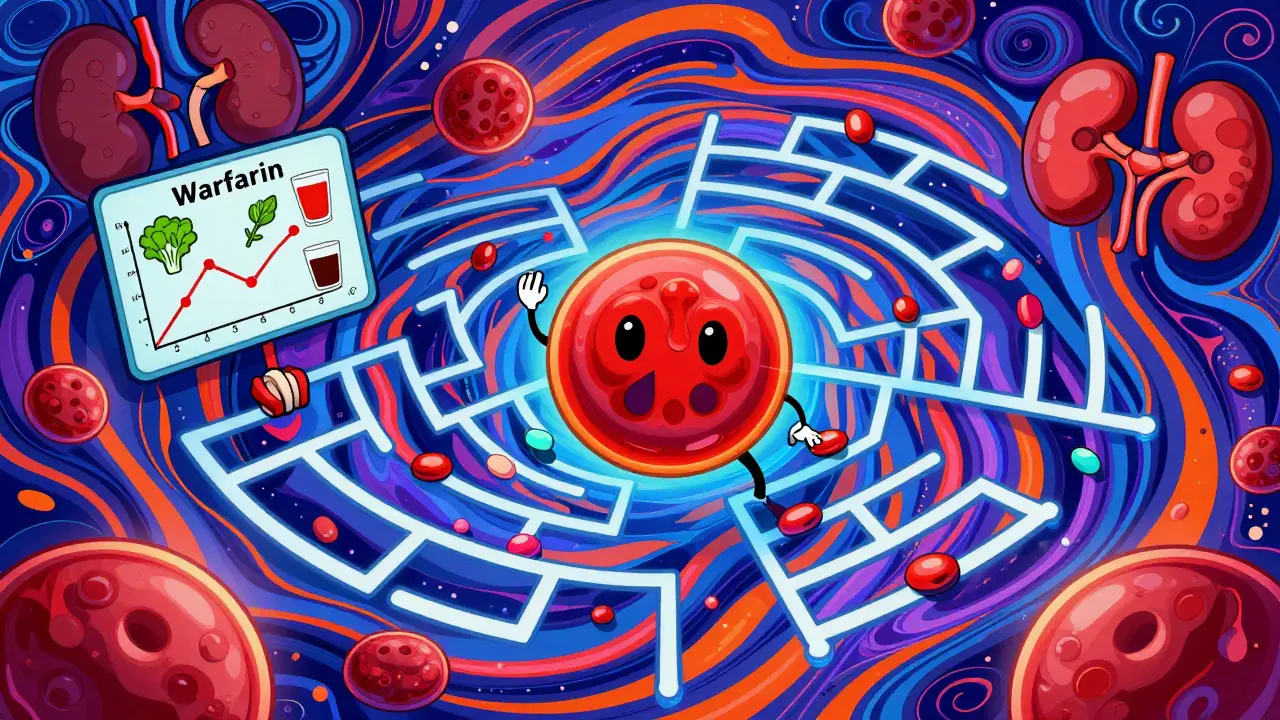
When you’re prescribed a blood thinner, you’re not just taking a pill-you’re managing a delicate balance between preventing deadly clots and avoiding dangerous bleeding. For decades, warfarin was the only option. Today, direct oral anticoagulants (DOACs) like apixaban, rivaroxaban, and dabigatran have taken over as the go-to choice for most people. But which one is truly safer for you? And when does warfarin still make sense?
Why DOACs Took Over
In 2010, dabigatran became the first DOAC approved in the U.S. Since then, they’ve quietly replaced warfarin in most clinics. Why? Because they work better and are easier to live with. DOACs don’t need regular blood tests. No more weekly finger pricks to check your INR. No more scrambling to adjust your dose because you ate a big salad or started a new antibiotic. DOACs have fixed doses, predictable effects, and fewer interactions. By 2023, they made up nearly 80% of all anticoagulant prescriptions in the U.S. Apixaban alone was prescribed over 25 million times globally that year. Clinical trials show DOACs reduce stroke risk in atrial fibrillation by 20% compared to warfarin. They cut intracranial bleeding-bleeding in the brain-by more than half. That’s huge. A brain bleed can kill or leave you disabled. Warfarin carries a higher risk of that.Where Warfarin Still Wins
But DOACs aren’t perfect for everyone. If you have a mechanical heart valve, DOACs are dangerous. They can cause clots to form on the valve, leading to stroke or valve failure. Warfarin is the only proven option here. Same goes for severe kidney failure-eGFR below 15. DOACs build up in your blood when your kidneys can’t clear them. That raises bleeding risk. Warfarin doesn’t rely on the kidneys as much, so it’s still used in dialysis patients. Also, if you’ve been on warfarin for years and your INR is stable, switching might not be worth it. Some people do better with the routine. The key is: don’t switch unless there’s a clear benefit.The Real Safety Differences
Let’s compare the actual risks. For people with atrial fibrillation, DOACs reduce major bleeding by about 20% compared to warfarin. That includes bleeding in the stomach, intestines, and brain. But not all DOACs are equal. Apixaban has the lowest bleeding risk among DOACs. In one study, patients on apixaban had 30% fewer major bleeds than those on rivaroxaban. Dabigatran had the lowest rate of recurrent clots. Rivaroxaban had slightly higher bleeding risk, especially in older or smaller patients. Warfarin’s big weakness? It’s unpredictable. Your INR can swing because of food, alcohol, other meds, or even a cold. A study found that patients spent less than 65% of their time in the safe INR range (2.0-3.0). That means they were either under-protected (risk of stroke) or over-anticoagulated (risk of bleeding). DOACs don’t have that problem. Their levels stay steady. You take your pill, and you’re covered.What About Kidney Function?
This is where things get tricky. DOACs are cleared by your kidneys differently. - Dabigatran: 80% cleared by kidneys → risky if eGFR <30 - Edoxaban: 50% → avoid if eGFR <15 - Rivaroxaban: 33% → still okay down to eGFR 15 - Apixaban: only 27% → safest in mild to moderate kidney disease For patients with eGFR between 25 and 50, DOACs are still safer than warfarin. But if your kidney function drops below 25, the advantage shrinks. In advanced kidney disease (eGFR <15), warfarin is often preferred. The 2023 KDIGO guidelines say DOACs can be used cautiously in stage 4 kidney disease (eGFR 15-29), but only at lower doses. Never use standard doses in dialysis patients unless there’s no alternative.
Cost and Adherence
Let’s talk money. Warfarin costs about $4 for a 30-day supply. Apixaban? Around $587. Rivaroxaban? $523. That’s a massive gap. But here’s the catch: warfarin isn’t cheap when you factor in everything. You need frequent blood tests-6 to 12 in the first month, then every few weeks. Each test costs $30-$80. Add in doctor visits, lab fees, and time off work. The true cost of warfarin can hit $1,200 a year. DOACs? One monthly copay. No labs. No extra visits. For younger, active people, this matters. A 2023 study found DOAC users had 32% higher adherence than warfarin users. Among people aged 18-45, adherence was 41% higher. That’s not just convenience-it’s survival.Reversing Bleeds: What Happens If You Bleed?
If you bleed badly, can we stop the drug fast? For warfarin, we use vitamin K and fresh frozen plasma. It takes hours to work. For DOACs, we have specific reversal agents. - Dabigatran: idarucizumab (Praxbind®) - works in minutes - Apixaban and rivaroxaban: andexanet alfa (Andexxa®) - approved in 2023 - Edoxaban: no specific reversal agent yet That’s a big advantage for DOACs. In an emergency, doctors can reverse them quickly. With warfarin, you’re waiting. And waiting increases the chance of death or disability.What About Cancer Patients?
People with cancer have a higher risk of clots. They often need anticoagulants long-term. Studies show apixaban is the safest DOAC in this group. It cuts major bleeding risk by 42% compared to warfarin. Rivaroxaban didn’t show the same benefit. For cancer patients, apixaban is now the top recommendation.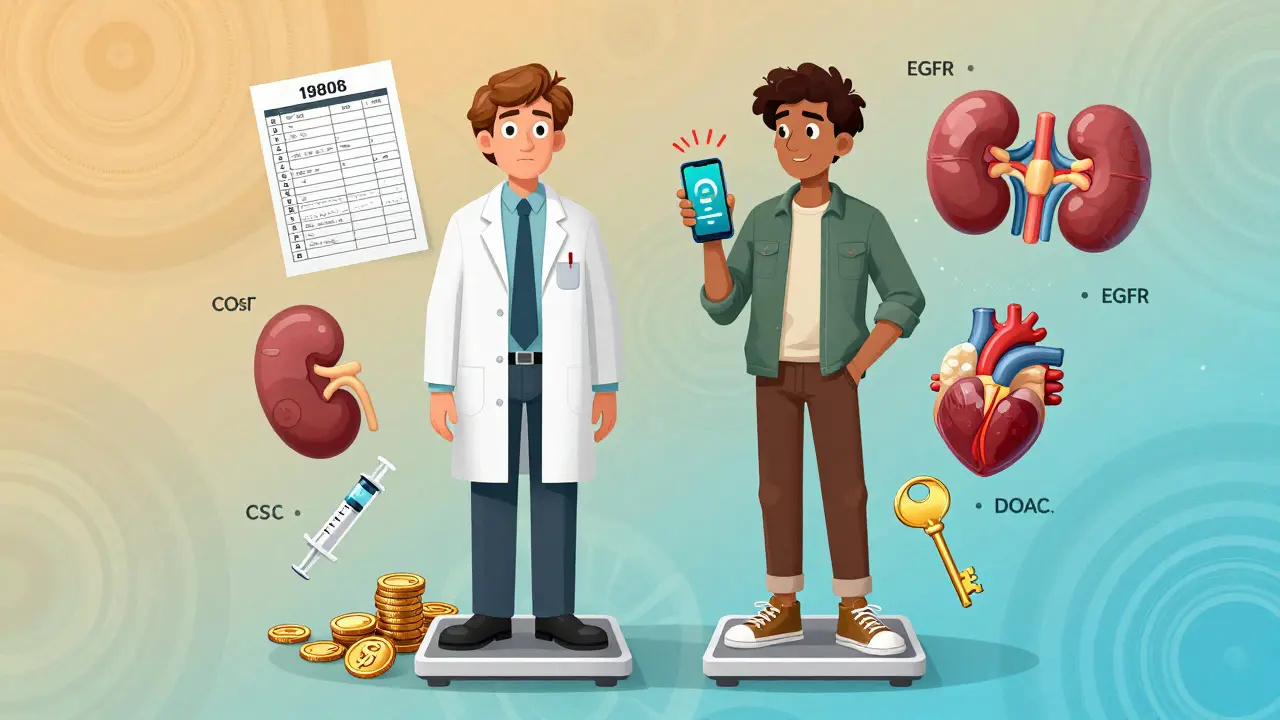
When to Stick With Warfarin
Here’s when you should stay on warfarin:- Mechanical heart valve
- eGFR below 15 (end-stage kidney disease)
- Severe mitral stenosis
- History of poor adherence to DOACs (missed doses = high clot risk)
- Already stable on warfarin with TTR over 70% for years
Practical Tips for Patients
- Know your kidney numbers. Ask your doctor for your eGFR. If it’s below 60, check if your DOAC dose needs adjusting. - Don’t stop your pill. DOACs have a short half-life. Missing one dose can leave you unprotected within 12-24 hours. Warfarin lasts longer, so missing a day is less risky. - Carry a card. Keep a list of your medication and dose in your wallet. Emergency responders need to know what you’re on. - Use pill organizers. Especially if you’re on multiple meds. DOACs are once or twice daily. Set phone reminders. - Don’t take NSAIDs. Ibuprofen, naproxen, celecoxib-they raise bleeding risk with both warfarin and DOACs. Use acetaminophen instead. - Ask about reversal agents. If you’re on a DOAC, find out if your hospital has the reversal drug on hand. Not all do.The Bottom Line
DOACs are safer, easier, and more effective than warfarin for most people. They’re the new standard for atrial fibrillation, deep vein thrombosis, and pulmonary embolism. But they’re not for everyone. Warfarin still has a place-for mechanical valves, severe kidney failure, and people who’ve mastered it. The goal isn’t to use the newest drug. It’s to use the right drug for you. If you’re on warfarin and tired of blood tests, talk to your doctor. If you’re on a DOAC and worried about cost, ask about patient assistance programs. Many manufacturers offer them. Your safety doesn’t depend on the brand. It depends on the right choice-and sticking with it.Are DOACs safer than warfarin?
Yes, for most people. DOACs reduce the risk of stroke by 20% and intracranial bleeding by more than 50% compared to warfarin. They also have fewer food and drug interactions. However, they’re not safer for everyone-people with mechanical heart valves or severe kidney failure still need warfarin.
Can I switch from warfarin to a DOAC?
You can, if you don’t have a mechanical valve, severe kidney disease, or mitral stenosis. Your doctor will check your kidney function, current INR, and other medications before switching. You’ll usually stop warfarin and start the DOAC the next day, with no overlap.
Do I need blood tests with DOACs?
No routine blood tests are needed for DOACs. But your doctor may check your kidney function once or twice a year, especially if you’re older or have other health issues. Blood tests are only done in emergencies, like after a major bleed or before surgery.
What’s the cheapest anticoagulant?
Warfarin is the cheapest at around $4 for a 30-day supply. DOACs cost $500-$600 per month retail, but many patients pay much less with insurance or manufacturer assistance programs. When you add in lab costs and doctor visits, warfarin’s total cost can rival DOACs.
What happens if I miss a dose of my DOAC?
If you miss one dose, take it as soon as you remember-if it’s within 12 hours of your usual time. If it’s more than 12 hours late, skip the missed dose and take your next one at the regular time. Never double up. Missing doses increases clot risk, especially with DOACs, since they leave your system faster than warfarin.
Can I drink alcohol while on anticoagulants?
Moderate alcohol is usually okay-no more than one drink per day. Heavy drinking raises bleeding risk with both warfarin and DOACs. It can also interfere with warfarin’s effect. Avoid binge drinking and always tell your doctor how much you drink.
12 Comments
Robert Gilmore January 3, 2026 AT 11:59
DOACs are a game-changer, no doubt. But I’ve seen patients on apixaban bleed out from a sneeze because their nephrologist didn’t adjust the dose after a UTI. It’s not magic-it’s pharmacokinetics with a side of arrogance.
Robert Gilmore January 4, 2026 AT 13:57
Of course you’d defend DOACs-you probably think ‘INR’ is a type of yoga pose. Warfarin has kept people alive since the 1950s. You wouldn’t know real medicine if it bit you in your pharma-sponsored ass.
Robert Gilmore January 5, 2026 AT 00:23
Wow. So you’re saying we’re just supposed to trust Big Pharma’s shiny new pills instead of the old-school, blood-tested, grandfather-approved method? How quaint. 😏
Robert Gilmore January 6, 2026 AT 19:34
Interesting. In Nigeria, warfarin is still king because DOACs cost more than a month’s rent. But I’ve seen people die because they couldn’t get INR checks. Maybe safety isn’t just about the drug-it’s about access.
Robert Gilmore January 8, 2026 AT 16:58
Apixaban is the best. No cap. Just take it. No tests. No stress. Done.
Robert Gilmore January 9, 2026 AT 06:41
While the data presented is statistically compelling, it neglects to address the ethical implications of obsolescing a well-characterized, cost-effective therapeutic agent in favor of proprietary, patent-protected alternatives. The commercialization of anticoagulation is a troubling precedent.
Robert Gilmore January 9, 2026 AT 15:57
Let’s not romanticize warfarin. Yes, it’s been around since WWII, but that’s like saying horse-drawn carriages are superior because they’re ‘authentic.’ The fact that patients spend less than two-thirds of their time in therapeutic range isn’t a feature-it’s a flaw in the system. DOACs don’t require you to become a nutritionist, a pharmacist, and a lab technician just to stay alive. And yes, apixaban’s bleeding profile is objectively better across all age groups, especially in frail elderly. The real question isn’t ‘which drug?’-it’s ‘which patient?’ And that’s where clinical judgment still matters.
Also, let’s talk about reversal agents. Idarucizumab for dabigatran? Brilliant. Andexanet alfa for FXa inhibitors? Expensive, yes, but available. Warfarin needs PCCs and vitamin K, which take hours to work. In a GI bleed at 3 a.m., that’s a lifetime.
And don’t get me started on compliance. I’ve had patients on warfarin who skipped doses because they forgot, then blamed the drug when they had a stroke. DOACs? Once daily. Fewer pills. Fewer chances to mess up. That’s not just convenience-it’s harm reduction.
But here’s the kicker: we’re not talking about perfect drugs. We’re talking about trade-offs. Dabigatran’s lower stroke rate? Great. But if your creatinine clearance drops to 30, you’re in trouble. Rivaroxaban’s once-daily dosing? Convenient-but it’s a bigger pill, and if you’re swallowing it with grapefruit juice? You’re playing Russian roulette with your gastrointestinal mucosa.
And yes, mechanical valves. Absolutely. Warfarin’s the only game in town. No exceptions. But that’s less than 5% of anticoagulated patients. For the other 95%, DOACs aren’t just better-they’re lifesaving. And if your clinic still has a ‘warfarin clinic’ with nurses calling patients every week to ask if they ate kale? That’s not tradition. That’s inefficiency dressed up as care.
The real tragedy isn’t that DOACs replaced warfarin. It’s that we still treat anticoagulation like it’s 1998. We need better monitoring tools, AI-driven dosing algorithms, and real-time INR trackers. But we don’t get that by clinging to the past. We get it by evolving.
Robert Gilmore January 11, 2026 AT 05:35
Interesting perspective... but I wonder if the data on renal clearance is being overinterpreted? Dabigatran’s 80% renal excretion sounds scary, but in practice, with proper eGFR monitoring, it’s manageable... isn’t it? 😅
Robert Gilmore January 12, 2026 AT 18:28
Actually, I just had my dad switch from rivaroxaban to apixaban last month because his nephrologist said his eGFR was dropping. He’s 78. No more bleeding gums. No more bruises on his legs. He says it’s like going from a rusty bike to a Tesla. Just saying.
Robert Gilmore January 14, 2026 AT 06:04
DOACs are a CIA mind-control plot. They’re designed to make you dependent on Big Pharma so they can track your blood levels via your smart fridge. 🤖💉 They don’t want you to know warfarin is cheaper and safer. The FDA is in on it. #StopDOACs
Robert Gilmore January 16, 2026 AT 02:52
Apixaban? Cute. I’m on dabigatran. It’s the only one that doesn’t make me feel like a lab rat. Also, I only take it because my rheumatologist has a $500,000 consulting deal with Boehringer Ingelheim. Just saying.
Robert Gilmore January 17, 2026 AT 08:28
Warfarin is fine. I’ve been on it for 12 years. My INR is perfect. Stop pushing DOACs. Also, you spelled ‘dabigatran’ wrong.