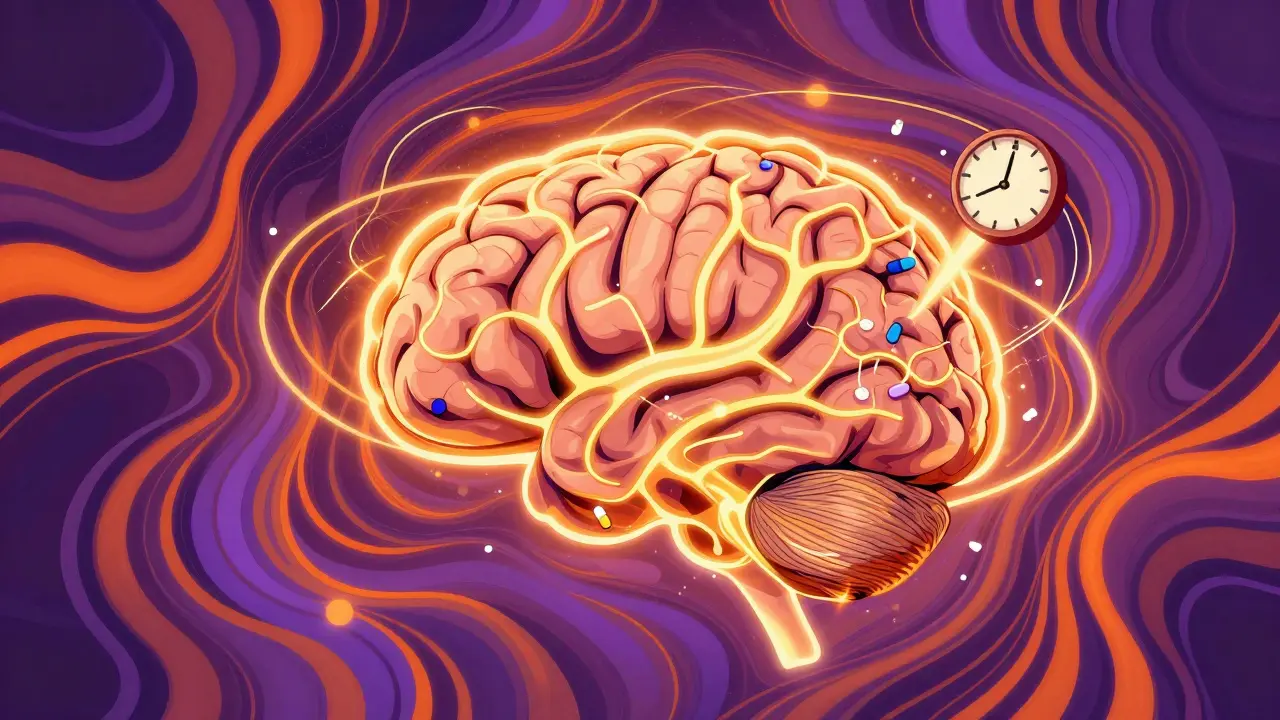
ADHD isn't just about being distracted or fidgety. It’s a neurodevelopmental condition that affects how the brain manages attention, impulse control, and energy. For millions of people-especially kids and teens-daily life can feel like a constant uphill battle. School, chores, friendships, even getting out of bed can feel overwhelming. The good news? We have real, research-backed tools to help. Medications, both stimulants and non-stimulants, can smooth out the rough edges. But they’re not magic. They work best when paired with behavioral strategies that teach real-life skills. This isn’t about fixing someone. It’s about giving them the tools to thrive.
How Stimulants Work (And Why They’re Still First-Line)
Stimulants are the most commonly prescribed ADHD medications for a reason: they work fast and they work well. About 70 to 80% of children and adults see clear improvements in focus, impulse control, and task completion. The two main types are methylphenidate (like Ritalin, Concerta) and amphetamine (like Adderall, Vyvanse). They don’t make you hyper. Instead, they help your brain’s prefrontal cortex-your personal control center-function more smoothly.
These drugs increase the availability of dopamine and norepinephrine in the brain. Think of it like turning up the signal in a weak radio station. Methylphenidate blocks the reuptake of these chemicals, so they stick around longer. Amphetamines do that too, but they also push more neurotransmitters out of storage. The result? Better focus, less impulsivity, and improved self-regulation.
Extended-release versions-like Concerta or Vyvanse-are often preferred because they last 10 to 12 hours. That means fewer doses, smoother symptom control, and less chance of the "rebound effect"-that cranky, emotional crash that happens when the medicine wears off. A 2023 survey from CHADD found that 45% of parents noticed this rebound in their kids, especially with shorter-acting versions.
Non-Stimulants: Slower, But Safer for Some
Not everyone can or should take stimulants. Maybe they have a history of substance use. Maybe they have tics, anxiety, or heart issues. That’s where non-stimulants come in.
Atomoxetine (Strattera) is the most common. It works by blocking norepinephrine reuptake, similar to some antidepressants. It doesn’t carry the same abuse risk as stimulants. But it takes time-up to 4 to 6 weeks-to reach full effect. That’s a big shift from stimulants, which can kick in within an hour.
Then there are the alpha-2 agonists: guanfacine (Intuniv) and clonidine (Kapvay). Originally used for high blood pressure, they calm overactive brain circuits. They’re especially helpful for kids with emotional outbursts or sleep problems. A 2023 study from Children’s Hospital Boston found that in preschoolers, these drugs caused significantly less irritability and appetite loss than stimulants.
Response rates are lower-around 50 to 60%-but for the right person, the trade-off is worth it. No risk of misuse. No sudden energy crash. Just steady, steady improvement.
The Side Effects No One Talks About (But Everyone Feels)
Medication isn’t without cost. Appetite suppression is the most common. Up to 60% of kids on stimulants eat less. That’s not just about snacks-it’s about growth. The American Academy of Pediatrics recommends checking height and weight every six months. About 30% of kids show a temporary dip in growth during the first year, but most catch up by year three.
Sleep trouble? It happens. Around 30 to 50% of users have trouble falling asleep. The fix? Move the last dose of the day earlier. If it’s taken after 4 p.m., it’s likely interfering with sleep. Simple shift. Big difference.
Headaches and stomachaches are common, too. Around 15 to 25% get headaches. About 10 to 20% feel nauseous. These usually fade within a week or two. If they don’t, talk to your doctor about lowering the dose or switching brands.
And then there’s emotional blunting. On Reddit’s r/ADHD, over 30% of users reported feeling "flat"-less joyful, less reactive. It’s not depression. It’s like the emotional volume got turned down. For some, that’s a relief. For others, it’s heartbreaking. One mom wrote: "My son stopped laughing at silly jokes. That’s not focus. That’s numb."
Women and girls report side effects more often. A 2022 study in Qatar found females experienced side effects 1.4 times more frequently than males. Why? Hormones. Body weight. Metabolism. It’s not just "they’re more sensitive." It’s biology.
Behavioral Strategies: The Missing Half of the Puzzle
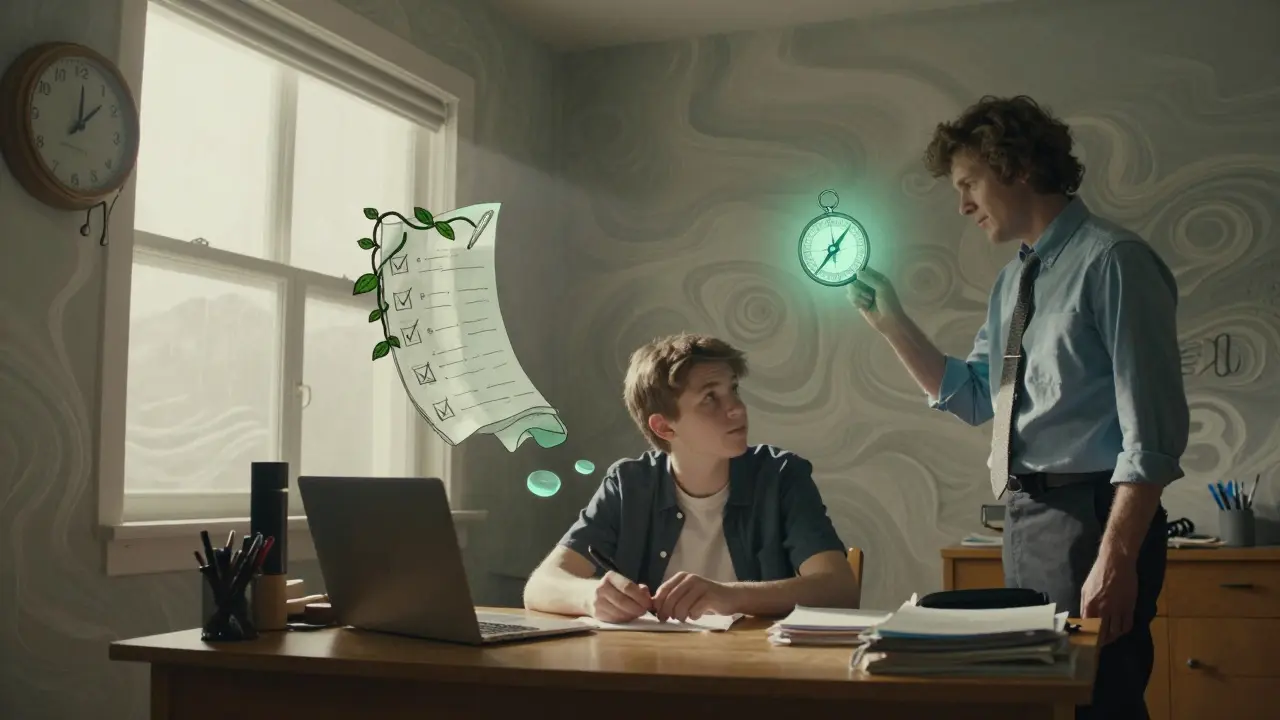
Medication helps the brain. Behavioral strategies help the person. You can’t medicate organization, time management, or emotional regulation. You have to teach them.
Parent training programs like the New Forest Parenting Programme have been shown to improve symptoms by 40 to 50%. That sounds high, but it’s real. These programs teach parents how to give clear, calm instructions. How to use consistent rewards and consequences. How to avoid power struggles. It takes 12 to 16 weekly sessions-each 90 minutes long. It’s not easy. But it’s one of the most effective tools we have.
Schools matter, too. Simple changes-like seating the child near the teacher, breaking tasks into chunks, using visual timers-can cut down meltdowns and homework battles. Teachers who understand ADHD aren’t just helpful. They’re essential.
For teens and adults, coaching makes a difference. A coach doesn’t tell you what to do. They help you figure out what works for you. Maybe you need a phone alarm for every task. Maybe you need to work standing up. Maybe you need to schedule breaks every 25 minutes. These aren’t quirks. They’re adaptations.
What the Research Really Says About Long-Term Use
Parents worry: "Will this hurt my child long-term?" The MTA study, which followed ADHD patients for 20 years, found no negative impact on adult outcomes from long-term medication use. In fact, those who stayed on treatment had better academic and social outcomes. But here’s the twist: 28% stopped medication by adolescence. Why? Side effects. Perceived lack of need. Peer pressure. The stigma.
There’s no evidence that stimulants cause heart damage in healthy people-but they do raise heart rate and blood pressure. That’s why baseline checks are required before starting. Quarterly monitoring is recommended. If someone has a family history of heart disease or arrhythmias, non-stimulants may be safer.
And what about growth? The FDA and AAP both acknowledge that some kids grow slower on stimulants. But most catch up. One 2021 study in the Journal of the American Academy of Child & Adolescent Psychiatry found height differences disappeared after 2 to 3 years. That’s not a red flag. It’s a temporary pause.
Cost, Access, and the Reality of Getting Help
Generic methylphenidate costs $15 to $25 a month. Brand-name extended-release versions? $250 to $400. Without insurance, that’s a dealbreaker. Many insurers force patients to try generic MPH before approving Adderall or Vyvanse. That’s called step therapy. It’s not about safety. It’s about cost.
In Australia, PBS subsidizes many ADHD meds, but not all. Some families still pay hundreds out of pocket. And getting diagnosed? It can take months. Waitlists for child psychologists are long. Adults often go undiagnosed until their 30s or 40s.
There’s hope on the horizon. In 2023, the FDA approved AZSTARYS-a new prodrug formulation designed to reduce misuse. Digital therapeutics like EndeavorRx (an FDA-cleared video game for attention training) are now covered by some insurers. VR-based cognitive training is entering phase 3 trials. Personalized medicine is coming, too. Genetic tests like Genomind’s PGx Express can predict who’s likely to respond to a specific stimulant-with 65% accuracy.
What Works Best? It’s Personal
There’s no one-size-fits-all. For one kid, Vyvanse + daily homework routines works. For another, guanfacine + a coach + a structured after-school plan is the answer. For a teenager with anxiety and ADHD, a non-stimulant might be the only way to avoid panic attacks.
Start low. Go slow. Track everything: sleep, appetite, mood, focus, schoolwork. Keep a log. Share it with your doctor. If something’s not working, don’t just quit. Adjust. Try a different dose. A different drug. A different strategy.
ADHD isn’t a flaw. It’s a different wiring. Medication helps the brain work better. Behavioral strategies help the person live better. Together, they don’t just manage symptoms-they change lives.
Are stimulants addictive?
When taken as prescribed, stimulants for ADHD are not addictive. They don’t create euphoria in people with ADHD the way they might in someone without it. The risk of abuse is very low when used under medical supervision. However, these medications are classified as controlled substances because they can be misused if taken in high doses or by someone without ADHD. That’s why prescriptions are tightly regulated and monitoring is essential.
Can ADHD be managed without medication?
Yes, some people manage ADHD well with behavioral strategies alone-especially adults who’ve developed coping skills over time. For children, however, research shows medication combined with behavioral therapy works better than either alone. If medication isn’t an option due to side effects, preferences, or access, behavioral interventions remain the most evidence-based alternative. School accommodations, coaching, and parent training can make a real difference.
Why do some people say ADHD meds change their personality?
It’s not that the medication changes who they are. It’s that it reduces the overwhelming noise of impulsivity and distraction, which can make emotions feel quieter. Some people describe it as feeling "calmer" or "less reactive." For others, it feels like emotional blunting-like they’ve lost their spark. That’s often a sign the dose is too high. A good doctor will adjust it until the person feels like themselves, just more focused and in control.
Do non-stimulants work as well as stimulants?
On average, stimulants are more effective, with 70-80% of users seeing strong improvement. Non-stimulants like atomoxetine or guanfacine help about 50-60% of users. But "as well as" isn’t the right question. The right question is: "Which one works for me?" For someone with tics, anxiety, or a history of substance use, a non-stimulant might be the only safe and effective option-even if it’s slightly less powerful.
How long should someone stay on ADHD medication?
There’s no set timeline. Some people need it for life. Others stop after high school or college when structure fades. Many try to taper off in their 20s or 30s. The key is regular check-ins. If symptoms return when medication is stopped, it’s likely still needed. If life feels manageable without it, then it’s okay to pause. Always do this under medical supervision. Don’t quit cold turkey.